Engineering Outdoor LED Displays for Harsh Environments
Section 1: Environmental Realities of Outdoor Digital Signage
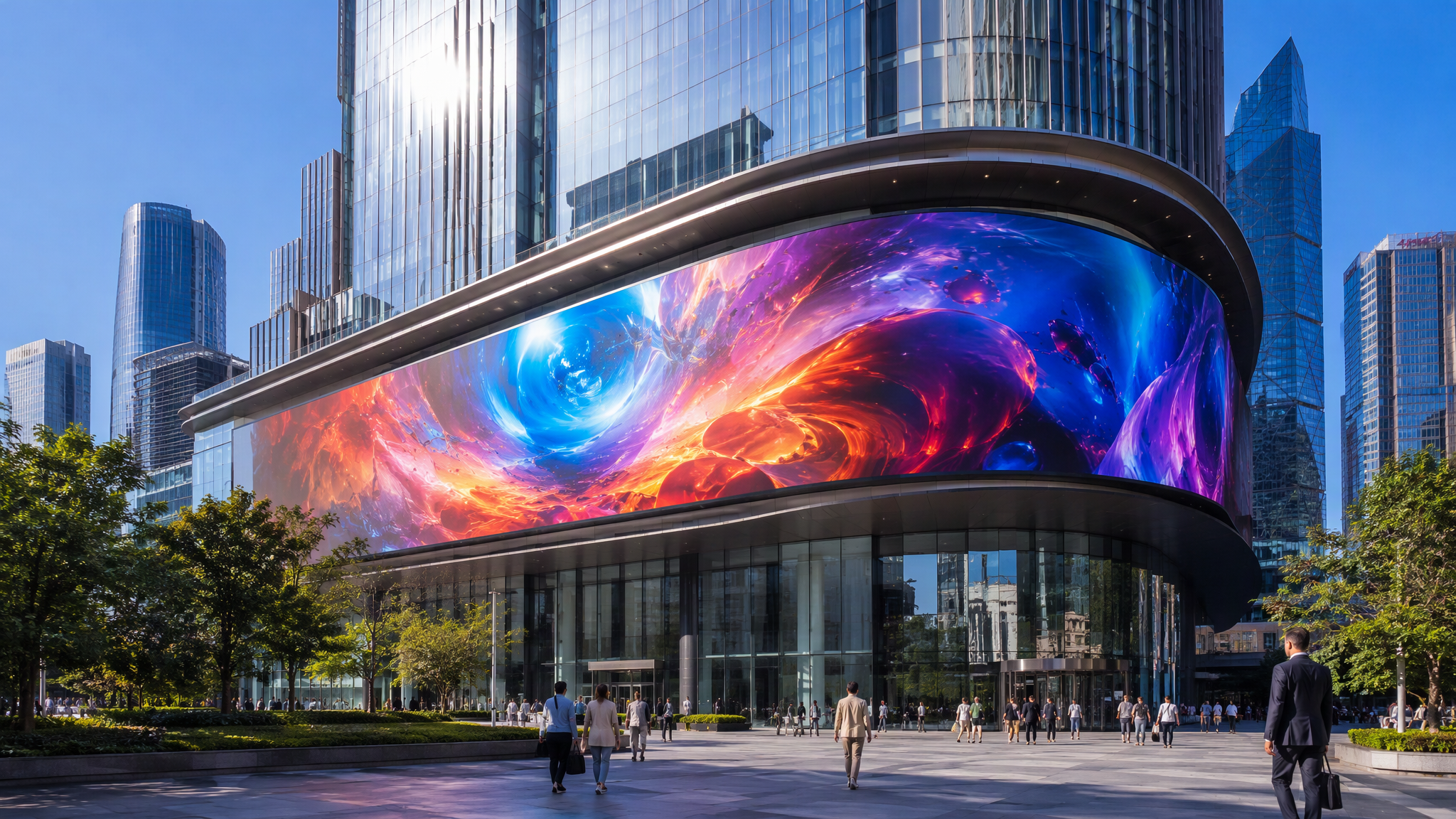
Outdoor direct-view light emitting diode (DV-LED) video displays, commonly deployed as digital out-of-home (DOOH) billboards, building facade screens, sports stadium scoreboards, and transit information totems, operate in hostile environments. Unlike climate-controlled indoor video walls, outdoor displays must withstand direct solar radiation exceeding 100,000 lux, driving rainstorms, hurricane-force wind loads, airborne industrial pollutants, and seasonal temperature swings ranging from minus 30 degrees Celsius to plus 55 degrees Celsius.
Procuring an outdoor LED screen requires balancing optical peak luminance against solar washout, specifying robust ingress protection (IP) seals, engineering heavy-duty steel substructures, and conducting rigorous seven-year Total Cost of Ownership (TCO) financial modeling. This comprehensive guide establishes the technical and financial framework required for successful outdoor visual media procurement.
Section 2: Luminance Output, Optical Physics, and Solar Washout Defense
Peak optical luminance, measured in nits (candela per square meter), is the single most critical performance parameter for outdoor legibility. Direct sunlight exerts immense ambient illumination that washes out low-brightness displays into unreadable gray surfaces.
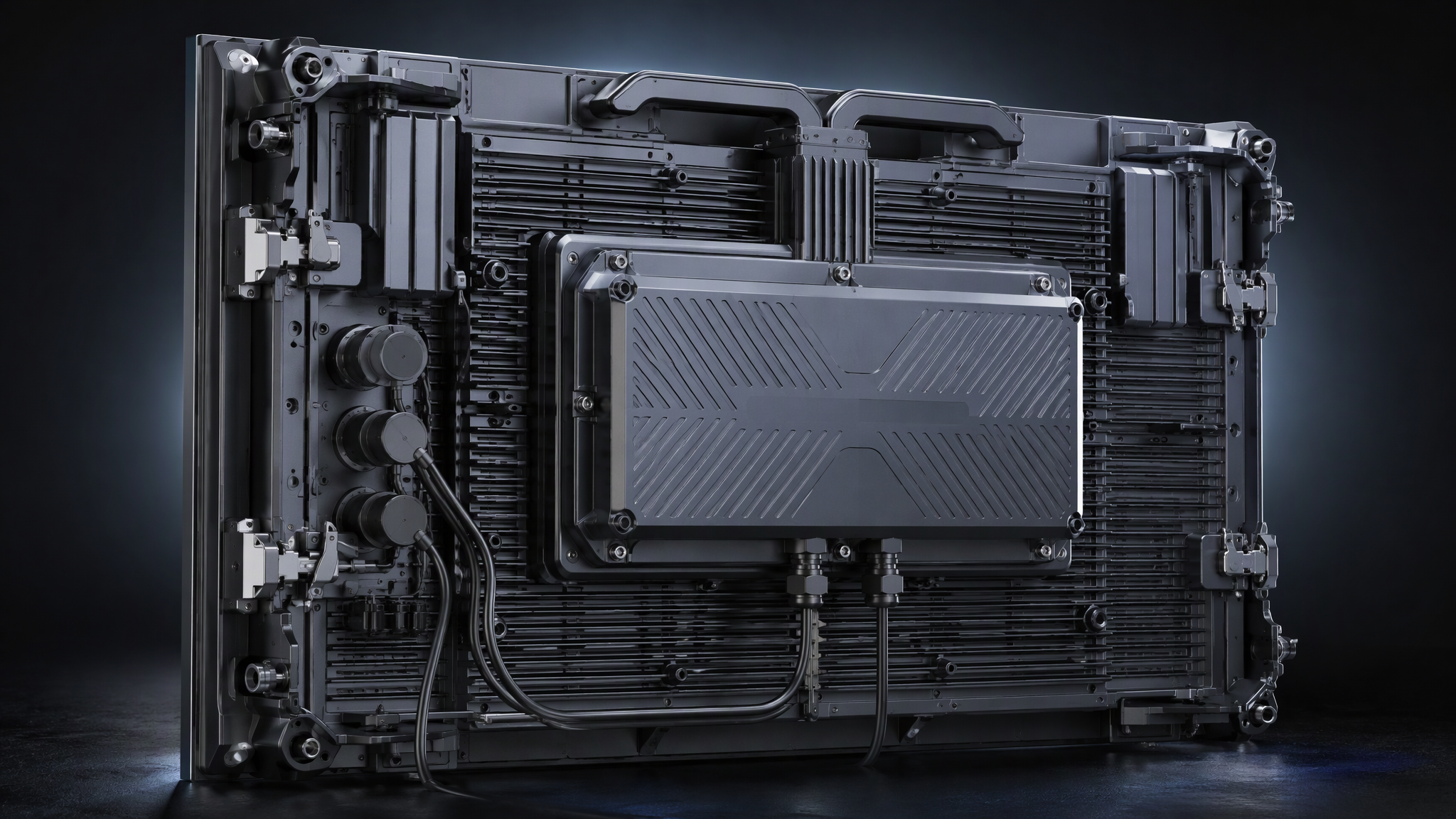
Figure 2: Microscopic surface architecture showcasing precision matte black optical shading louvers and weather-sealed surface diodes.
· North-Facing or Shaded Outdoor Sites: 5,000 to 6,000 nits. Provides sufficient dynamic range where the screen never directly faces the midday solar path.
· Direct South-Facing or West-Facing Sunlit Sites: 6,500 to 8,500 nits. Essential for highway billboards and open plazas subject to direct, unshaded afternoon sunlight.
· Extreme High-Solar Environments (Desert and Coastal): 9,000 to 10,000 nits. Required in equatorial, desert, or reflective marine coastal zones where solar irradiance reaches extreme levels.
· Matte Black Optical Shading Louvers: Molded horizontal micro-louvers cast microscopic downward shadows across diode faces, reducing specular sunlight reflection and preserving contrast ratios above 5,000 to 1.
· Automatic Ambient Photocell Dimming: Integrated multi-point optical sensors automatically throttle screen luminance from 8,000 nits at midday down to 800 to 1,200 nits at midnight. This prevents nighttime blinding glare, complies with municipal light pollution ordinances, and cuts overnight power draw by up to 70 percent.
Table 1: Outdoor Solar Ambient Illumination and Display Luminance Sizing Matrix
Site Solar Exposure | Peak Ambient Lux Level | Required Display Luminance | Recommended Optical Treatment |
Shaded Urban Street Canopy | 10,000 to 25,000 lux | 5,000 to 6,000 nits | Standard Black Mask, Anti-Glare Coating |
Open Commercial Plaza | 30,000 to 60,000 lux | 6,500 to 7,500 nits | Deep Optical Shading Louvers, Auto Photocell |
Unshaded Highway Billboard | 70,000 to 100,000 lux | 7,500 to 8,500 nits | UV-Resistant Mask, High-Efficiency Diodes |
Desert or Marine Coastal Site | 100,000+ lux (Reflective) | 9,000 to 10,000 nits | High-Gain Gold Wire Diodes, Thermal Sinks |
Section 3: Ingress Protection (IP) Sealing and Environmental Hardening
Ingress Protection (IP) ratings, defined under standard IEC 60529, specify the enclosure defense against solid particulate matter (first digit, 0 to 6) and liquid water penetration (second digit, 0 to 8).
· IP65 Front Rating: Complete protection against dust ingress (dust-tight, rating 6) and protection against low-pressure water jets projected by a 6.3 mm nozzle from any direction (rating 5). This is the mandatory baseline for all outdoor commercial LED screens.
· IP66 High-Pressure Water Jet Defense: Protects against powerful water jets from a 12.5 mm nozzle at 100 kilopascals pressure, recommended for coastal hurricane regions and high-altitude exposed facades.
· Rear Ingress Protection (IP54 versus IP65): While front faces are always IP65, rear cabinet enclosures vary. Enclosed building facades can utilize IP54 rear access, but open highway billboards and rooftop totems must mandate IP65 sealed rear doors.
· Triple-Proof Conformal PCB Coating: Printed circuit boards must receive automated robotic polymer spray coating to defend copper traces against salt fog corrosion, industrial sulfur dioxide, and condensing moisture.
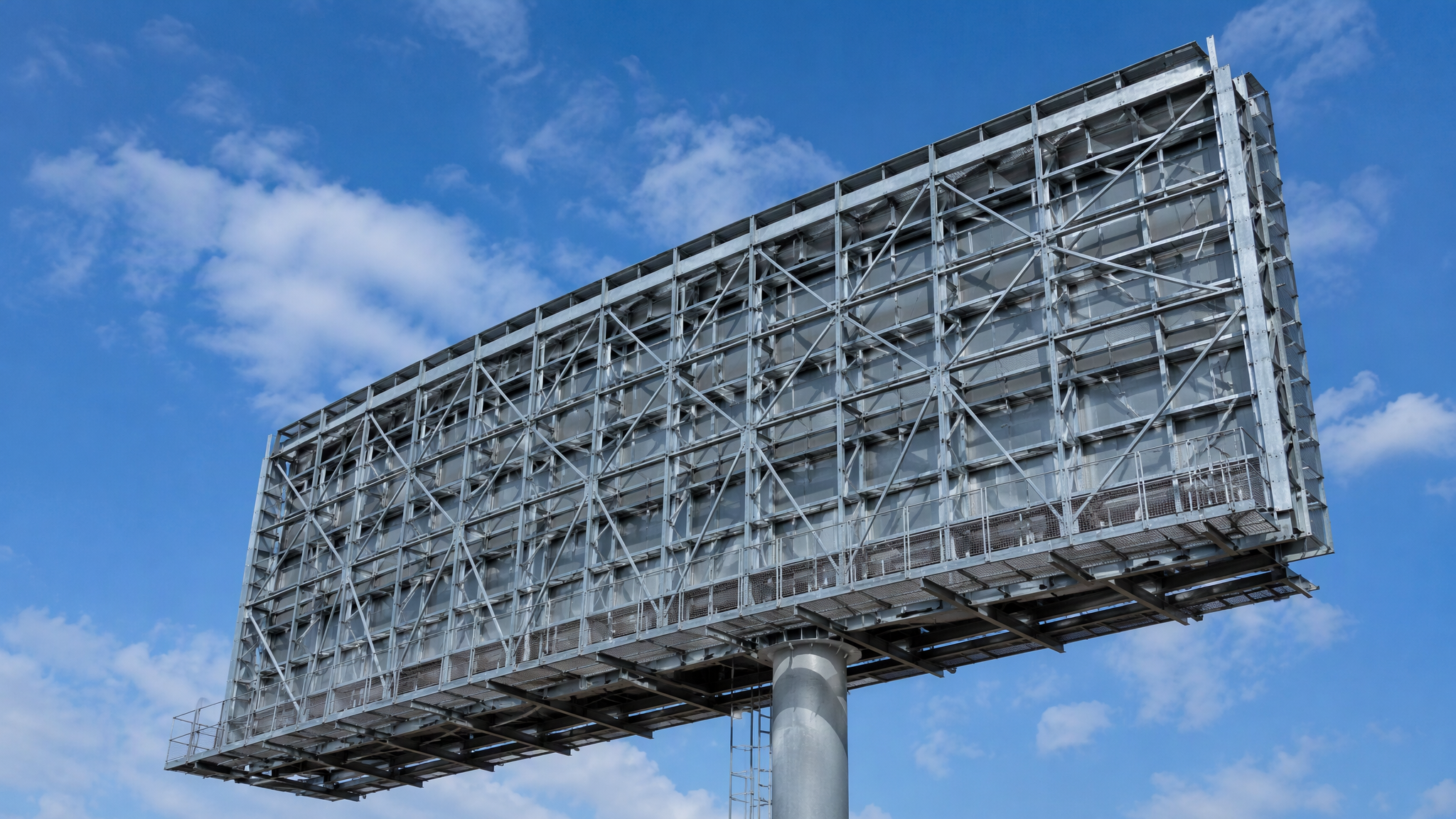
Table 2: Ingress Protection (IP) Engineering Matrix for Outdoor Digital Signage
IP Rating | Dust Ingress Defense | Water Ingress Defense | Applicable Outdoor Environment |
IP54 | Dust Protected (Limited) | Water Splashing from any direction | Semi-Outdoor Sheltered Canopies Only |
IP65 | Dust Tight (Full Seal) | Water Jets (6.3 mm nozzle at 30 kPa) | Standard Commercial Outdoor DOOH Baseline |
IP66 | Dust Tight (Full Seal) | Heavy Seas and Powerful Water Jets | Coastal Areas, High-Altitude Exposed Facades |
IP68 | Dust Tight (Full Seal) | Continuous Underwater Submersion | Fountain Submerged LED Video Modules |
Section 4: Structural Rigidity, Catwalks, and Wind Load Engineering
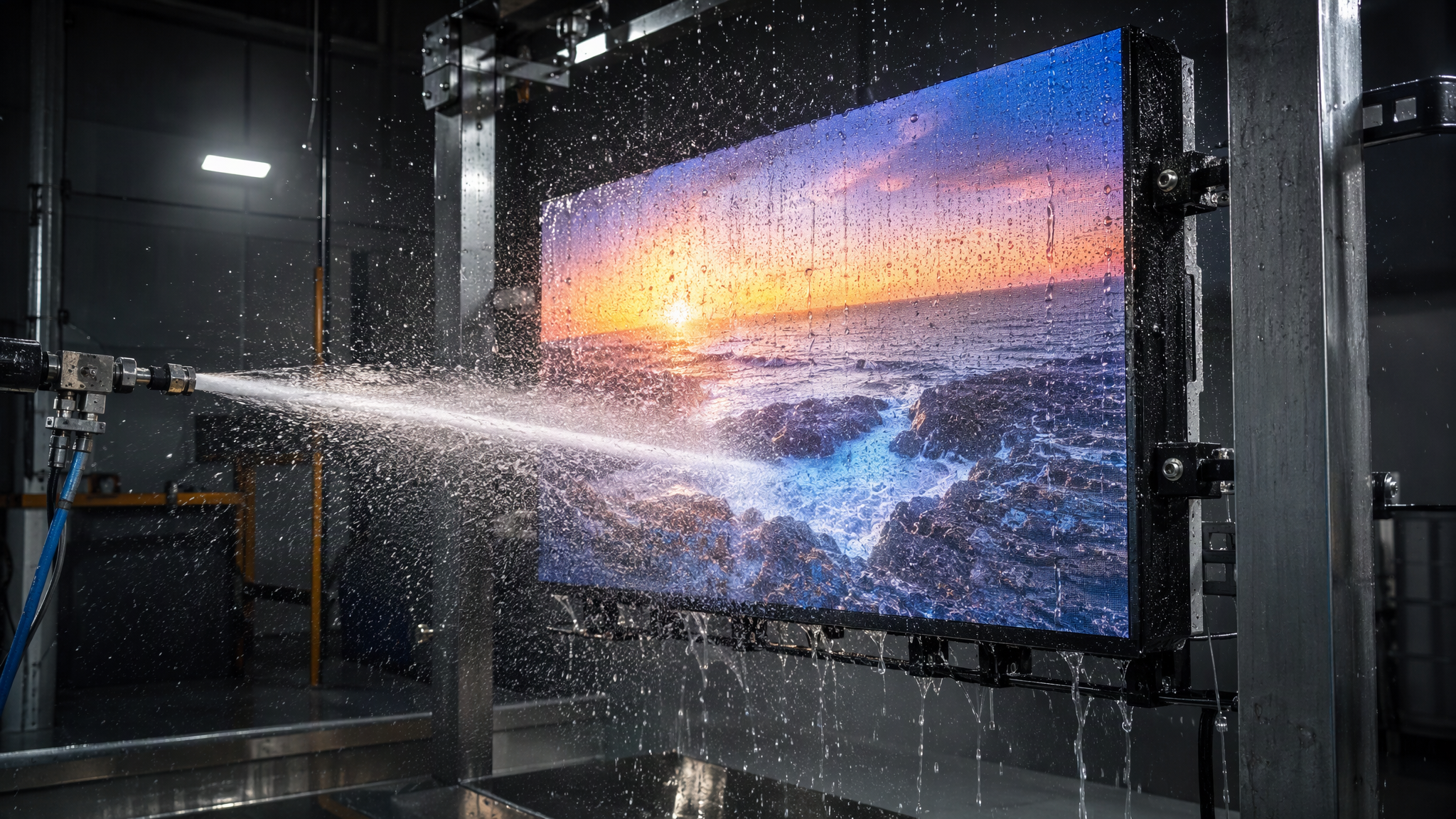
Outdoor screens mounted at height act as massive vertical air sails subjected to tremendous aerodynamic wind drag forces.
· Wind Load Sizing (Beaufort Scale 12 to 14): Structural engineering must certify the steel truss foundation to withstand wind speeds of 120 to 150 kilometers per hour (typhoon and hurricane standards).
· Hot-Dip Galvanized Structural Steel: Steel trusses and unistrut framing must undergo hot-dip galvanization (minimum 85 micron zinc coating thickness) to prevent structural rust over a 20-year civil lifespan.
· Rear Maintenance Catwalk Platforms: Large billboards must integrate safety railings, toe kicks, and OSHA-compliant catwalk platforms (minimum 800 mm clear width) to allow safe technician access.
Table 3: Outdoor Pixel Pitch, Viewing Geometry, and Cabinet Weight Specifications
Pixel Pitch | Pixel Density (sqm) | Min Viewing Distance | Optimal Viewing Range | Primary Outdoor Application |
P3.9 mm | 65,536 pixels | 3.9 meters | 5.0 to 12.0 meters | Street-Level Retail Flagship Displays |
P4.8 mm | 43,402 pixels | 4.8 meters | 6.0 to 16.0 meters | Commercial Building Plaza Facades |
P6.0 mm | 27,777 pixels | 6.0 meters | 8.0 to 22.0 meters | Transit Centers, Shopping Mall Walls |
P8.0 mm | 15,625 pixels | 8.0 meters | 12.0 to 35.0 meters | Stadium Scoreboards, Urban Billboards |
P10.0 mm | 10,000 pixels | 10.0 meters | 15.0 to 60.0 meters | High-Altitude Highway Digital Billboards |
Section 5: Total Cost of Ownership (TCO) Financial Model
A common financial error in outdoor digital media procurement is evaluating only the initial hardware purchase price. Over a seven-year operational lifespan, hardware represents approximately 40 to 50 percent of total investment, while civil structural engineering, electrical grid expansion, power consumption, and ongoing maintenance comprise the remaining 50 to 60 percent.
Table 4: Outdoor LED Screen Seven-Year Total Cost of Ownership (TCO) Model
TCO Cost Category | Typical Share of Spend | Expenditure Timing | Strategic Cost Mitigation Strategy |
LED Display Hardware | 40 to 50 Percent | Year 0 (CAPEX) | Select Common Cathode and Die-Cast Aluminum |
Steel Truss and Civil Foundation | 15 to 20 Percent | Year 0 (CAPEX) | Standardize modular unistrut mounting beams |
Electrical Utility Grid Trenching | 5 to 10 Percent | Year 0 (CAPEX) | Deploy high-voltage step-down transformers |
Electricity Power Consumption | 20 to 25 Percent | Years 1 to 7 (OPEX) | Mandate automatic ambient photocell dimming |
Preventative Service and Spares | 8 to 12 Percent | Years 1 to 7 (OPEX) | Secure 5 percent same-bin diode spare pool |
Permitting and Structural Insurance | 2 to 5 Percent | Annual Recurring | Ensure third-party certified structural PE stamps |
ESSENTIAL OUTDOOR LED PROCUREMENT AND ENGINEERING TAKEAWAYS 1. Size peak luminance to solar site exposure (minimum 7,500 nits for unshaded direct south-facing billboards). 2. Mandate IP65 front and IP65 rear weather sealing with triple-proof PCB conformal polymer coating. 3. Specify Common Cathode driver IC topology to cut operational electrical power and heat draw by up to 35 percent. 4. Enforce automated multi-point photocell sensors to prevent municipal light pollution violations at night. 5. Include 5 percent same-bin diode spare modules and dedicated 10G fiber optic signal extension in the initial bid. |
Table 5: Comprehensive Outdoor LED Request for Proposal (RFP) Scoring Rubric
Item | RFP Evaluation Dimension | Technical and Operational Target Benchmark | Scoring Weight |
01 | Calibrated Peak Luminance | 7,500 to 8,500 nits with auto photocell dimming sensor | 15 Percent |
02 | Ingress Sealing (IP Rating) | IP65 front and IP65 rear, triple-proof PCB conformal coat | 15 Percent |
03 | Power Architecture and Energy | Common Cathode, low power draw, fanless passive cooling | 15 Percent |
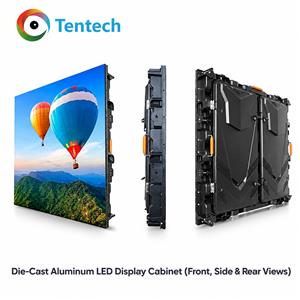
04 | Mechanical Chassis Quality | Die-cast aluminum chassis under 30 kg per square meter | 10 Percent |
05 | Structural Wind Load Design | Certified to withstand 140 km per hour typhoon wind forces | 10 Percent |
06 | Optical Louver Shading Mask | UV-resistant matte black louvers, contrast over 5,000 to 1 | 10 Percent |
07 | Signal Distribution Pipeline | 10G optical fiber transmission, dual-loop ring redundancy | 10 Percent |
08 | Spare Parts Batch Matching | 5 percent same-bin diode spare pool delivered with main order | 5 Percent |
09 | Safety and EMC Certification | UL 62368, FCC Class A, CE, RoHS third-party verified | 5 Percent |
10 | Extended Warranty and SLA | 5-year comprehensive hardware warranty with 24-hour response | 5 Percent |
Section 6: Conclusion and Strategic Procurement Summary
Outdoor digital LED displays represent substantial capital investments that generate long-term advertising revenue and public visual impact. By systematically addressing peak optical luminance, certified IP65 weatherproofing, wind-load structural mechanics, and seven-year Total Cost of Ownership modeling, commercial media operators and enterprise buyers can ensure flawless visual performance and decade-long return on investment.