Hybrid LED Cabinet Splicing for Rental Events
Mixing 500x500 and 500x1000 Rental LED Cabinets: Engineering, Splicing, and Rigging Guide
An Operational Blueprint for Event Staging: Mechanical Fast-Lock Compatibility, Brick-Pattern Splicing, Controller Port Mapping, and Inventory ROI
Executive Summary: In professional concert touring, corporate conferences, and live event staging, AV production companies increasingly deploy hybrid LED video wall configurations that combine 500 mm wide by 500 mm high square cabinets with 500 mm wide by 1000 mm high rectangular panels within a unified screen structure. This hybrid staging methodology delivers the optimal balance between setup speed and architectural versatility. The larger 500x1000 mm panels provide twice the surface area per lift, cutting installation labor time in half and eliminating 50 percent of horizontal mechanical seams across the main video canvas. Concurrently, the compact 500x500 mm panels provide essential half-meter vertical granularity, enabling precise height adjustments (such as achieving exact 2.5-meter, 3.5-meter, or 4.5-meter stage trims), staggered brick-pattern interlocking for enhanced structural rigidity, and stepped creative archways. However, successful hybrid cabinet splicing requires rigorous adherence to mechanical fast-lock alignment, universal positioning pin tolerances, receiving card data port mapping, and structural rigging load calculations. This guide provides event technical directors, master electricians, and AV rental operations managers with an exhaustive engineering specification matrix, splicing topology blueprints, controller loading formulas, and fleet investment benchmarks. |
 1. Mechanical and Structural Principles of Hybrid Cabinet Splicing
Interlocking 500x500 mm and 500x1000 mm die-cast rental cabinets requires unified mechanical and electrical engineering standards across the product family:
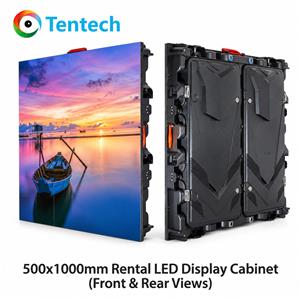
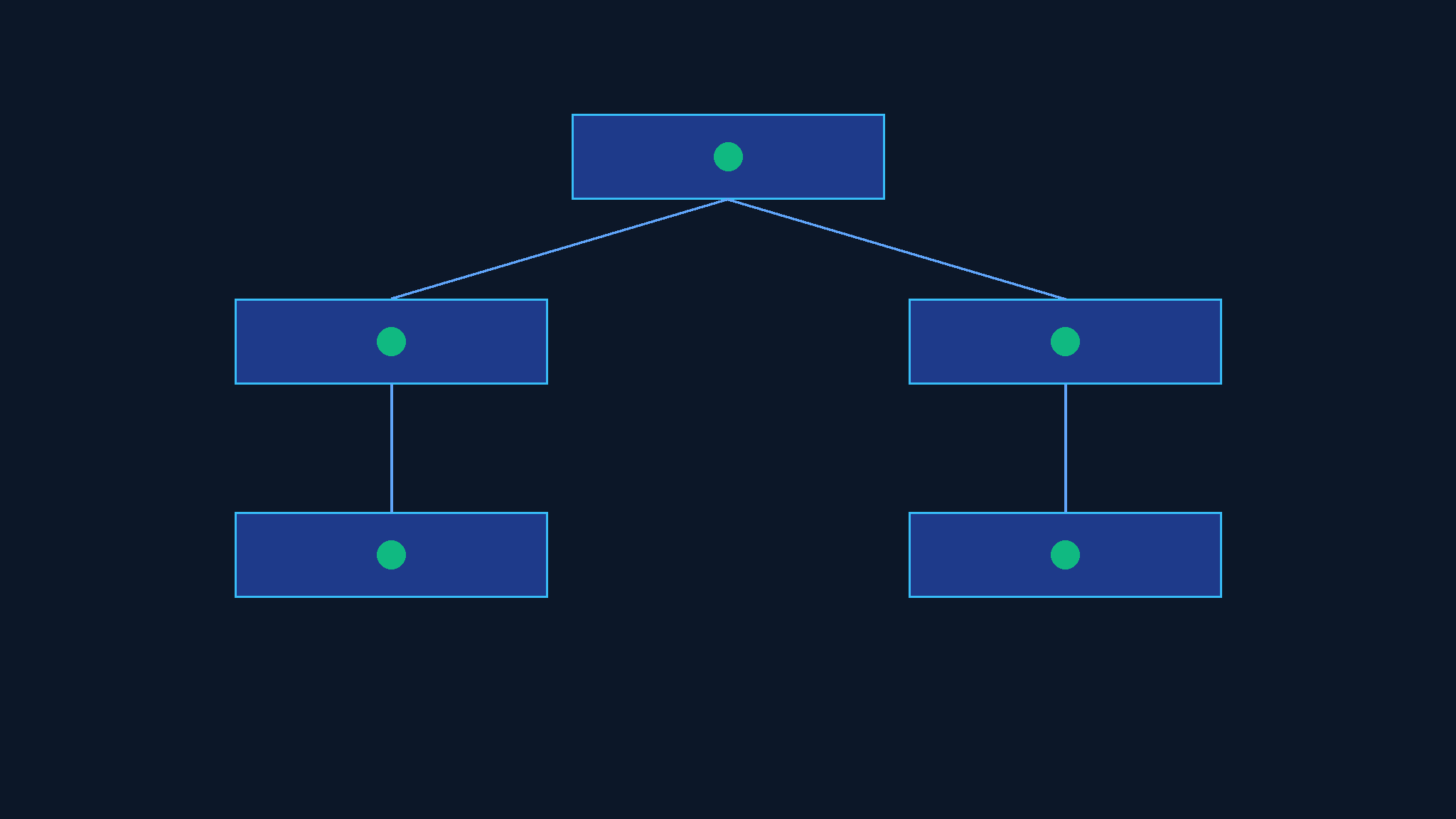
A. Universal Fast-Lock Spacing and Conical Positioning Pins: Both cabinet formats must originate from the exact same manufacturer tooling series. The top and bottom horizontal profiles share identical 500 mm widths with matching quick-action rotary fast locks and conical positioning pins. The 500x1000 mm panel features two stacked vertical locking zones along each side, aligning perfectly with two individual 500x500 mm panels placed adjacent to it.
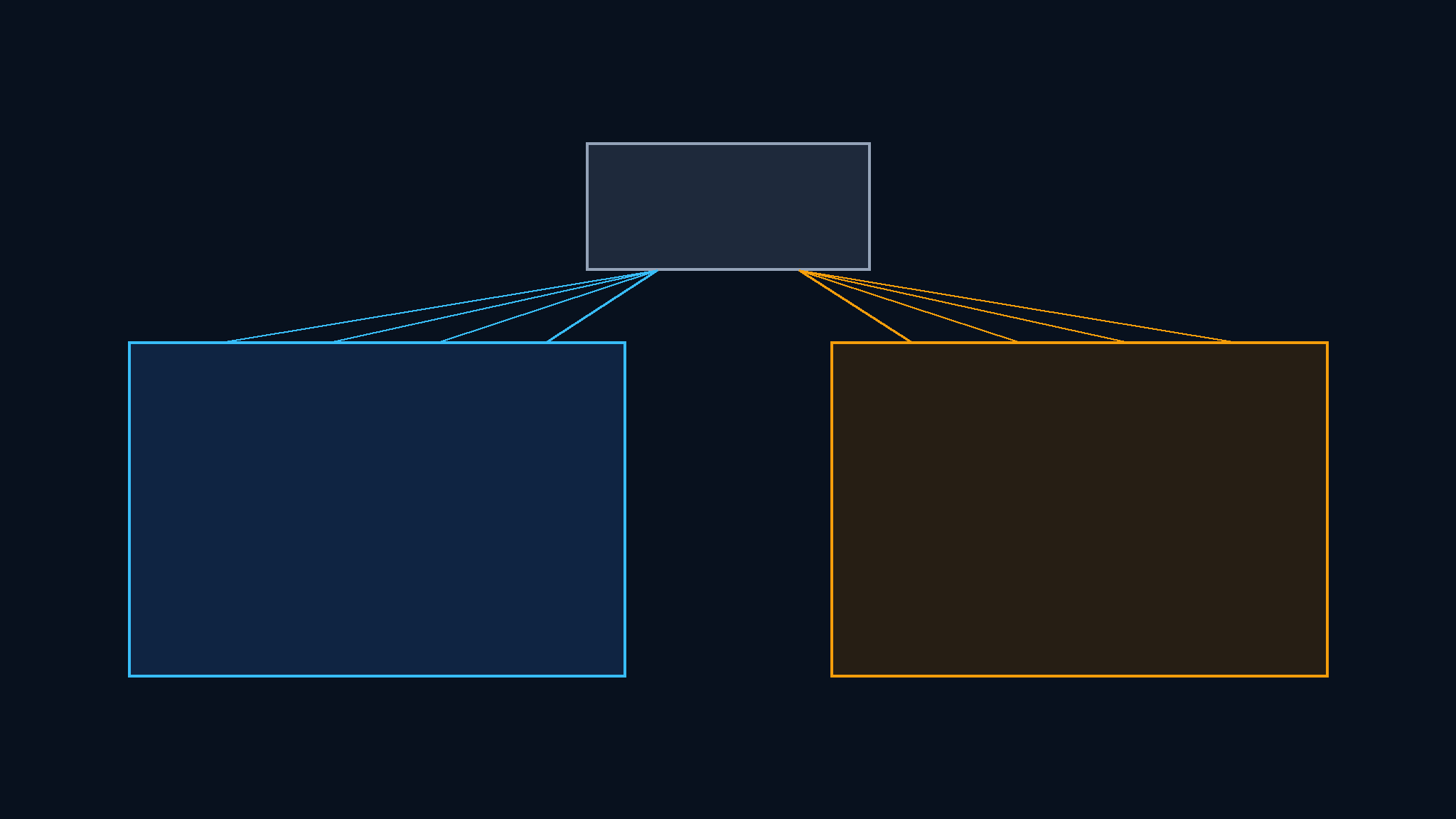
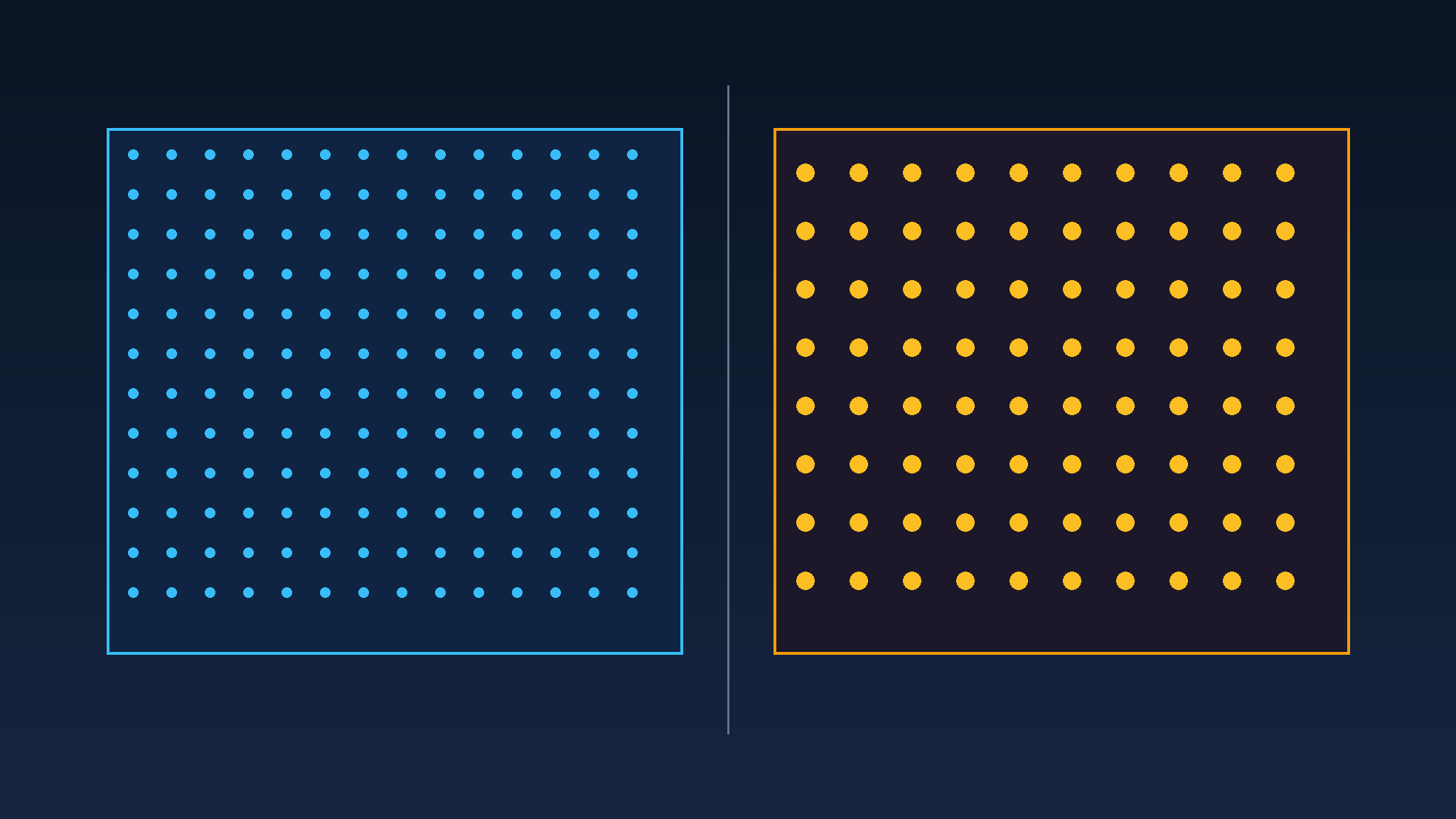
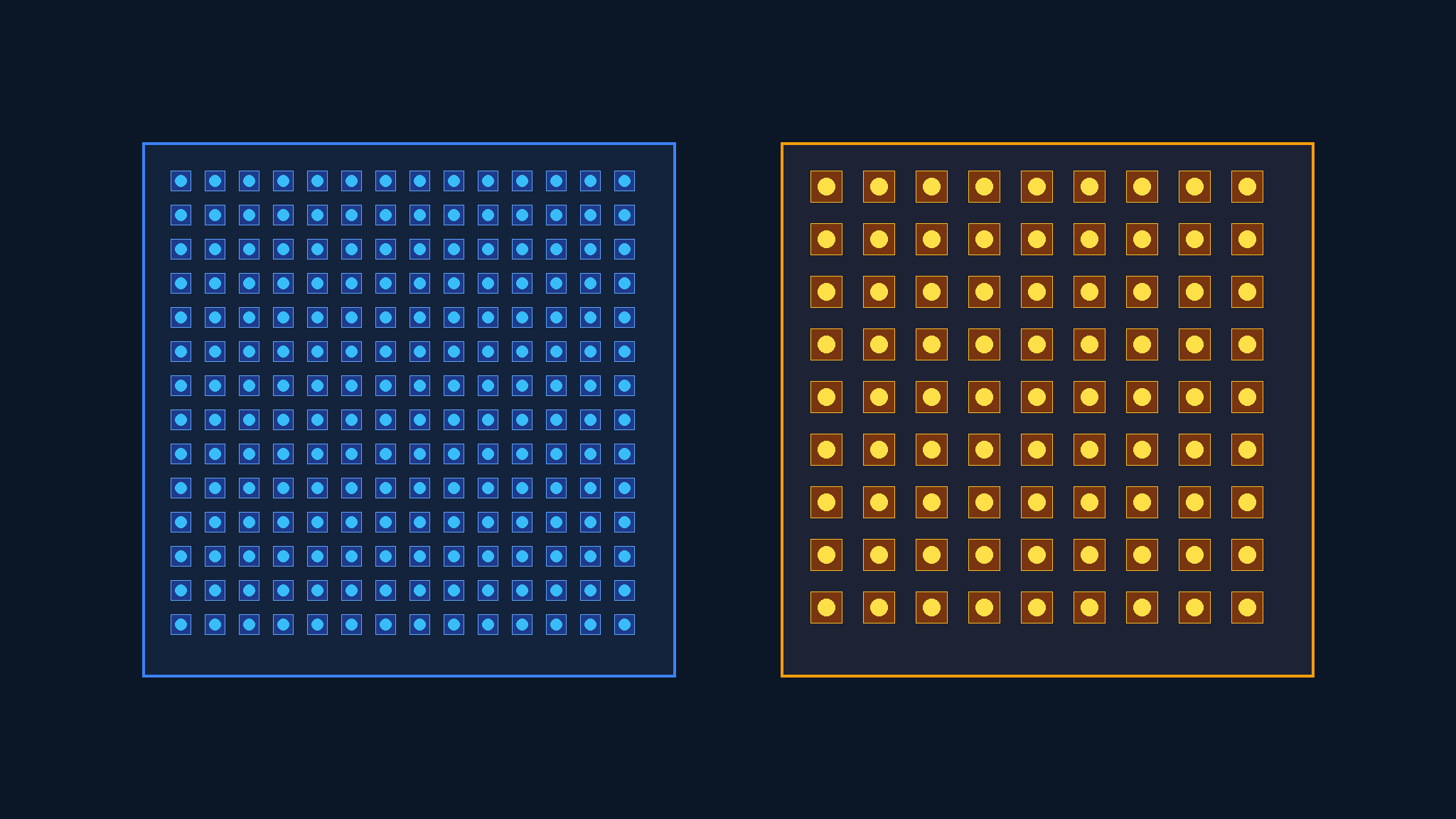
B. Standardized 250x250 mm Magnetic Module Interchangeability: Both cabinet sizes utilize standard 250 mm wide by 250 mm high magnetic LED modules. A 500x500 mm cabinet houses four modules (two rows by two columns), while a 500x1000 mm cabinet houses eight modules (four rows by two columns). Module interchangeability ensures that rental houses maintain a single common spare module inventory across the entire fleet.
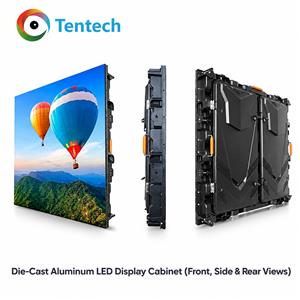
C. Magnesium-Aluminum Alloy Chassis and Weight Distribution: Die-cast magnesium-aluminum alloy chassis deliver high structural rigidity while minimizing total weight. A typical 500x500 mm rental panel weighs approximately 7.0 kg to 8.0 kg (equivalent to 28 kg to 32 kg per square meter), whereas a 500x1000 mm panel weighs approximately 12.5 kg to 14.0 kg (equivalent to 25 kg to 28 kg per square meter), reducing the dead load on overhead rigging trusses.
2. Master Mechanical and Electrical Specification Comparison Matrix
The following engineering table correlates dimensions, weight, module layout, receiving card topology, and operational characteristics between both cabinet formats.
Engineering Dimension | 500x500 mm Rental Cabinet | 500x1000 mm Rental Cabinet | Hybrid Operational Impact |
Physical Dimensions | 500 mm W x 500 mm H x 75 mm D | 500 mm W x 1000 mm H x 75 mm D | Identical 500 mm width enables direct vertical and horizontal locking |
Unit Weight | Approx. 7.0 kg to 8.0 kg per panel | Approx. 12.5 kg to 14.0 kg per panel | 500x1000 panels reduce overall screen weight by 10% to 15% per square meter |
Module Count per Cabinet | 4 modules (250x250 mm standard) | 8 modules (250x250 mm standard) | 100% spare module and magnetic tool interchangeability across both sizes |
Internal Power Supply | 1x 200W or 250W ultra-slim PSU | 1x 350W or 400W high-efficiency PSU | Power looping uses standardized Neutrik powerCON TRUE1 connectors |
Receiving Card Topology | 1x NovaStar MRV or Armor card | 2x standard cards or 1x high-load card | Ethernet port mapping must account for dual-card or double-height loading |
Mechanical Fast Locks | 2 side locks, 2 top locks | 4 side locks, 2 top locks | Side locks align seamlessly when stacking two 500x500 units against one 500x1000 |
Curve Angle Range | -5 degrees to +10 degrees per lock | -5 degrees to +10 degrees per lock | Enables smooth concave and convex curved video walls with unified radii |
Assembly Labor Speed | Approx. 25 minutes for 10 sqm | Approx. 12 minutes for 10 sqm | Mixing panels achieves rapid bulk builds with fine height adjustments |
Typical Unit Price Range | $300 to $650 USD (Depends on pitch) | $500 to $1,100 USD (Depends on pitch) | 500x1000 panels offer a lower cost per square meter than 500x500 units |
3. Advanced Splicing Topologies and Staging Configurations
Combining both cabinet sizes unlocks four powerful staging topologies that solve common venue restrictions and elevate event aesthetics:
1. The Half-Row Height Optimization (0.5-Meter Increments): Many corporate ballrooms and exhibition halls feature ceiling height constraints that prevent standard 1.0-meter increment builds. For example, a ballroom with a 3.8-meter trim height cannot fit a 4.0-meter tall wall (built from four 500x1000 panels). By stacking three 500x1000 panels and adding one 500x500 panel, riggers create an exact 3.5-meter tall display that maximizes sightlines without exceeding truss clearance.
2. Staggered Brick-Pattern Interlocking for Superior Rigidity: In traditional grid splicing, continuous vertical seams run from the top truss to the stage floor, creating potential mechanical flex points during dynamic wind gusts or stage vibration. In a staggered brick-pattern layout, 500x500 and 500x1000 panels are offset horizontally. This interlocks the panels like structural brickwork, increasing overall wall shear rigidity by over 40 percent.
3. Stepped Creative Borders, Archways, and DJ Booth Facades: Stage designers frequently incorporate creative stepped borders, center proscenium cutouts, and multi-level DJ booth surrounds. 500x500 mm panels allow fine stepped contouring along outer edges while 500x1000 mm panels form the massive central video backdrop, reducing total cabinet unit count while preserving creative freedom.
4. Precision Curved Splicing with Angle-Adjustment Locks: Both cabinet variants incorporate precision angle-adjustment lock plates (typically offering -5 degrees concave to +10 degrees convex settings in 2.5-degree steps). When building curved touring screens, riggers can alternate 500x1000 center panels with 500x500 edge panels to maintain smooth, continuous arc geometry without facet gaps.
4. Controller Port Mapping, Loading Capacity, and Rigging Safety
When routing Gigabit Ethernet data cables from video processors (such as NovaStar VX1000, NovaStar H Series, or Colorlight Z6 PRO), engineers must calculate pixel loading per port based on the standard Gigabit bandwidth limit of 650,000 pixels at 60Hz 8-bit.
Pixel Pitch Configuration | Pixel Resolution (500x500 mm) | Pixel Resolution (500x1000 mm) | Max 500x500 Panels per Gigabit Port | Max 500x1000 Panels per Gigabit Port | Typical Hybrid Cable Routing Mix |
Ultra-Fine: P1.95 mm | 256 x 256 (65,536 px) | 256 x 512 (131,072 px) | 9 panels per port | 4 panels per port | 3x 500x1000 plus 3x 500x500 panels (589,824 px) |
High-End Touring: P2.6 mm | 192 x 192 (36,864 px) | 192 x 384 (73,728 px) | 17 panels per port | 8 panels per port | 6x 500x1000 plus 4x 500x500 panels (589,824 px) |
Mainstream Event: P2.97 mm | 168 x 168 (28,224 px) | 168 x 336 (56,448 px) | 22 panels per port | 11 panels per port | 8x 500x1000 plus 6x 500x500 panels (620,928 px) |
Outdoor Corporate: P3.91 mm | 128 x 128 (16,384 px) | 128 x 256 (32,768 px) | 39 panels per port | 19 panels per port | 14x 500x1000 plus 10x 500x500 panels (622,592 px) |
Large-Scale Staging: P4.81 mm | 104 x 104 (10,816 px) | 104 x 208 (21,632 px) | 59 panels per port | 29 panels per port | 22x 500x1000 plus 14x 500x500 panels (627,328 px) |
 |5. Rental Fleet Inventory Strategy, Rigging Safety, and FAQs
Optimal Rental Inventory Ratio: For professional AV rental companies, the recommended fleet investment ratio is 70 percent 500x1000 mm cabinets and 30 percent 500x500 mm cabinets. This 70 to 30 ratio allows technicians to quickly assemble standard 16:9 main concert backdrops using 500x1000 panels while maintaining enough 500x500 panels to build stepped borders, DJ booths, delay relay screens, and precision height trim rows across concurrent weekend events.
Q1: Batch Mixing and Optical Calibration — Question 1: Can you mix 500x500 and 500x1000 cabinets from different production batches?
Answer: While mechanical locks may fit, mixing different manufacturing batches on a single visual canvas often results in subtle color temperature or brightness discrepancies due to LED diode bin differences. Rental companies should perform full-screen camera chroma calibration using NovaStar NovaLCT or Colorlight software to normalize color coordinates across all panels.
Q2: NovaLCT Screen Connection Setup — Question 2: How do you configure a hybrid screen in NovaStar NovaLCT software?
Answer: In NovaLCT Screen Configuration under the Screen Connection tab, select Standard Screen or Complex Screen mode. Technicians simply set individual cabinet widths and heights (500x500 or 500x1000 pixels) on the visual grid and draw the Ethernet cable daisy-chain route across the mixed panels, sending the unified mapping file to all receiving cards simultaneously.
 Q3: Overhead Truss Rigging Limits — Question 3: What is the maximum safe hanging height for a hybrid rental LED screen?
Answer: Certified aluminum hanging beams are rated to support up to 20 vertical 500x500 panels or 10 vertical 500x1000 panels (equivalent to a 10-meter hanging height). Riggers must always use secondary steel safety wire ropes rated with a 5 to 1 or 8 to 1 safety factor and verify truss load limits with a certified structural engineer.
Q4: AC Power Loop Distribution — Question 4: How are power lines looped between mixed cabinets?
Answer: Standard 20A Neutrik powerCON TRUE1 cables loop AC power between cabinets. On a 220V power grid, a single 20A circuit supports up to 18 units of 500x500 mm panels (approx. 3,600W total) or 9 units of 500x1000 mm panels (approx. 3,600W total). In a hybrid loop, ensure total combined load does not exceed 80 percent of the circuit breaker rating.
Q5: Touring Flight Case Packaging — Question 5: What are the flight case packaging configurations for hybrid fleets?
Answer: Standard roadshow flight cases typically house eight 500x500 mm panels (8 in 1 case) or four to six 500x1000 mm panels (4 in 1 or 6 in 1 case). Flight cases share standardized 600 mm or 1200 mm truck-pack footprints, allowing seamless side-by-side loading inside standard 24-foot freight trucks and sprinter vans.