Inside Huidu’s B-Series: Performance Across Three Models
Executive Summary: Huidu Technology's B-series controllers (HD-B6L, HD-B8L, and HD-B8H) represent dedicated multimedia playback and synchronous-asynchronous processing hardware designed specifically for commercial LED poster screens, freestanding mirror displays, and multi-unit digital signage video walls. While all three models feature integrated Android computing engines, standard HDMI loop-through cascading interfaces, Wi-Fi connectivity, and XiaoHui Cloud cluster management, they differ significantly in single-card pixel loading capacity (1.3 million pixels on HD-B6L and HD-B8L versus 2.6 million pixels on HD-B8H), Gigabit Ethernet output ports (2 ports on B6L and B8L versus 4 ports on B8H), maximum HDMI spliced canvas limits (2.6 million pixels on B6L versus up to 8.8 million pixels on B8L and B8H), and 4K hardware video decoding. This engineering guide provides a detailed head-to-head comparison across hardware topologies, cascading bandwidth, software programming workflows, and scenario-specific selection guidelines. |
1. Overview of Huidu B-Series LED Poster Controller Architecture
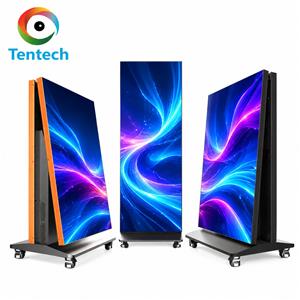
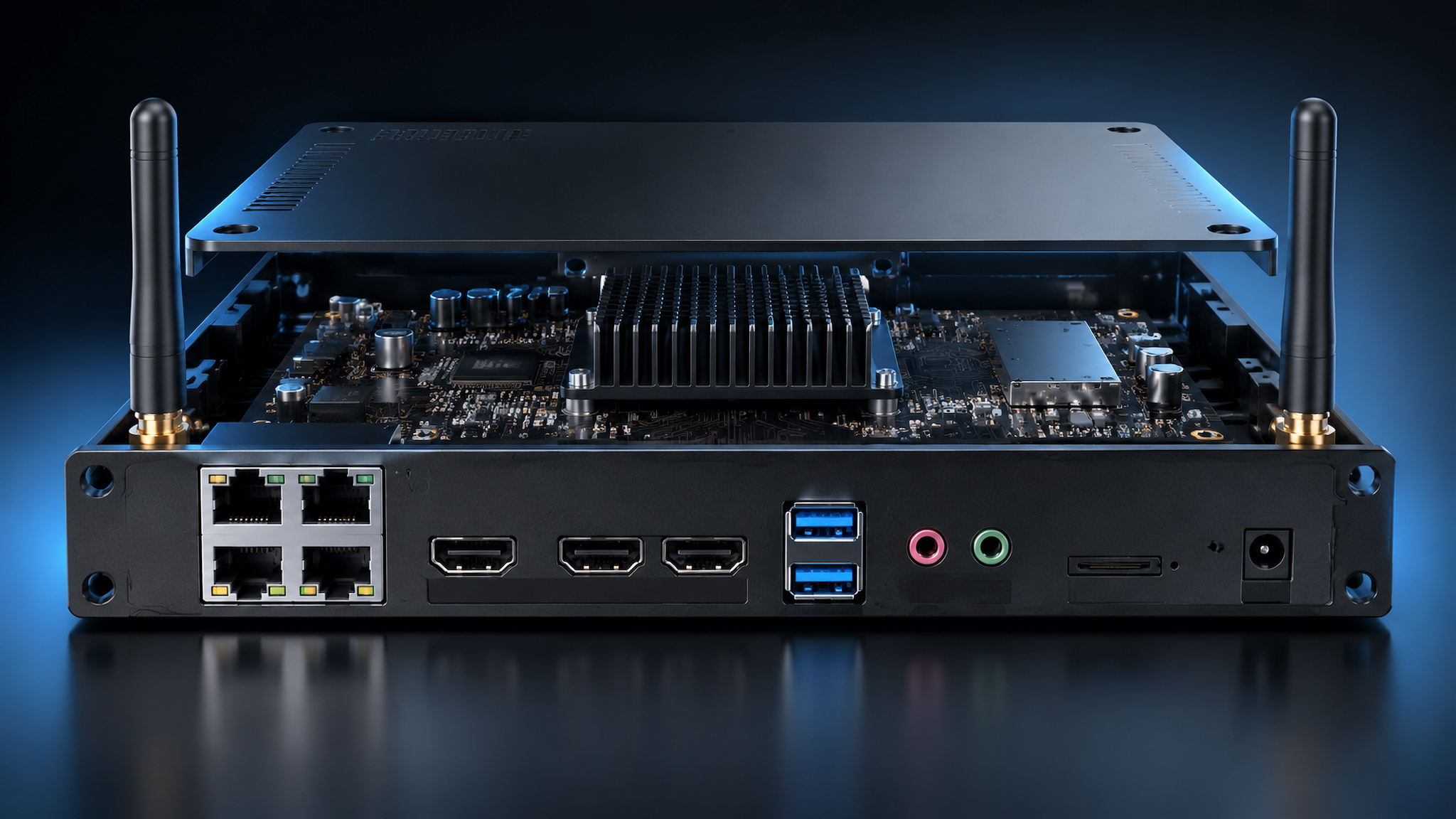
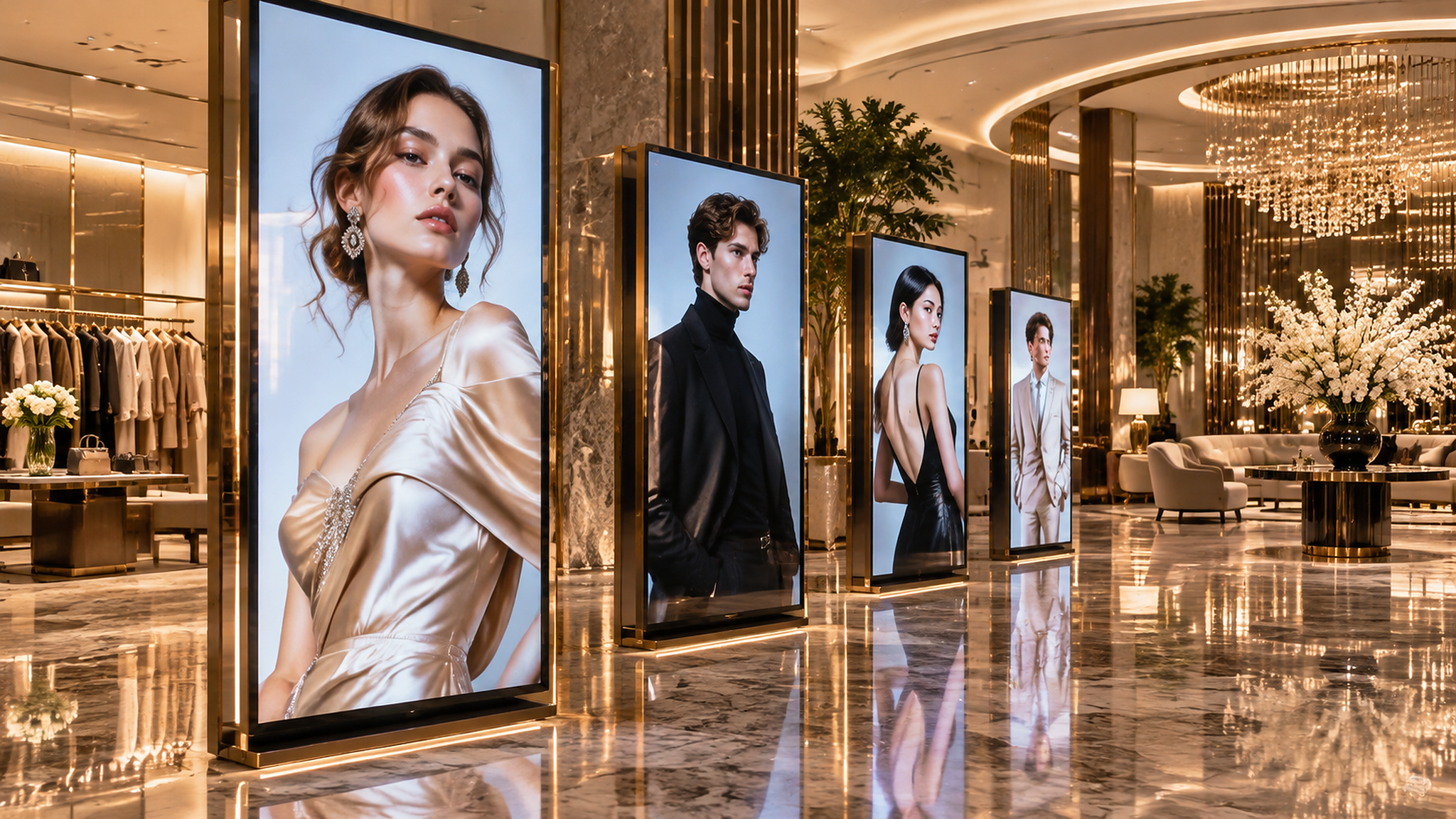
Commercial LED poster displays (often referred to as digital mirror posters, totem displays, or roll-up LED screens) demand compact, integrated controller hardware capable of standalone offline playback, wireless mobile control, and seamless multi-screen daisy-chain splicing. Shenzhen Huidu Technology Co., Ltd. developed the B-series controller line to integrate Android operating systems, FPGA video mapping pipelines, Gigabit Ethernet sending cards, and HDMI synchronization hardware into a single embedded form factor. The lineup consists of three specialized tiers:
• Huidu HD-B6L (Standard Entry Poster Controller): Engineered as an entry-level, highly cost-effective solution for standalone single-poster screens and small 2-to-3 unit HDMI cascaded displays. Features 1.3 million pixel loading capacity and dual Gigabit Ethernet output ports.
2. Huidu HD-B8H vs B6L vs B8L Master Hardware Specification Comparison
The following engineering table outlines the detailed hardware specifications, pixel capacities, interface topologies, and feature sets across the three models.
Technical Specification | Huidu HD-B6L | Huidu HD-B8L | Huidu HD-B8H (Flagship) |
Single-Card Loading Capacity | 1.3 million pixels (e.g. 1280x1024) | 1.3 million pixels (e.g. 1280x1024) | 2.6 million pixels (e.g. 1920x1080 at 60Hz) |
Maximum Canvas Dimensions | Widest 16,384 px, Highest 8,192 px | Widest 65,536 px, Highest 8,192 px | Widest 65,536 px, Highest 8,192 px |
Gigabit Ethernet Output Ports | 2 Gigabit RJ45 Ports | 2 Gigabit RJ45 Ports | 4 Gigabit RJ45 Ports |
HDMI Splicing Cascading Limit | Up to 2.6 million pixels (2 to 6 units) | Up to 8.8 million pixels (up to 14 units) | Up to 8.8 million pixels (up to 14 units) |
Video Hardware Decoding | 1080p Full HD @ 60fps (H.265 and H.264) | 1080p Full HD @ 60fps (H.265 and H.264) | 4K UHD @ 60fps Hardware Decoding |
Processor and Memory System | Quad-core 1.6GHz, 1GB RAM, 8GB eMMC | Quad-core 1.6GHz, 2GB RAM, 16GB eMMC | Quad-core 1.6GHz, 2GB RAM, 16GB eMMC |
HDMI Input and Loop Output | 1x HDMI Input, 1x HDMI Loop Output | 1x HDMI Input, 1x HDMI Loop Output | 1x HDMI Input, 1x HDMI Loop Output |
Operating Playback Modes | Asynchronous Playback and HDMI Input | Asynchronous and HDMI Splicing | Full Synchronous and Asynchronous Dual Mode |
Wireless and Cloud Connectivity | Standard Wi-Fi (AP and Station), Opt 4G | Standard Wi-Fi (AP and Station), Opt 4G | Standard Wi-Fi (AP and Station), Opt 4G |
Audio and Peripheral Ports | 1x 3.5mm Audio Out, 1x USB 2.0, Sensor | 1x 3.5mm Audio Out, 1x USB 3.0, Sensor | 1x 3.5mm Audio Out, 1x USB 3.0, Sensor |
Operating Temperature and Power | -40°C to +80°C, 5V DC Input, <15W | -40°C to +80°C, 5V DC Input, <15W | -40°C to +80°C, 5V DC Input, <18W |
Estimated Price Reference Range | 110 to 160 USD (Reference Range) | 140 to 190 USD (Reference Range) | 210 to 290 USD (Reference Range) |
3. Detailed Hardware Analysis: Capacity, Ports, and Splicing Limits
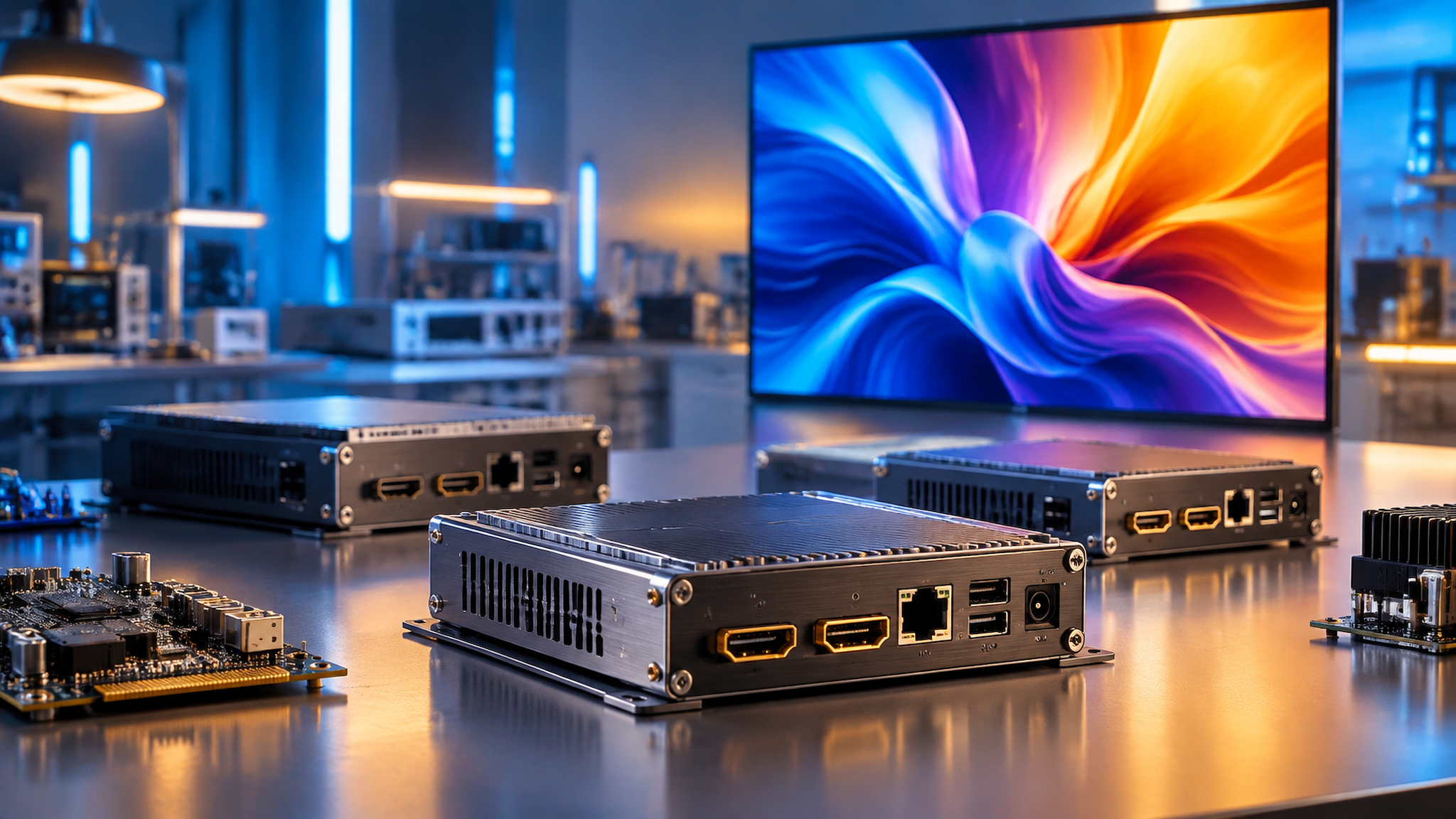
A deeper examination of the three controllers reveals the key architectural distinctions that govern purchasing decisions:
A. Pixel Loading Capacity and Ethernet Ports: The single most critical difference is that HD-B8H provides 2.6 million pixels of direct driving power across 4 Gigabit Ethernet ports (capable of running a native 1920x1080 pixel display on a single card). In contrast, HD-B6L and HD-B8L provide 1.3 million pixels across 2 Gigabit ports, which perfectly matches standard commercial poster resolutions (such as P2.5 256x768 pixels or P1.86 320x960 pixels).
B. HDMI Splicing and Cascading Capacity: All three models feature HDMI input and HDMI loop output connectors for daisy-chain cascading. However, HD-B6L's internal splicing engine is capped at 2.6 million total spliced pixels (accommodating 2 to 3 standard posters or up to 6 lower-resolution screens). HD-B8L and HD-B8H incorporate enhanced FPGA synchronization engines capable of synchronizing up to 8.8 million spliced pixels across 10 to 14 cascaded poster screens.
4. Software Management and Cloud Ecosystem: HDPlayer, LedArt, and XiaoHui Cloud
All Huidu B-series controllers share a unified, highly versatile software ecosystem that simplifies content publishing for single stores and nationwide retail chains alike:
• HDPlayer (Desktop Content Management Software): The flagship Windows PC authoring tool allows AV technicians to configure screen canvas layouts, configure multi-poster HDMI cascade offsets, partition multi-window display areas (video, pictures, scrolling text, real-time clock, weather widgets), and set scheduled playback routines.
• LedArt (Mobile App for On-Site Control): Available on iOS and Android smartphones and tablets. Enables store managers to connect directly to the poster controller over localized Wi-Fi (AP mode), edit text promotions, upload images and short videos directly from mobile camera rolls, adjust brightness, and switch input sources without requiring a PC.

5. Multi-Scenario Selection Matrix: Which Controller Should You Choose?
The following engineering decision matrix maps commercial display deployment scenarios to the optimal Huidu controller model.
Deployment Scenario | Recommended Controller | Pixel Pitch and Resolution | Cascading Setup | Key Selection Rationale |
Standalone Retail Window Poster | Huidu HD-B6L | P2.0 to P3.0 mm (Under 1.3M px) | Single Standalone Screen | Maximum cost efficiency, integrated Wi-Fi, LedArt mobile app control |
Small Multi-Poster Array (2-4 Screens) | Huidu HD-B6L or HD-B8L | P1.86 to P2.5 mm | 2 to 4 Unit HDMI Loop | Cost-effective HDMI loop cascading up to 2.6 million total pixels |
Large Mall Corridor Splicing (6-12 Screens) | Huidu HD-B8L | P1.86 to P2.5 mm | 6 to 14 Unit HDMI Splicing | 8.8M pixel cascading capacity, ultra-wide 65,536 px canvas mapping |
Fine-Pitch 4K High-End Showrooms | Huidu HD-B8H | P1.25 to P1.56 mm (Up to 2.6M px) | Single or Multi-Screen 4K | 2.6M pixel load, 4 Gigabit ports, 4K hardware decoding, dual mode |
Live Corporate Event Stage Totems | Huidu HD-B8H | P1.56 to P2.0 mm | Synchronous Live HDMI | True synchronous HDMI live streaming from laptops, zero latency |
Nationwide Retail Chain Totems | Huidu HD-B6L with 4G | Standard P2.5 mm Poster | Distributed Single Posters | XiaoHui Cloud 4G cluster management, remote scheduled publishing |
6. Frequently Asked Questions (FAQ) and Final Buying Recommendations
Commercial Pricing Disclaimer: Quoted commercial price ranges for Huidu controllers (HD-B6L approx. 110 to 160 USD, HD-B8L approx. 140 to 190 USD, and HD-B8H approx. 210 to 290 USD) represent typical distributor reference estimates and may vary based on 4G cellular module options, regional import duties, order volume, and supplier warranty terms.
Q1: Standalone Single Poster Selection — Question 1: If I only have a single standalone LED poster screen, is HD-B6L sufficient?
Answer: Yes. For a standalone poster screen under 1.3 million pixels (such as a standard P2.5 poster measuring 640 mm by 1920 mm with 256x768 pixels), HD-B6L delivers flawless 1080p playback, Wi-Fi connectivity, and mobile app control at the lowest price point.
Q2: Multi-Poster HDMI Splicing Mechanism — Question 2: How do multiple LED poster screens achieve synchronized HDMI splicing?
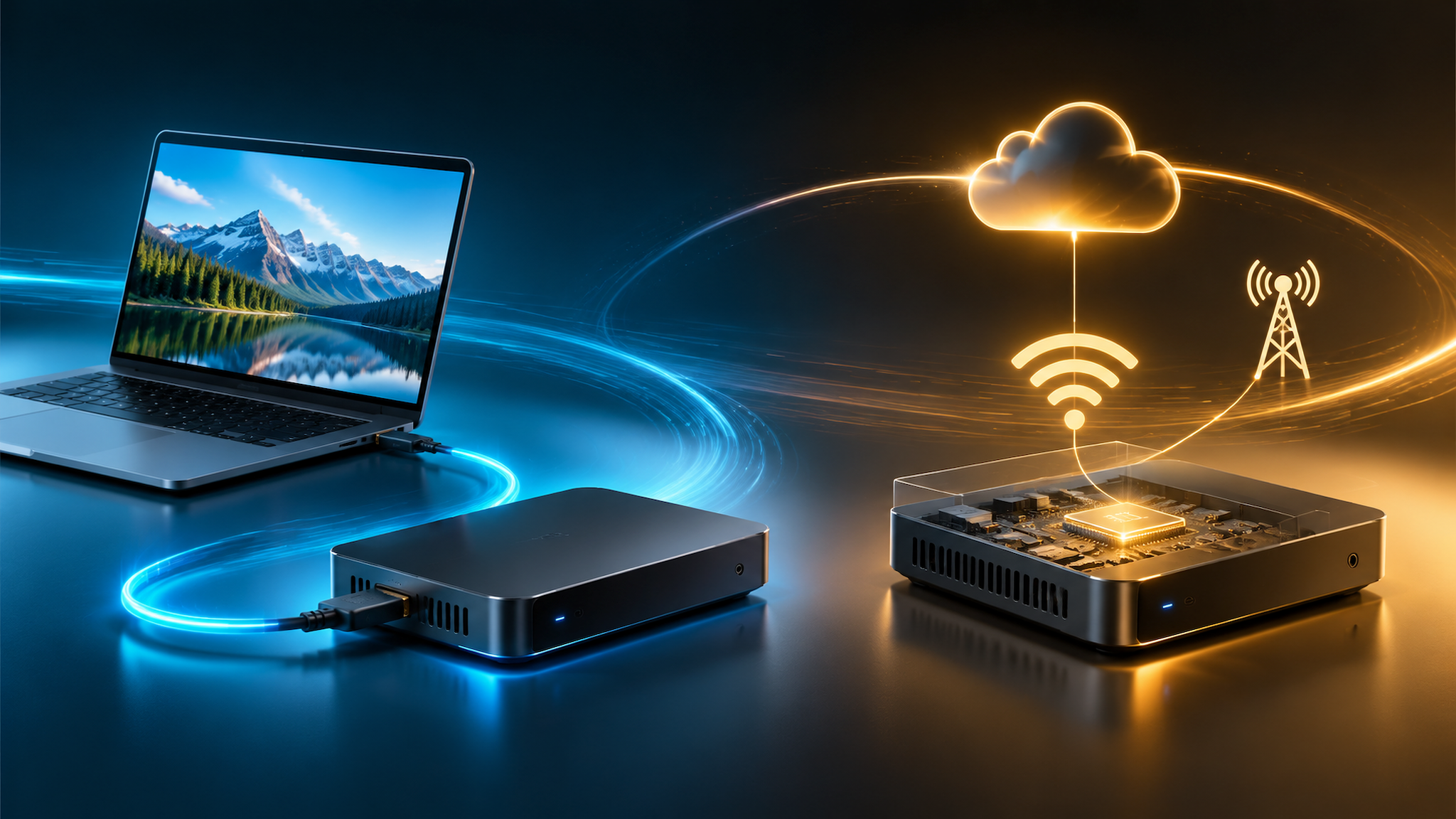
Answer: The primary master controller connects to a media player or video source via HDMI. Subsequent controllers connect via standard HDMI loop-through cables in a daisy chain. In HDPlayer, each controller is assigned its exact pixel offset coordinate, creating a single seamless panoramic canvas across all poster units.
Q3: Choosing HD-B8H vs HD-B8L — Question 3: When should I choose HD-B8H instead of HD-B8L?
Answer: Choose HD-B8H if your screen requires higher resolution than 1.3 million pixels on a single unit (e.g. fine-pitch P1.25 or P1.53 posters reaching native 1080p 1920x1080), requires 4 Gigabit Ethernet output ports to drive dense module hubs, requires 4K video decoding, or demands live synchronous HDMI laptop streaming during events.
Q4: Offline Standalone Operation — Question 4: Can Huidu B-series controllers operate without an internet connection?
Answer: Yes. All three models feature internal eMMC storage (8GB on B6L, 16GB on B8L and B8H) and built-in Wi-Fi hotspots (AP mode). Users can upload programs directly from a mobile phone via LedArt, insert a USB flash drive for automatic plug-and-play loop playback, or connect via a local Ethernet cable.
Final Sourcing Checklist: Verify total screen pixel count against controller loading limits, confirm whether multi-screen HDMI loop cascading is required, determine whether 4G cellular cloud connectivity is needed for remote management, select between 1080p and 4K decoding, and ensure proper 5V DC regulated power distribution inside the poster chassis.