
Mega-Scale LED Screens: World Records and Engineering Insights
Mega-scale architectural, stadium, and urban LED displays represent the absolute pinnacle of modern optoelectronic engineering, structural design, and digital out-of-home (DOOH) advertising. From the colossal spherical envelope of the Las Vegas Sphere to stadium center-hung halo video boards and sprawling urban media canopies, these engineering marvels transform city skylines into high-revenue digital landmarks.
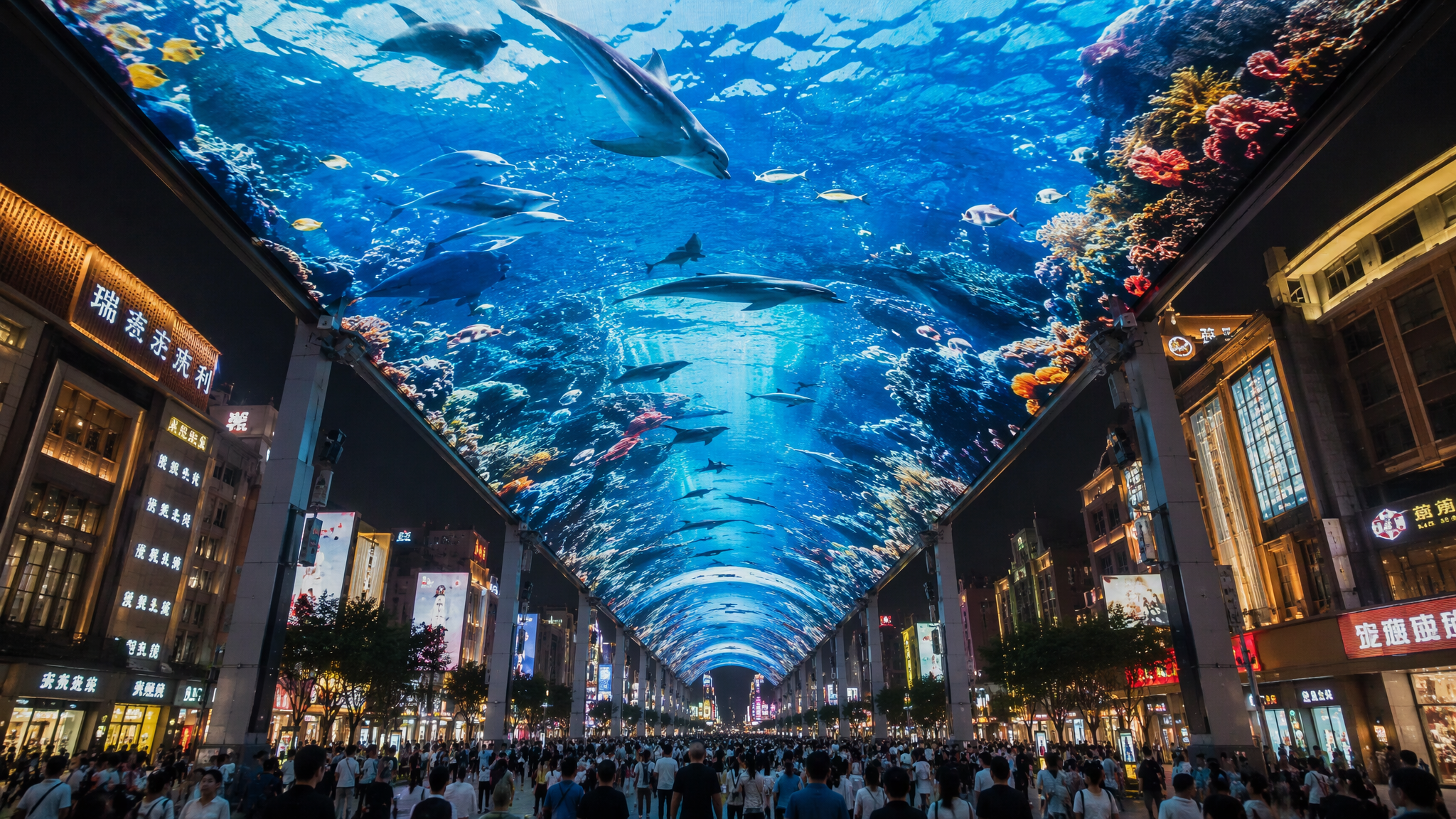
However, scaling an LED display past $1,000text{ square meters}$ introduces severe engineering constraints: megawatt (MW) power distribution, aerodynamic wind-load forces, thermal dissipation, single-bin diode uniformity, and synchronized 16K/32K media processing. Mismatching structural or electrical specifications leads to catastrophic power grid failures, wind shear damage, or visible color patchiness across vast display canvases.
This comprehensive guide breaks down the world's most iconic record-breaking LED screens and delivers a practical engineering buyer's framework for large-scale commercial installations.
```
Mega-Scale LED Display Engineering Challenges
┌────────────────────────────────────────────────────────────────────────┐
│ 1. Structural Wind Load: Perforated Mesh (50%–70% Open) vs. Solid Walls│
├────────────────────────────────────────────────────────────────────────┤
│ 2. Electrical Grid Load: Dedicated 10kV Substations & Megawatt (MW) PDU│
├────────────────────────────────────────────────────────────────────────┤
│ 3. Pixel Matrix Scaling: Ultra-High-Resolution 16K/32K Genlock Servers │
├────────────────────────────────────────────────────────────────────────┤
│ 4. Optical Uniformity: Single-Bin Diode Sorting Across Millions of LEDs│
├────────────────────────────────────────────────────────────────────────┤
│ 5. Total Cost Modeling: Hardware CapEx, Steel Framing, & 10-Year TCO │
└────────────────────────────────────────────────────────────────────────┘
```
---
1. World Record Mega-Screens: Engineering Benchmarks
Landmark Project | Location & Format | Surface Area | Resolution / Diode Architecture | Key Engineering Feat |
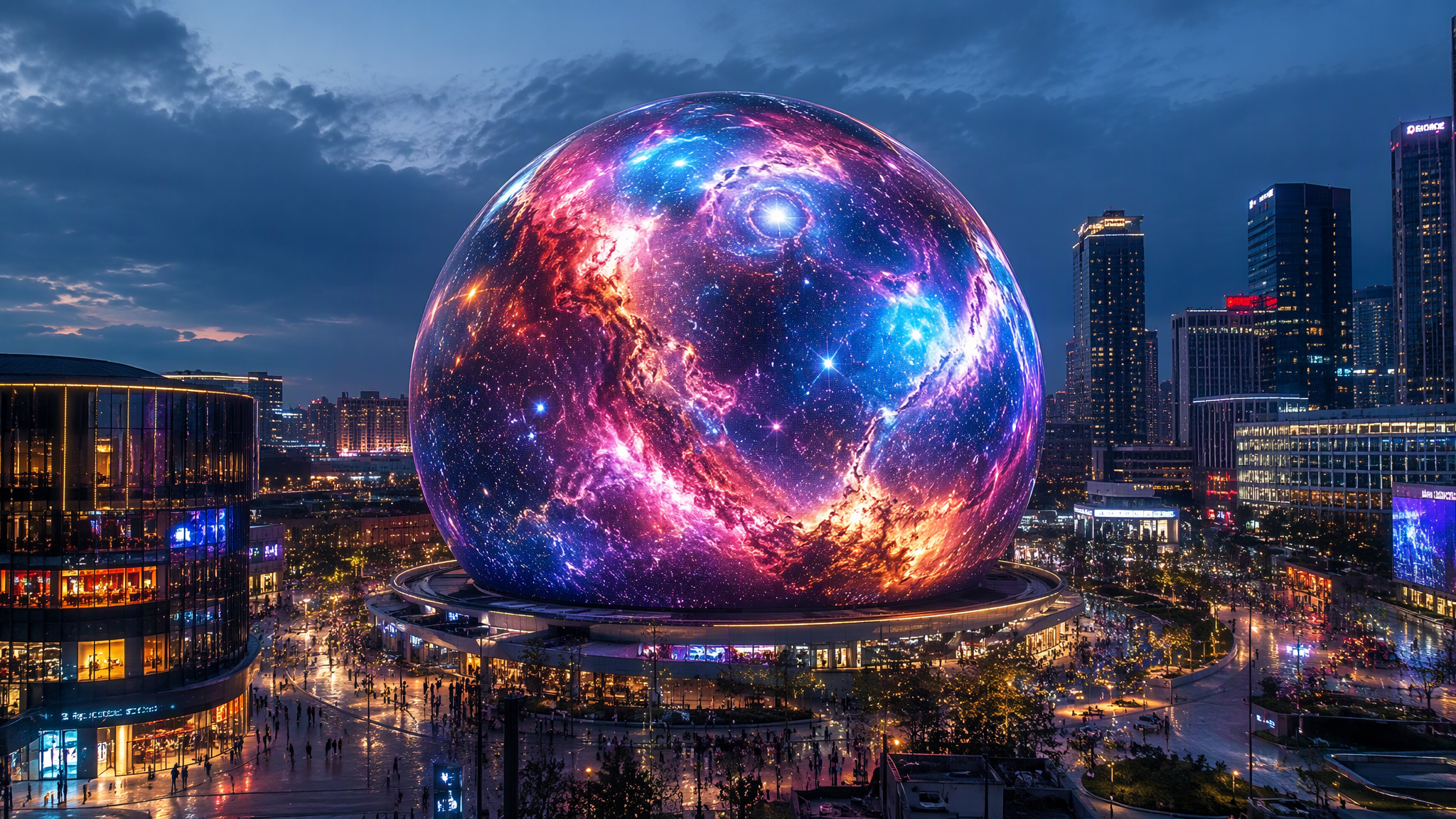
Sphere (Exosphere) | Las Vegas, USA (Exterior Globe) | $54,000text{ m}^2$ ($580,000text{ sq ft}$) | $1.23text{M}$ Custom LED Pucks ($48text{ diodes/puck}$) | World's largest spherical LED structure; fully programmable 360° DOOH |
Sphere (Interior) | Las Vegas, USA (Immersive Bowl) | $15,000text{ m}^2$ ($160,000text{ sq ft}$) | $16text{K}times 16text{K}$ Native Resolution | Wraparound $160^circ$ immersive screen; sub-millimeter acoustic perforation |
Fremont Street Canopy | Las Vegas, USA (Overhead Arch) | $12,000text{ m}^2$ ($130,000text{ sq ft}$) | $49.3text{ Million Pixels } (5,000text{ nits})$ | Suspended pedestrian barrel-vault canopy ($419text{m}$ length, $27text{m}$ height) |
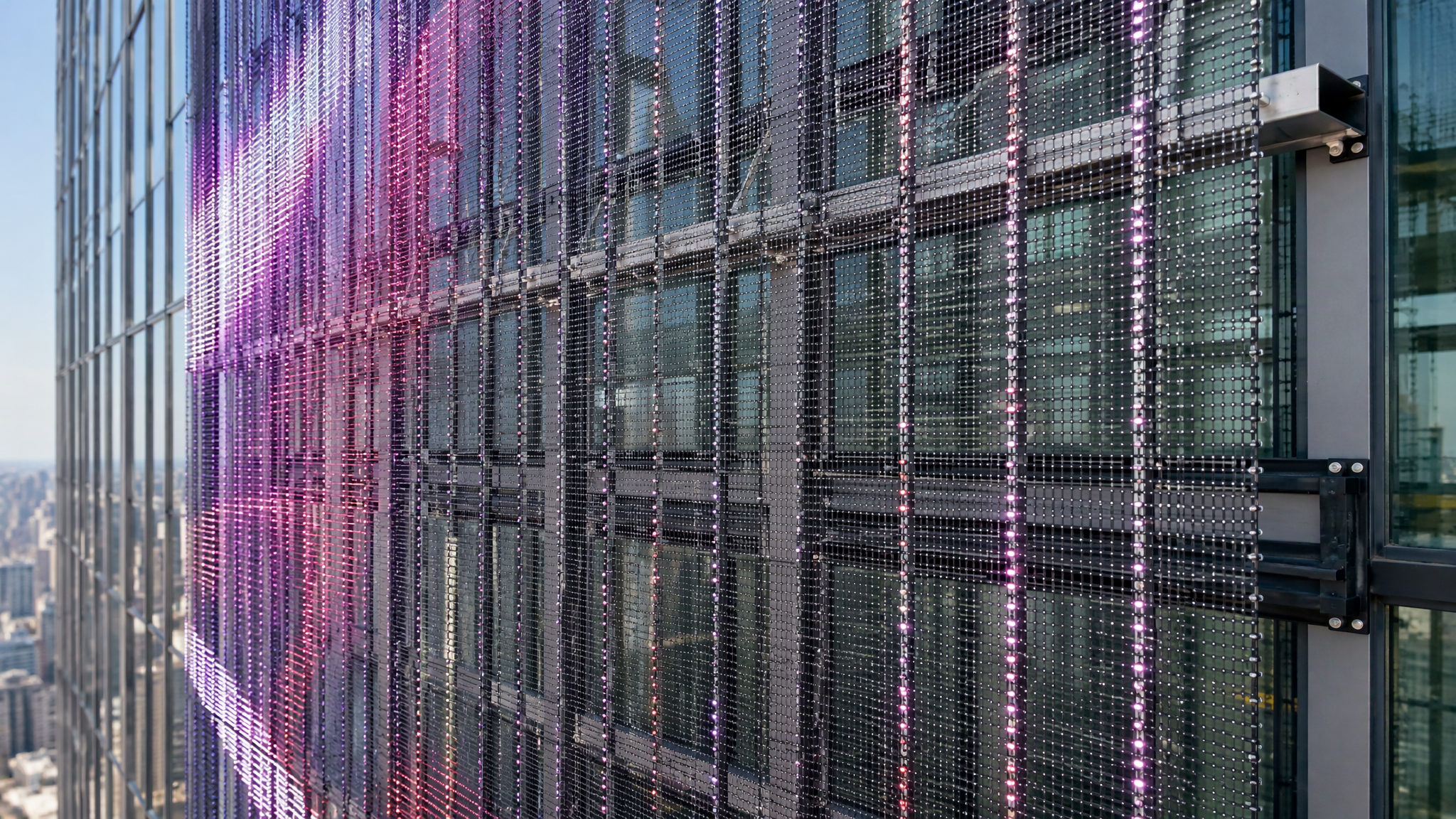
Resorts World Facade | Las Vegas, USA (Building Wall) | $9,300text{ m}^2$ ($100,000text{ sq ft}$) | Outdoor Mesh Curtain / High-Transparency | One of the largest building facade video displays in the world |
The Place Sky Screen | Beijing, China (Canopy) | $7,500text{ m}^2$ ($80,700text{ sq ft}$) | Custom Overhead Architectural Array | $250text{m}times 30text{m}$ suspended commercial ceiling screen |
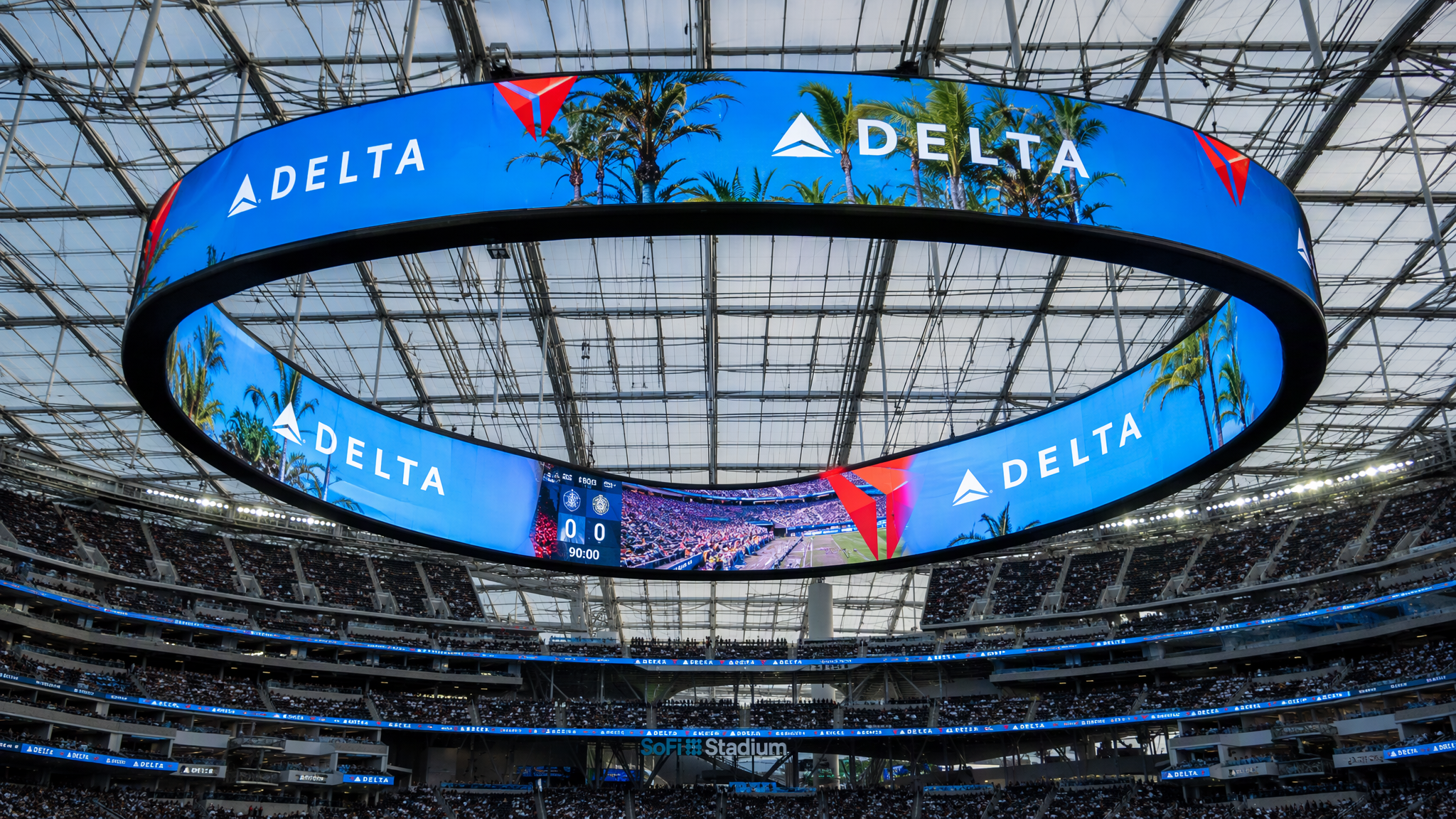
SoFi Stadium Infinity | Los Angeles, USA (Center-Hung) | $6,500text{ m}^2$ ($70,000text{ sq ft}$) | $80text{ Million Pixels}$ (Double-Sided 4K) | $120text{-yard}$ continuous oval halo; $1,000text{-ton}$ total truss load |
---
2. Core Engineering Challenges for Mega-Scale Displays
```
Mega-Screen Technical Pillars
Structural Dynamics ──────> Wind Load Permeability (50%–70% Mesh Transparency)
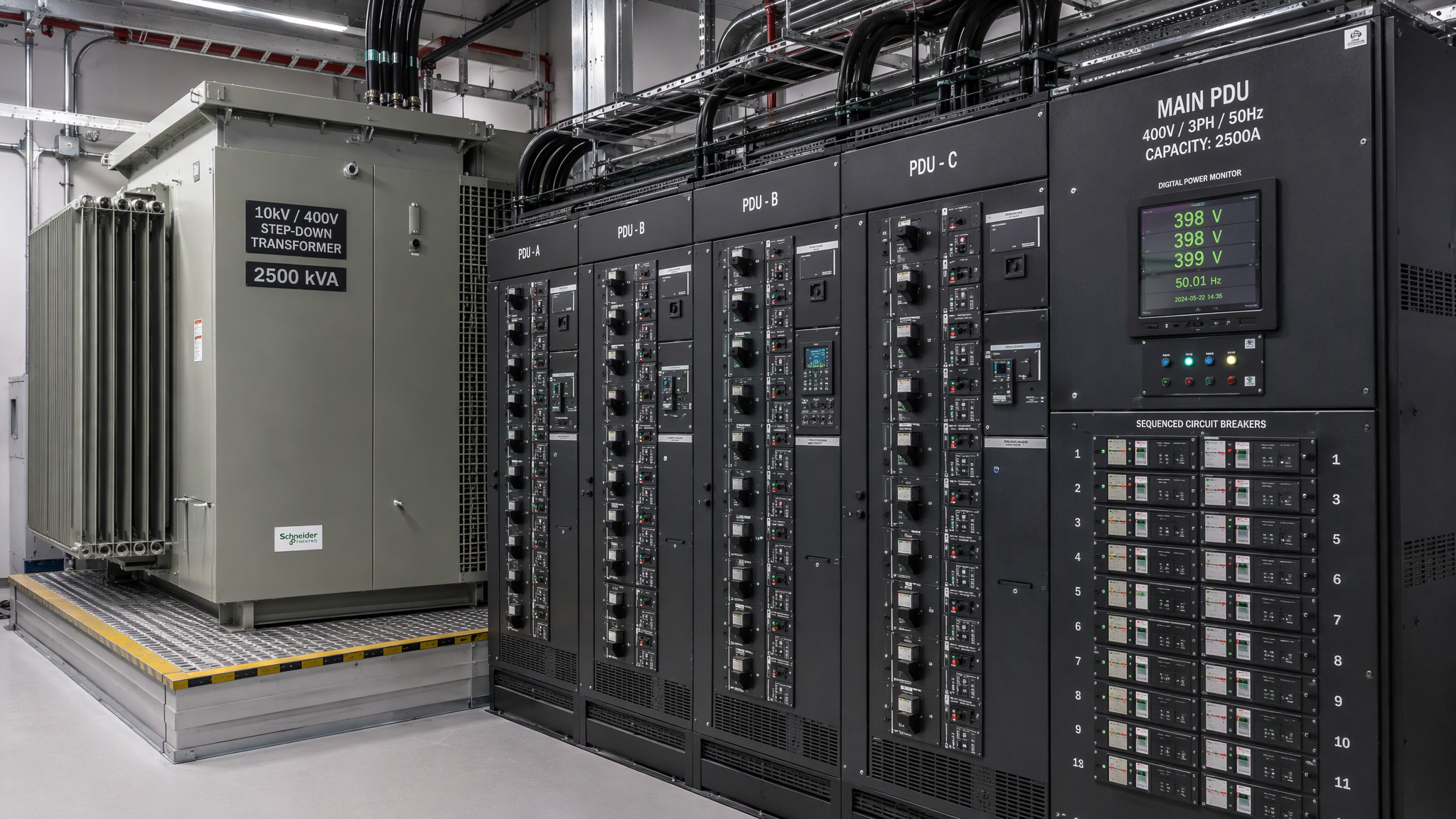
Power Infrastructure ─────> Megawatt Demand (1.5MW – 6.0MW Dedicated Transformers)
Content Architecture ─────> Synchronized 16K Multi-Server Media Playback (Disguise/7thSense)
```
1. Aerodynamic Wind-Load Mitigation:
· Solid LED cabinets act as massive aerodynamic sails. For building facades exceeding $2,000text{ m}^2$, engineers specify transparent LED mesh or strip curtains with $50%text{ to }70%$ wind permeability, slashing wind drag forces and structural steel tonnage by over 40%.
2. Megawatt Electrical Infrastructure:
· A $5,000text{ m}^2$ outdoor display operating at peak brightness draws $1.5text{ to }3.5text{ Megawatts}$ of electrical power.
· Installations require dedicated step-down transformer substations (10kV/380V), multi-stage sequenced power distribution units (PDUs) to prevent inrush breaker tripping, and Common Cathode energy-saving circuitry.
3. Synchronized 16K/32K Media Pipeline:
· Ultra-large canvases exceed standard 4K/8K controller limits. Systems utilize cluster-based media servers (e.g., Disguise vx4+ or 7thSense) with hardware Genlock frame-locking to drive hundreds of synchronized NovaStar controllers with zero frame tearing across module boundaries.
---
3. Commercial Buyer's Sourcing Guide: Cost & Feasibility Matrix
Large-Scale Category | Typical Scale Range | Recommended Pitch | 2026 Turnkey Cost ($text{per m}^2$) | Key Engineering Consideration |
Architectural Mesh Facade | $1,000 - 10,000text{ m}^2$ | P15.6 - P31.25 mm | $$800 - $1,600 /text{m}^2$ | Wind permeability, building glass transparency, lightweight rigging |
Stadium Center-Hung Halo | $1,000 - 7,000text{ m}^2$ | P3.91 - P8.0 mm | $$1,500 - $3,200 /text{m}^2$ | Double-sided viewing, roof truss weight load limits, 4K broadcast refresh |
Mega Urban DOOH Billboard | $500 - 3,000text{ m}^2$ | P6.0 - P10.0 mm | $$1,200 - $2,400 /text{m}^2$ | $8,000+text{ nits}$ daylight punch, $45^circ$ 3D corner miter, IP66 sealing |
Immersive Canopy / Ceiling | $1,500 - 12,000text{ m}^2$ | P8.0 - P16.0 mm | $$1,100 - $2,200 /text{m}^2$ | Overhead seismic rigging, lightweight panels, wide viewing angle |
---
4. Five Strategic Rules for Mega-Screen Procurement
4. Mandate Wind Tunnel Aerodynamic Simulation. For outdoor screens exceeding $1,000text{ m}^2$, require computational fluid dynamics (CFD) and wind tunnel engineering reports before fabricating structural steel foundations.
5. Specify Common Cathode Architecture to Cap OpEx. Over a 10-year lifespan on a megawatt-scale screen, Common Cathode power reduces electricity draw by $25%text{ to }40%$, saving hundreds of thousands of dollars in annual utility bills.
6. Enforce Single-Wafer Diode Binning ($Delta lambda le pm 1.0text{ nm}$). Procure the entire diode volume from a single manufacturing run with 5% matching spare modules to prevent color patchwork across thousands of square meters.
7. Require Sequenced Multi-Stage PDU Power-On. Prevent municipal grid brownouts by programming power distribution racks to power up cabinet blocks in 500ms staggered stages.
8. Contract for Redundant Fiber Optic Ring Topology. Route dual redundant 10Gbps fiber optic trunks through opposite sides of the building structure to ensure zero signal loss if one trunk is severed.
---
Frequently Asked Questions
What is the largest LED display in the world?
The exterior Exosphere at Sphere in Las Vegas holds the world record, spanning $54,000text{ square meters } (580,000text{ sq ft})$ and wrapped in 1.23 million programmable LED pucks.
How much electricity does a mega LED screen consume?
A $2,000text{ m}^2$ outdoor screen averages $300text{ to }600text{ kW}$ during normal commercial video playback, with peak demand reaching $1.0text{ to }1.5text{ MW}$ during maximum daytime brightness.
How are ultra-large resolutions (16K/32K) processed?
Systems use high-performance media server clusters running frame-synchronized GPU outputs, distributing uncompressed video slices across dozens of 4K LED sending controllers via synchronized Genlock clocks.
Why is transparent mesh preferred for building facades?
Transparent mesh ($50%–70%$ open area) allows wind to pass through, reducing structural steel requirements by up to 50% while preserving natural sunlight into interior offices.
---
Final Thoughts
Building a world-class mega LED display requires an integrated engineering balance: aerodynamic structural design, megawatt electrical planning, and synchronized multi-server video processing. Specifying high-grade Common Cathode hardware, single-bin diodes, and certified steel foundations ensures maximum visual impact and long-term commercial return.


