NovaStar HDR Master 4K vs. MCTRL4K: Key Differences
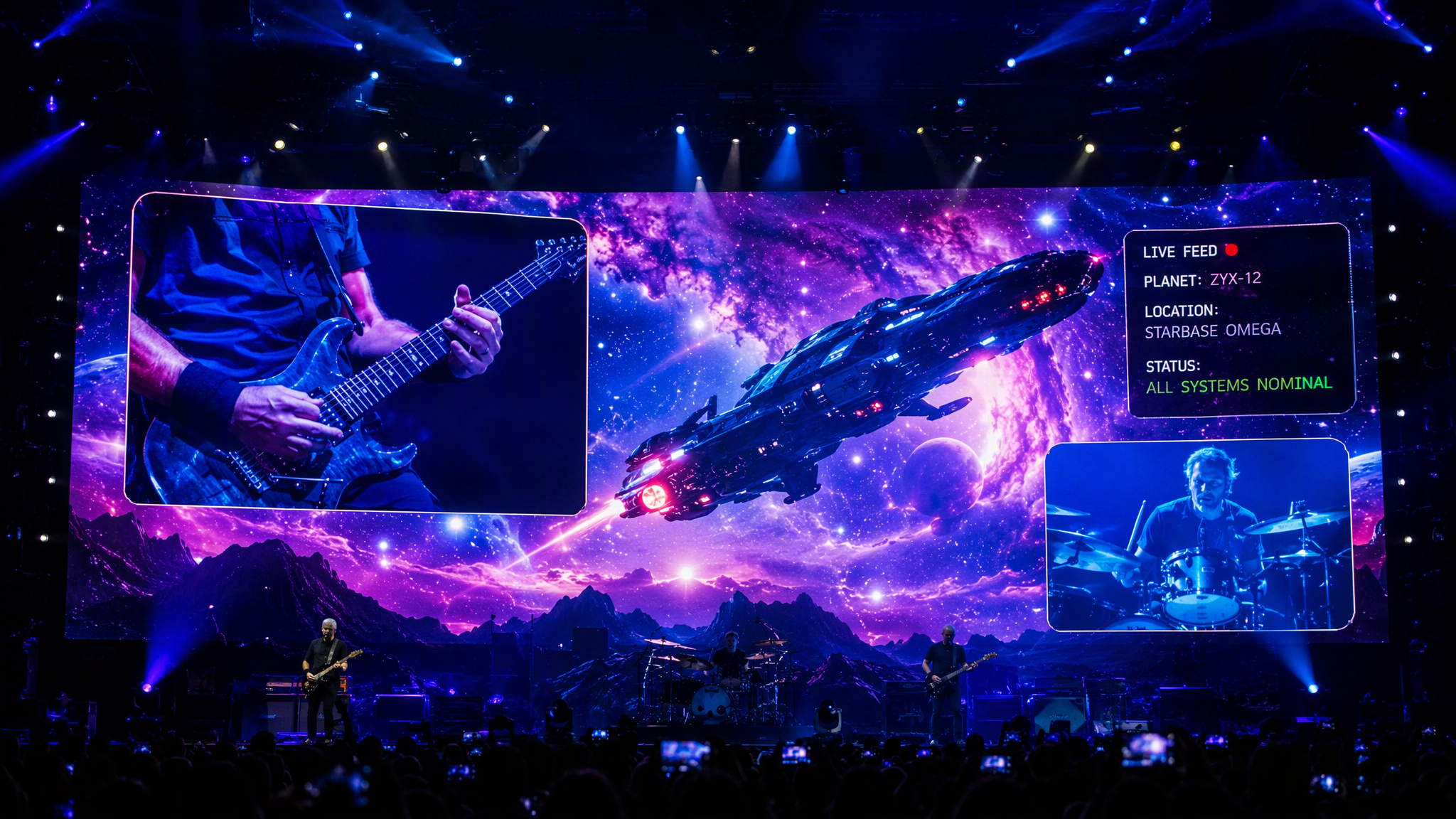
In modern high-end LED display engineering, distinguishing between a video processor and an LED sending controller is essential for designing reliable broadcast studios, virtual production stages, and touring concert systems. Two prominent NovaStar flagship devices, the NovaStar HDR Master 4K and the NovaStar MCTRL4K, frequently appear in professional technical specifications. While both devices occupy 2U or 1U rack enclosures and process 4K video signals at 60 Hz, they perform entirely different roles within the AV signal chain.
This technical comparison provides a definitive breakdown of hardware architectures, core functional differences, real-world deployment workflows, 2026 pricing benchmarks, and selection guidance to determine whether you need a dedicated video processor, an independent sending controller, or both.
`
Professional 4K Video Processing and Control Topology
[1] Video Source: Media Server or 4K Broadcast Camera (SDR 8-bit or HDR 10-bit)
│
▼ (HDMI 2.0, DP 1.2, or 12G-SDI)
[2] Video Processor: NovaStar HDR Master 4K (SDR-to-HDR, BT.2020 Color, Tone Mapping)
│
▼ (Enhanced 4K 10-bit Video Stream)
[3] Sending Controller: NovaStar MCTRL4K (Canvas Slicing and Pixel Packet Sending)
│
▼ (16x Neutrik Gigabit RJ45 Ethernet Lines or Optical Trunk)
[4] LED Display Wall: Direct Cabinet Receiving Cards (A8s, A10s Pro, or Armor Series)
`
---
1. Core Technical Differences: Processor vs. Controller
Evaluation Metric NovaStar HDR Master 4K (Video Processor) NovaStar MCTRL4K (LED Controller)
Primary Device Role Dedicated Video Processor and HDR Generator Independent LED Sending Controller
Core Functionality SDR to HDR conversion, color gamut expansion, tone mapping Canvas mapping, cabinet slicing, Ethernet data packet distribution
Direct LED Wall Drive No (Requires an external sending controller) Yes (Directly drives LED cabinet receiving cards)
Video Input Interfaces 1x 12G-SDI, 1x HDMI 2.0, 1x DP 1.2 1x DP 1.2, 1x HDMI 2.0, 2x Dual-Link DVI
Video Output Interfaces 12G-SDI, HDMI 2.0, DP 1.2 (Processed video out and loop) 16x Neutrik Gigabit RJ45 Ports and 4x Optical Ports
Max Loading Capacity Not applicable (Processes video stream bandwidth) 8.8 Million Pixels (4096x2160 or 3840x2160 at 60Hz)
Color and HDR Engine Real-time SDR to HDR10, HLG, BT.2020 color management Supports 8-bit, 10-bit, 12-bit input pass-through and HDR10
Broadcast Genlock BNC Genlock input and loop for camera synchronization BNC Genlock input and loop for frame-accurate sync
Control Software NovaStar HDR Master control software and front panel NovaLCT and SmartLCT screen configuration software
Form Factor 1U rack-mount chassis 2U rack-mount chassis
2026 Price Benchmark 4,000 USD to 4,800 USD per unit 3,200 USD to 4,500 USD per unit
---
2. NovaStar HDR Master 4K: What It Does
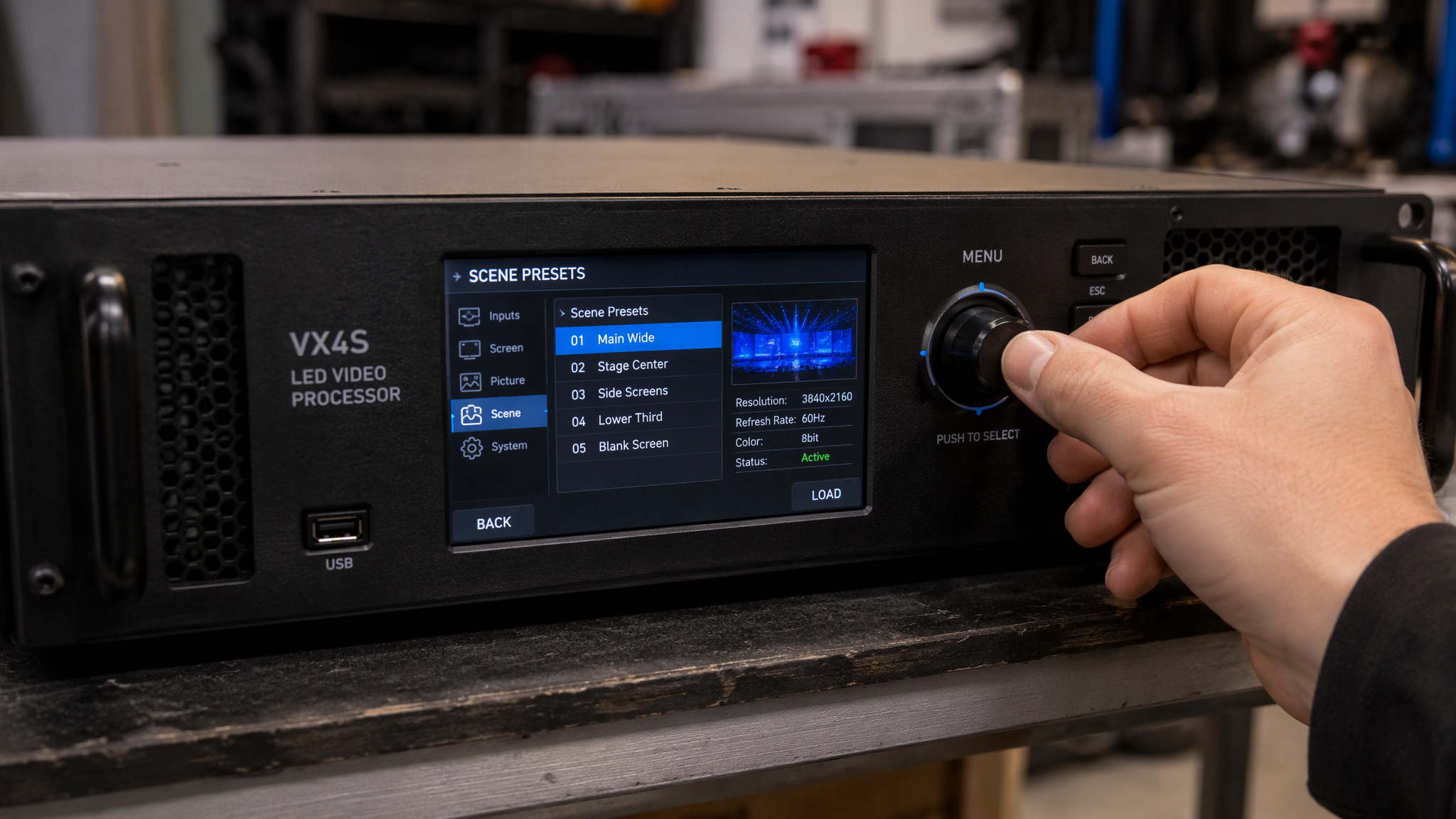
The NovaStar HDR Master 4K is an advanced video processing engine engineered to elevate standard dynamic range content to true high dynamic range visual fidelity. It does not output RJ45 network signals to LED cabinets; instead, it receives raw video feeds, enhances dynamic range, expands color saturation, and outputs pristine HDR video streams to an downstream controller.
Key Capabilities:
• Real-Time SDR to HDR Conversion: Analyzes standard 8-bit SDR content frame-by-frame and applies dynamic tone mapping to expand luminance and shadow details into HDR10 and HLG standards.
• Wide Color Gamut Transformation: Converts standard Rec.709 color space into DCI-P3 and ultra-wide BT.2020 gamuts without color distortion or oversaturation artifacts.
• Super-Resolution Image Sharpening: Enhances edge clarity, textures, and fine visual details on large LED canvases.
• Hardware Loop and Multi-Output: Provides seamless video pass-through to feed multiple downstream controllers simultaneously.
---
3. NovaStar MCTRL4K: What It Does
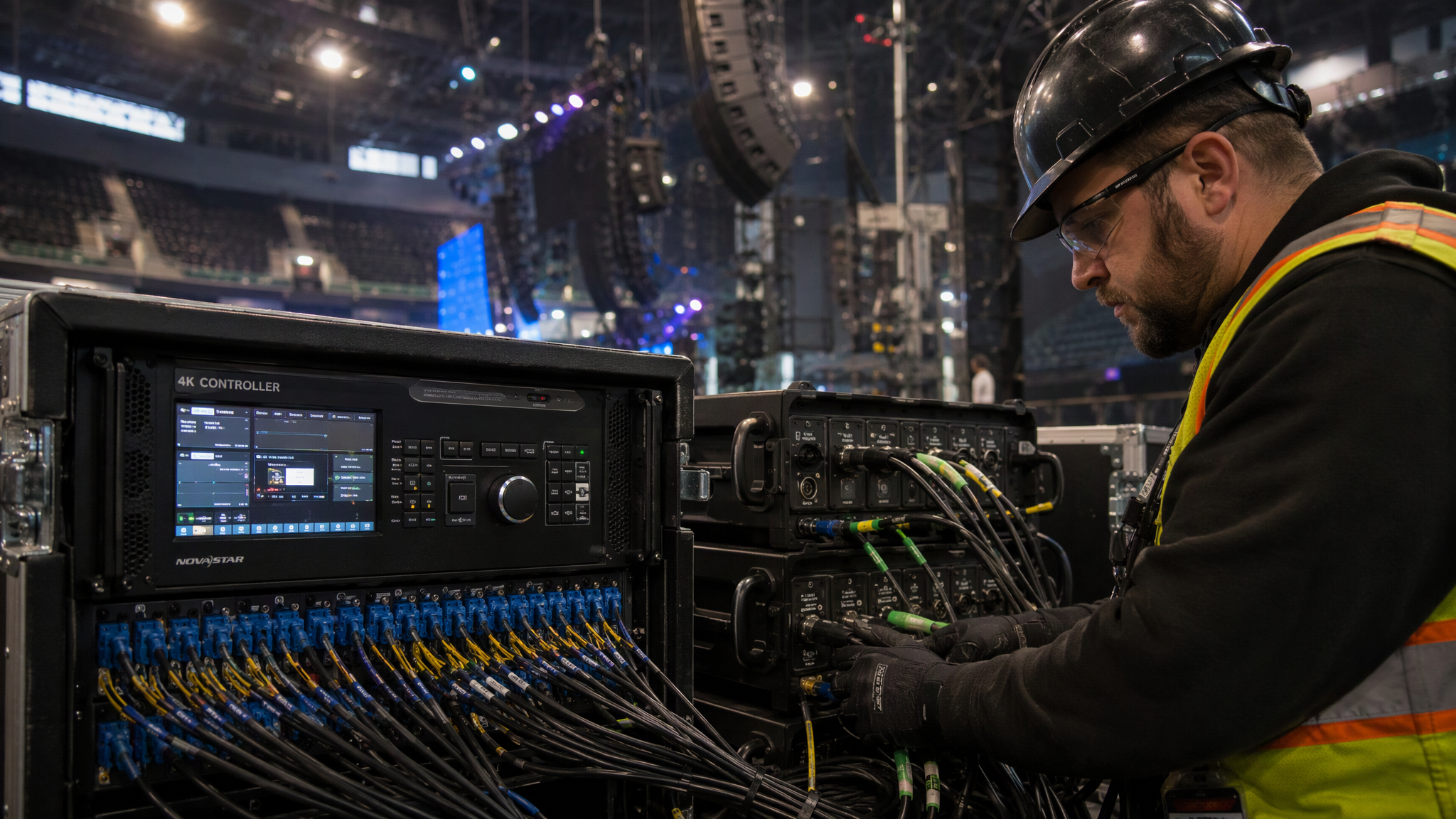
The NovaStar MCTRL4K is an independent synchronous LED sending master box. Its sole mission is to take an incoming 4K video signal, slice the pixel canvas according to the physical LED wall layout, and distribute synchronized high-speed data packets to receiving cards across 16 Gigabit Ethernet ports.
Key Capabilities:
• Massive 8.8 Million Pixel Loading: Drives complete 4K native screens ( imes 2160$ at 60 Hz) from a single 2U master chassis.
• 16-Port High-Density Distribution: Eliminates the need for multiple daisy-chained sending cards, saving rack space and reducing cabling complexity.
• Integrated Optical Fiber Outputs: Four 10G optical ports enable transmission over distances exceeding 300 meters using fiber breakout boxes.
• Full NovaLCT Configuration: Coordinates receiving card firmware, cabinet layout topology, and point-by-point calibration.
---
4. End-to-End Workflow: Using Both Devices Together
`
Staging Workflow Steps
Input Setup ───> HDR Enhancement ───> 4K Video Hand-off ───> NovaLCT Screen Mapping
`
1. Video Signal Ingestion:
• Connect the main media server or broadcast camera output to the HDMI 2.0 or 12G-SDI input on the HDR Master 4K.
2. Dynamic Range and Color Enhancement:
• On the HDR Master 4K, enable SDR to HDR10 mode, select the target color space (such as DCI-P3 or BT.2020), and fine-tune peak white luminance and dark shadow tone curves.
3. High-Bitrate Video Hand-off:
• Connect the HDMI 2.0 output or DP 1.2 output of the HDR Master 4K directly into the corresponding HDMI 2.0 input of the MCTRL4K.
4. NovaLCT Canvas Slicing and Transmission:
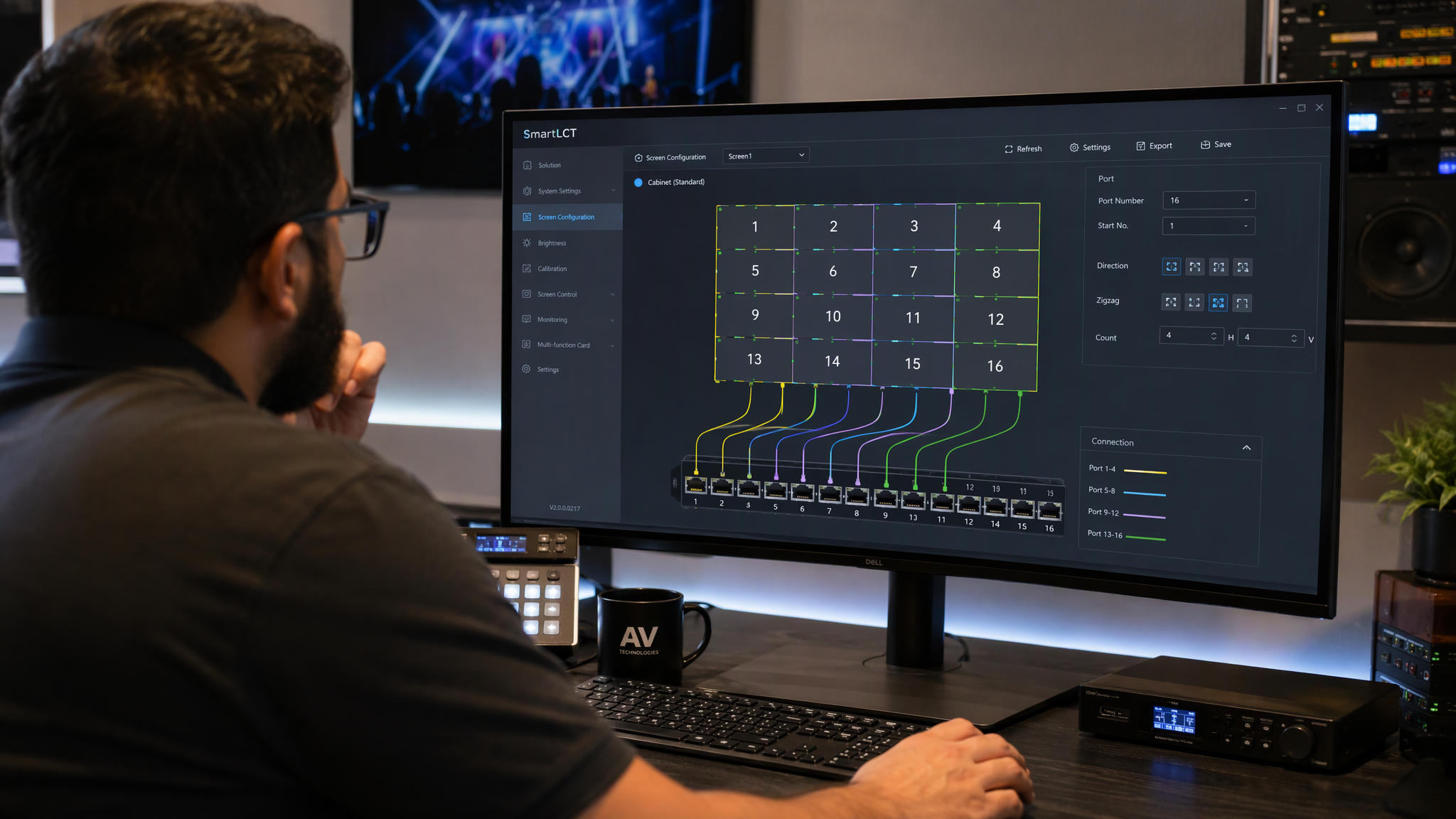
• On the MCTRL4K, open NovaLCT on a control PC. Configure the 16 Gigabit Ethernet port routing topology across all LED cabinets.
• Enable 10-bit HDR Mode in NovaLCT to ensure zero compression of the enhanced HDR signal down to the receiving cards.
---
5. Engineering Buyer Guide: Which One Do You Need?
Project Scenario Recommended Device Selection Technical Justification
Standard 4K LED Screen (Fixed or Rental) NovaStar MCTRL4K Only The MCTRL4K accepts standard 4K feeds directly and sends data to 16 Ethernet ports without extra video processing costs.
Broadcast Studio with High-Contrast Needs Both HDR Master 4K and MCTRL4K The HDR Master 4K converts 8-bit camera and SDR feeds to HDR10, which the MCTRL4K distributes across the LED wall with zero banding.
XR Virtual Production Soundstage HDR Master 4K with MCTRL4K (or COEX MX40 Pro) Film cameras require high dynamic range shadow gradients and BT.2020 color matching to blend physical actors with virtual backgrounds.
Existing LED Wall with Faded Color Add NovaStar HDR Master 4K Installing the processor in front of existing sending cards dramatically improves contrast, color vibrancy, and perceived sharpness.
---
Frequently Asked Questions
Can the NovaStar HDR Master 4K replace the MCTRL4K?
No. The HDR Master 4K is purely a video enhancement processor with HDMI, DP, and SDI outputs. It lacks the RJ45 Ethernet sending ports required to drive LED receiving cards, so an MCTRL4K or equivalent sending box is mandatory.
Can the MCTRL4K process HDR content without the HDR Master 4K?
Yes, but only if the video source is already formatted in native HDR10. The MCTRL4K cannot convert standard SDR video into HDR; it only passes through native HDR signals to compatible receiving cards.
Do both devices support broadcast Genlock frame synchronization?
Yes. Both the HDR Master 4K and MCTRL4K feature dedicated BNC Genlock input and loop connectors, ensuring zero frame tearing or shutter line artifacts during live multi-camera broadcasts.
---
Final Thoughts
Understanding the distinction between the NovaStar HDR Master 4K (the image quality enhancer) and the NovaStar MCTRL4K (the screen data distributor) enables AV professionals to design robust, cost-effective LED display architectures. When maximum visual fidelity, wide color gamuts, and true HDR dynamic range are required on large 4K canvases, pairing these two flagship units delivers an unbeatable broadcast-grade visual experience.


