Understanding LED Resolution: Pitch, Clarity and Viewing Range
Executive Summary: Pixel pitch represents the single most fundamental engineering specification in direct-view LED display design, defining the physical center-to-center distance in millimeters between adjacent LED pixel clusters. Pixel pitch directly dictates four critical project parameters: pixel density (dots per square meter), minimum and optimal viewing distance thresholds, visual resolution acuity, and capital equipment expenditure. Halving the pixel pitch quadruples the total pixel count across an identical physical area, increasing manufacturing cost by 250 to 400 percent. Selecting the correct pixel pitch requires balancing viewer proximity, native source resolution (1080p Full HD vs 4K UHD), packaging architecture (Surface Mounted Device SMD vs Chip on Board COB vs Glue on Board GOB), and environmental ambient brightness. This comprehensive engineering guide details the mathematical optical formulas, presents an exhaustive master viewing distance chart covering P0.7 to P16.0, evaluates multi-scenario application frameworks, and outlines procurement budgeting optimization. |
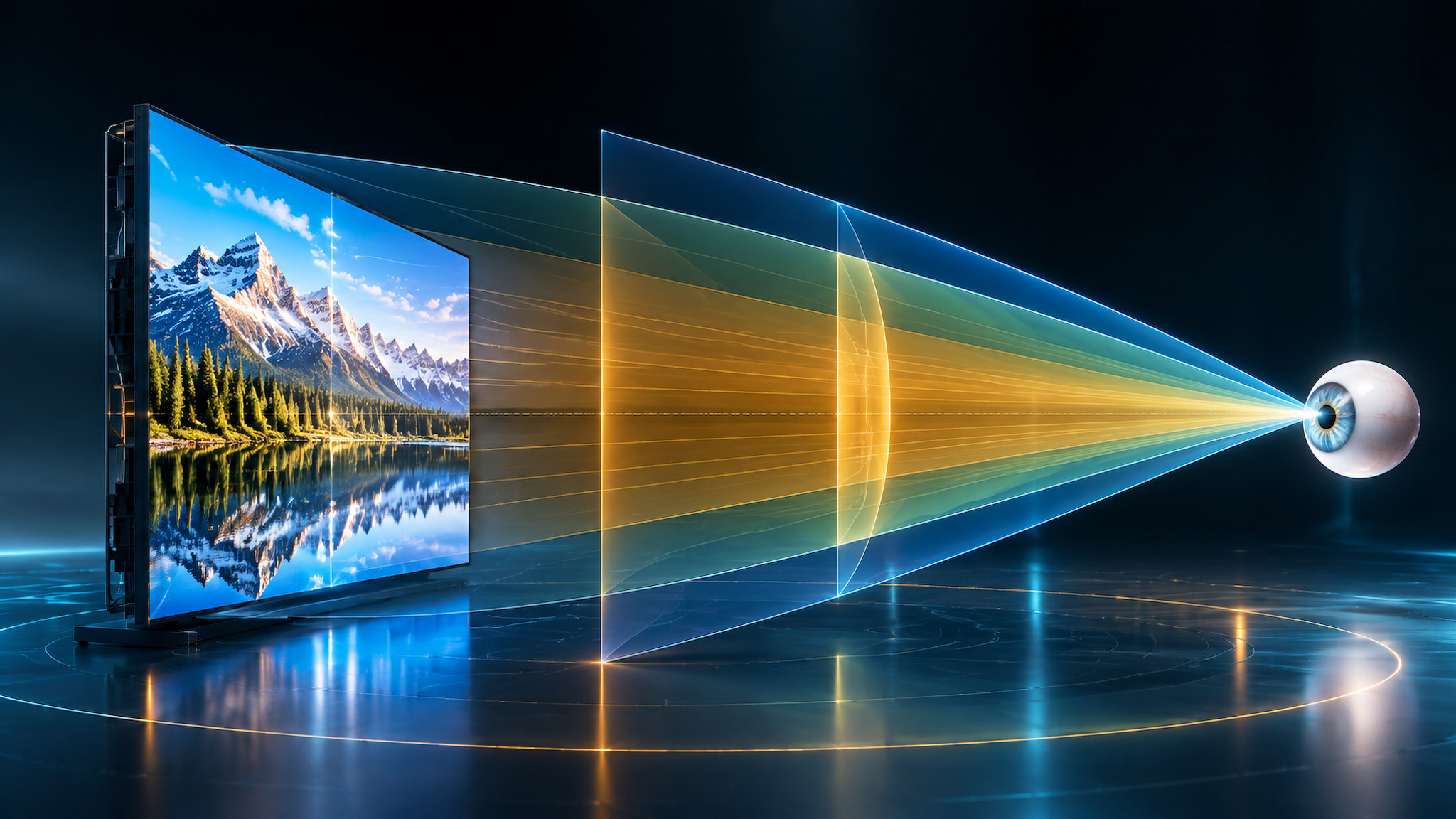
1. Optical Definition and Core Principles of Pixel Pitch
In direct-view LED display engineering, pixel pitch (designated as P-value, such as P1.25 or P3.91) defines the physical distance in millimeters from the exact optical center of one RGB pixel to the optical center of its adjacent neighbor. A smaller pixel pitch packs diodes closer together, creating higher pixel density and enabling sharper imagery at close range.
Four core technical relationships govern pixel pitch selection:
• Pixel Density Formula: Calculated as 1,000,000 divided by the square of the pixel pitch in millimeters. For example, P1.25 provides 640,000 pixels per square meter, while P2.5 provides 160,000 pixels per square meter and P10 provides 10,000 pixels per square meter.
• Visual Acuity and Pixel Blending: Human eye resolution limits mean that beyond a specific distance, the human visual cortex cannot distinguish individual pixels, blending them into a continuous seamless image.
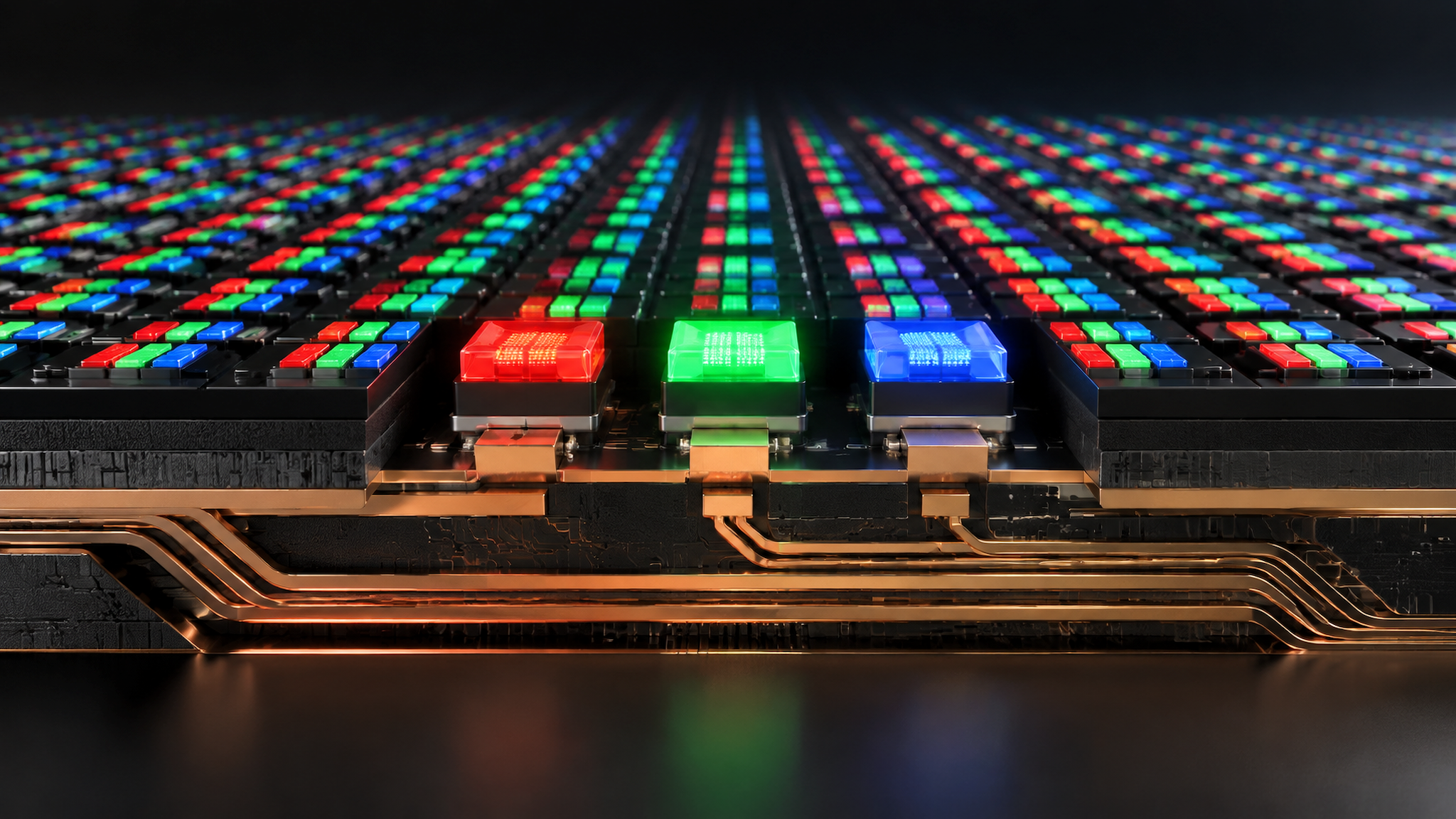
2. Mathematical Optical Formulas for Viewing Distance
Selecting the ideal pixel pitch relies on four established optical formulas:
Formula 1: Minimum Viewing Distance (Pixel Discernibility Threshold) — The closest distance at which human eyes begin to perceive a coherent image without individual pixel graininess. Calculated as Minimum Distance in meters equals Pixel Pitch in millimeters multiplied by 1.0 (or Pixel Pitch in millimeters multiplied by 3.28 in feet). For example, a P2.5 screen has a minimum viewing distance of 2.5 meters (8.2 feet).
Formula 2: Optimal and Comfortable Viewing Distance — The standard recommended viewing range where images appear completely smooth and comfortable for extended viewing. Calculated as Optimal Distance in meters equals Pixel Pitch in millimeters multiplied by 2.0 to 3.0 meters (or Pixel Pitch in millimeters multiplied by 6.5 to 10.0 in feet). For example, a P2.5 screen provides optimal viewing between 5.0 and 7.5 meters.
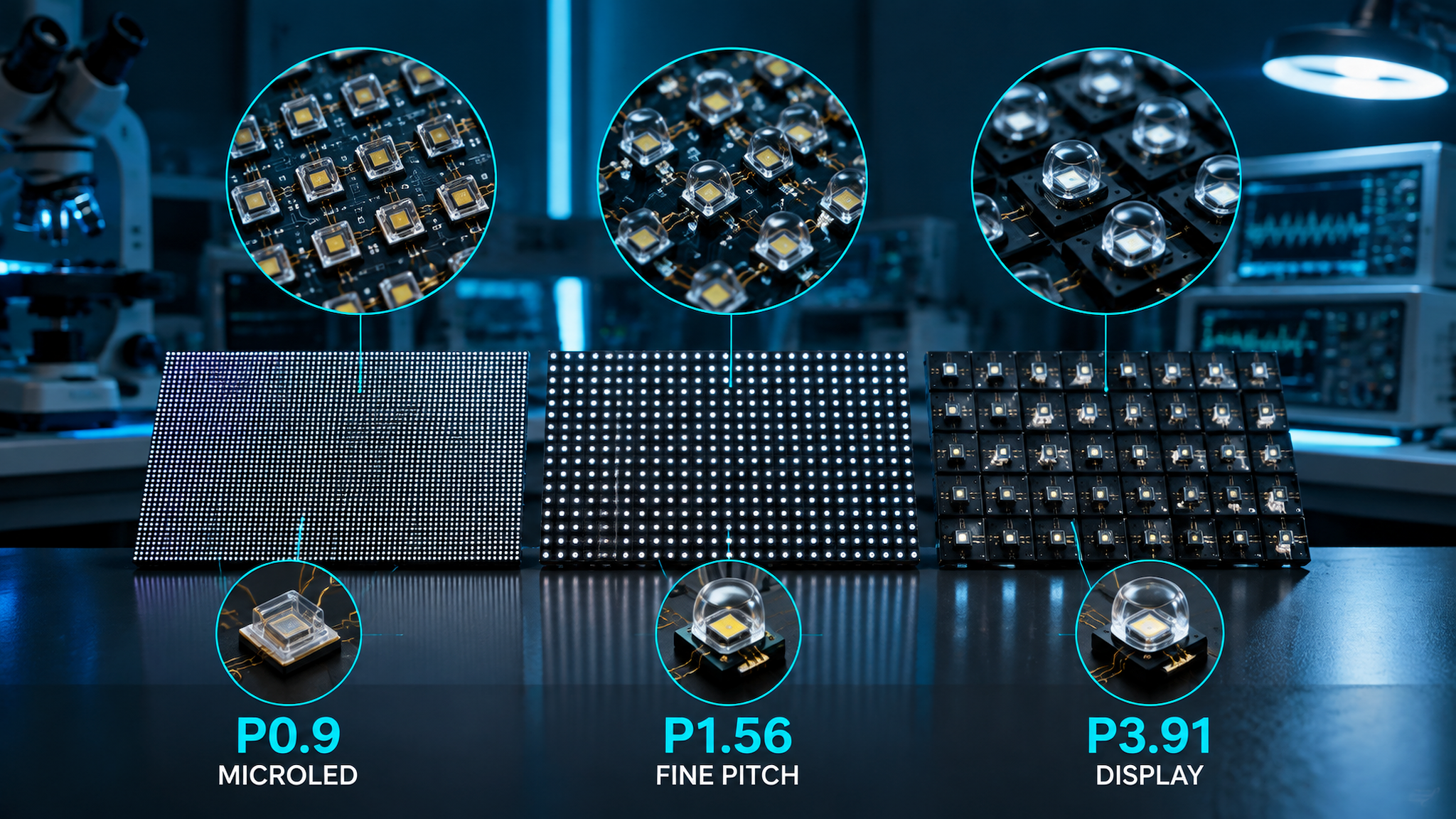
3. Master Viewing Distance Chart: P0.7 to P16.0
The following master engineering chart provides comprehensive distance calculations, pixel densities, and application scopes across the full standard pixel pitch spectrum.
Pixel Pitch (P-Value) | Pixel Density (dots per m²) | Minimum Distance (m and ft) | Optimal Distance (m and ft) | Visual Acuity Distance (m) | Primary Application Scope |
P0.7 mm MicroLED | 2,040,816 dots per m² | 0.7 m (2.3 ft) | 1.4 to 2.1 m (4.6 to 6.9 ft) | 2.4 m (7.9 ft) | Mission-Critical Command, Medical, Luxury Home Cinema |
P0.9 mm MicroLED | 1,234,567 dots per m² | 0.9 m (3.0 ft) | 1.8 to 2.7 m (5.9 to 8.9 ft) | 3.1 m (10.2 ft) | Security Operations Centers, Broadcast Video Walls |
P1.25 mm Fine Pitch | 640,000 dots per m² | 1.25 m (4.1 ft) | 2.5 to 3.8 m (8.2 to 12.5 ft) | 4.3 m (14.1 ft) | Executive Boardrooms, 110-inch to 138-inch 1080p Walls |
P1.56 mm Fine Pitch | 410,958 dots per m² | 1.56 m (5.1 ft) | 3.1 to 4.7 m (10.2 to 15.4 ft) | 5.4 m (17.7 ft) | Corporate Conference Rooms, 138-inch to 165-inch Displays |
P1.875 mm Fine Pitch | 284,444 dots per m² | 1.88 m (6.2 ft) | 3.8 to 5.6 m (12.5 to 18.4 ft) | 6.5 m (21.3 ft) | Auditoriums, University Lecture Halls, Briefing Centers |
P2.0 mm Standard Indoor | 250,000 dots per m² | 2.0 m (6.6 ft) | 4.0 to 6.0 m (13.1 to 19.7 ft) | 6.9 m (22.6 ft) | High-End Retail Showrooms, Corporate Lobbies |
P2.5 mm Standard Indoor | 160,000 dots per m² | 2.5 m (8.2 ft) | 5.0 to 7.5 m (16.4 to 24.6 ft) | 8.6 m (28.2 ft) | Worship Sanctuaries, Shopping Malls, Hotel Ballrooms |
P2.6 mm Rental Staging | 147,929 dots per m² | 2.6 m (8.5 ft) | 5.2 to 7.8 m (17.1 to 25.6 ft) | 8.9 m (29.2 ft) | Live Touring Stage Backdrops, Corporate Event Staging |
P2.97 mm Rental Staging | 113,287 dots per m² | 3.0 m (9.8 ft) | 6.0 to 9.0 m (19.7 to 29.5 ft) | 10.2 m (33.5 ft) | Concert Touring, Exhibition Booths, Virtual Production |
P3.0 mm Standard Indoor | 111,111 dots per m² | 3.0 m (9.8 ft) | 6.0 to 9.0 m (19.7 to 29.5 ft) | 10.3 m (33.8 ft) | Public Transport Terminals, Commercial Signage |
P3.91 mm Indoor Outdoor | 65,536 dots per m² | 3.9 m (12.8 ft) | 7.8 to 11.7 m (25.6 to 38.4 ft) | 13.4 m (44.0 ft) | Stage Rental Staging, Outdoor Festivals, Retail Facades |
P4.0 mm Commercial | 62,500 dots per m² | 4.0 m (13.1 ft) | 8.0 to 12.0 m (26.2 to 39.4 ft) | 13.8 m (45.3 ft) | Outdoor Plaza Displays, Sports Arena Scoreboards |
P4.81 mm Outdoor Rental | 43,219 dots per m² | 4.8 m (15.7 ft) | 9.6 to 14.4 m (31.5 to 47.2 ft) | 16.5 m (54.1 ft) | Outdoor Concert Stages, Temporary Sports Events |
P5.0 mm Outdoor DOOH | 40,000 dots per m² | 5.0 m (16.4 ft) | 10.0 to 15.0 m (32.8 to 49.2 ft) | 17.2 m (56.4 ft) | Commercial Outdoor Billboards, Building Facades |
P6.0 mm Outdoor DOOH | 27,778 dots per m² | 6.0 m (19.7 ft) | 12.0 to 18.0 m (39.4 to 59.1 ft) | 20.6 m (67.6 ft) | Highway Billboards, Gas Station Digital Totems |
P8.0 mm Outdoor DOOH | 15,625 dots per m² | 8.0 m (26.2 ft) | 16.0 to 24.0 m (52.5 to 78.7 ft) | 27.5 m (90.2 ft) | High-Mast Roadside Billboards, Stadium Perimeter |
P10.0 mm Outdoor DOOH | 10,000 dots per m² | 10.0 m (32.8 ft) | 20.0 to 30.0 m (65.6 to 98.4 ft) | 34.4 m (112.9 ft) | Large Highway Monument Billboards, Pylon Signs |
P16.0 mm Outdoor Mesh | 3,906 dots per m² | 16.0 m (52.5 ft) | 32.0 to 48.0 m (105.0 to 157.5 ft) | 55.0 m (180.4 ft) | Architectural Skyscraper Mesh, Long-Range Signage |
4. Packaging Technology Selection by Pixel Pitch: SMD vs COB vs GOB
Pixel pitch determines the appropriate semiconductor packaging and encapsulation technology:
• Sub-1.0 mm (P0.7 to P0.9 mm) — Flip-Chip COB (Chip on Board): Flip-chip MicroLED dies bonded directly to the PCB substrate without wire bonding and sealed in an optical epoxy matrix. Mandatory for pixel pitches below P1.0 mm (P0.7, P0.9 mm), providing extreme impact resistance, IP65 front water and dust protection, and zero solder pin failure.
• P1.25 mm to P2.5 mm — High-Precision SMD (Surface Mounted Device): High-density SMD packaging utilizing gold wire bonding and red copper brackets. Dominant for indoor conference rooms, boardrooms, and auditoriums requiring high low-grayscale precision and modular serviceability.
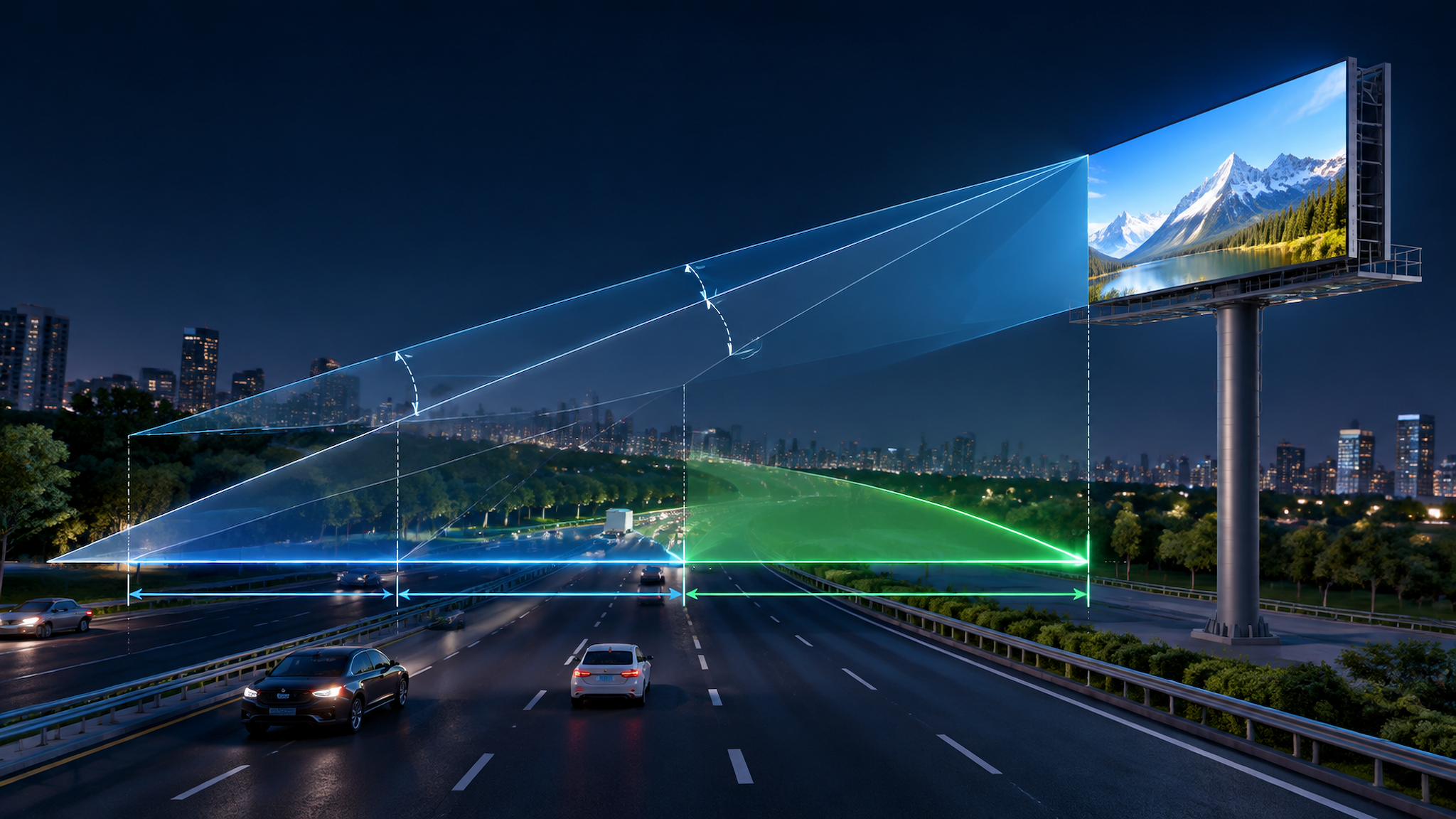
5. Multi-Scenario Application Selection and Aspect Ratio Matrix
The following engineering matrix maps target application scenarios to recommended pixel pitch ranges, viewing distances, and physical screen dimensions for native 1080p and 4K UHD resolutions.
Application Environment | Recommended Pixel Pitch | Typical Viewer Distance | Native 1080p Screen Size | Native 4K UHD Screen Size | Primary Selection Drivers |
Mission-Critical Command Centers | P0.7 mm to P1.25 mm | 1.0 to 4.0 meters | 1.7 m by 1.0 m (P0.9 mm) | 3.5 m by 1.9 m (P0.9 mm) | Sub-millimeter data text legibility, zero pixelation |
Corporate Executive Boardrooms | P1.25 mm to P1.56 mm | 2.5 to 5.0 meters | 2.4 m by 1.35 m (110 inch) | 4.8 m by 2.7 m (220 inch) | Point-to-point 1080p and 4K presentations, camera ready |
University Auditoriums and Lecture | P1.875 mm to P2.5 mm | 4.0 to 10.0 meters | 3.6 m by 2.0 m (P1.875 mm) | 7.2 m by 4.0 m (P1.875 mm) | Wide horizontal off-axis viewing, balanced cost per m² |
Shopping Malls and Retail Showrooms | P2.0 mm to P3.0 mm | 3.0 to 12.0 meters | 4.8 m by 2.7 m (P2.5 mm) | 9.6 m by 5.4 m (P2.5 mm) | High visual impact, rich contrast, cost-effective scale |
Live Event Touring and Rental Staging | P2.6 mm to P3.91 mm | 4.0 to 20.0 meters | 5.0 m by 2.8 m (P2.6 mm) | 10.0 m by 5.6 m (P2.6 mm) | High refresh rate (>3840Hz), fast rigging, GOB protection |
Outdoor DOOH Commercial Billboards | P4.0 mm to P8.0 mm | 8.0 to 40.0 meters | 9.6 m by 5.4 m (P5.0 mm) | 19.2 m by 10.8 m (P5.0 mm) | 6,000 to 10,000 nits brightness, IP66, sun readability |
Highway Traffic VMS and Billboards | P10.0 mm to P16.0 mm | 20.0 to 100.0 meters | 19.2 m by 10.8 m (P10.0 mm) | 38.4 m by 21.6 m (P10.0 mm) | High-speed vehicular legibility, maximum weather durability |

6. Frequently Asked Questions (FAQ) and Selection Guidelines
Commercial Budgeting Guidance: Indoor fine-pitch LED displays (P0.9 to P1.5 mm) carry an estimated reference cost range of 2,200 to 5,500 USD per square meter. Standard indoor commercial screens (P2.0 to P3.0 mm) range between 700 and 1,600 USD per square meter. Outdoor DOOH displays (P4.0 to P10.0 mm) range between 900 and 2,200 USD per square meter. Actual turnkey quotations depend on video processing controllers, structural steel sub-frames, installation labor, and warranty tiers.
Q1: Screen Resolution Calculation Formula — Question 1: How do I calculate the total resolution of an LED screen given its physical dimensions and pixel pitch?
Answer: Width in pixels equals Screen Width in millimeters divided by Pixel Pitch in millimeters. Height in pixels equals Screen Height in millimeters divided by Pixel Pitch in millimeters. For example, a 4,000 mm wide by 2,250 mm high screen using P2.0 mm pitch delivers a native resolution of 2,000 by 1,125 pixels.
Q2: Common Pixel Pitch Selection Mistakes — Question 2: What is the most common mistake buyers make when choosing pixel pitch?
Answer: The most common mistake is choosing an ultra-fine pixel pitch for a screen that will only be viewed from far away, or choosing a large pitch for a conference room where viewers sit within 2 meters, resulting in visible pixel graininess.