
Creative Design Concepts and Practical Setup Guidance for Flexible Stage LED Screens
Flexible Stage LED Screens
Design Concepts and Practical Setup Guide
Flexible stage LED screens use soft silicone or rubber-based modules and flexible printed circuits (FPCs) to form curves and sculptural shapes beyond a traditional flat video wall. They can create immersive backdrops, columns, arches and moving ribbons for concerts, theatre, brand launches and broadcast productions. Successful projects depend on respecting bend limits, engineering the supporting frame and mapping content to the actual 3D surface.
1. Technology and Key Specifications
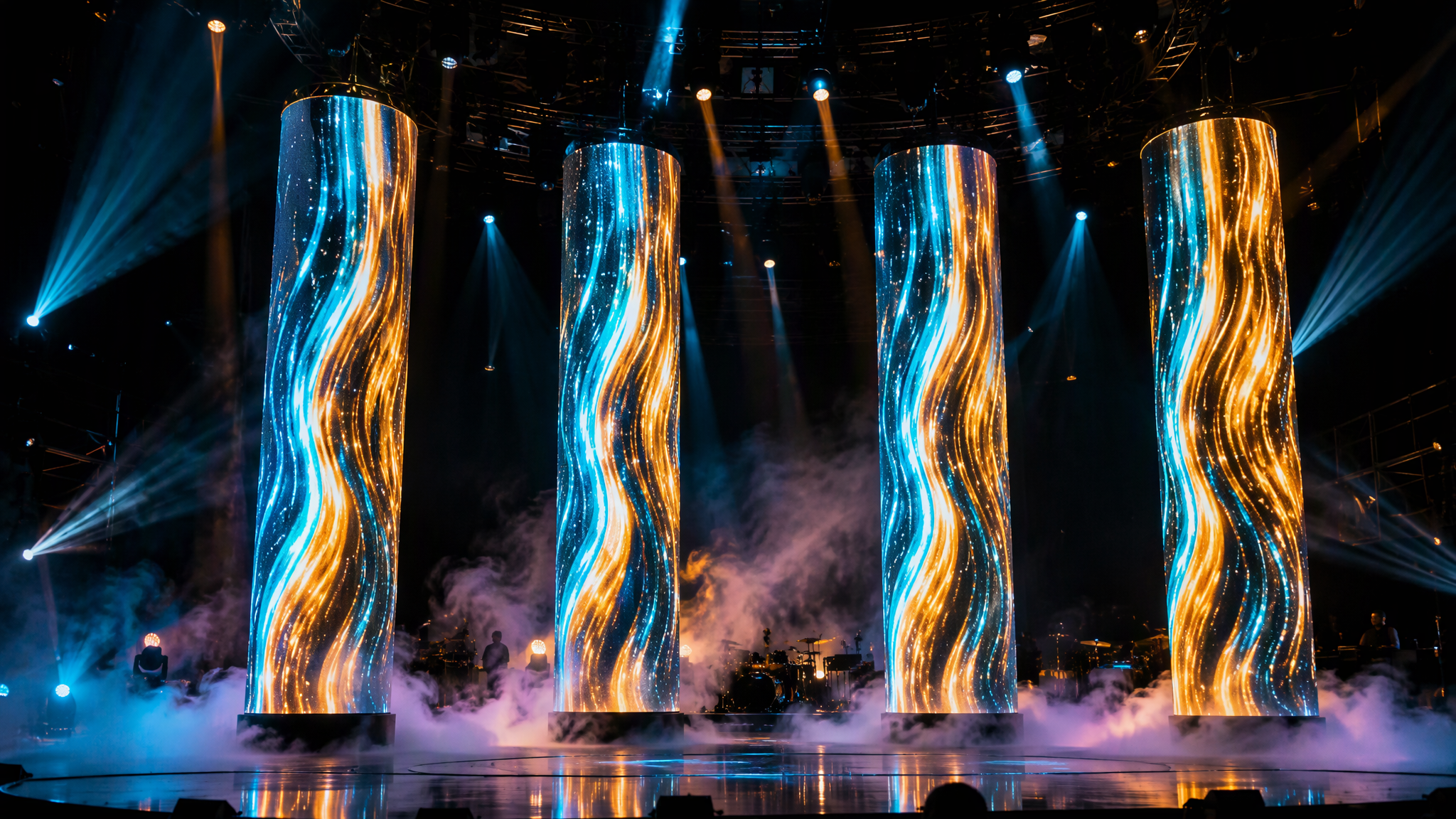
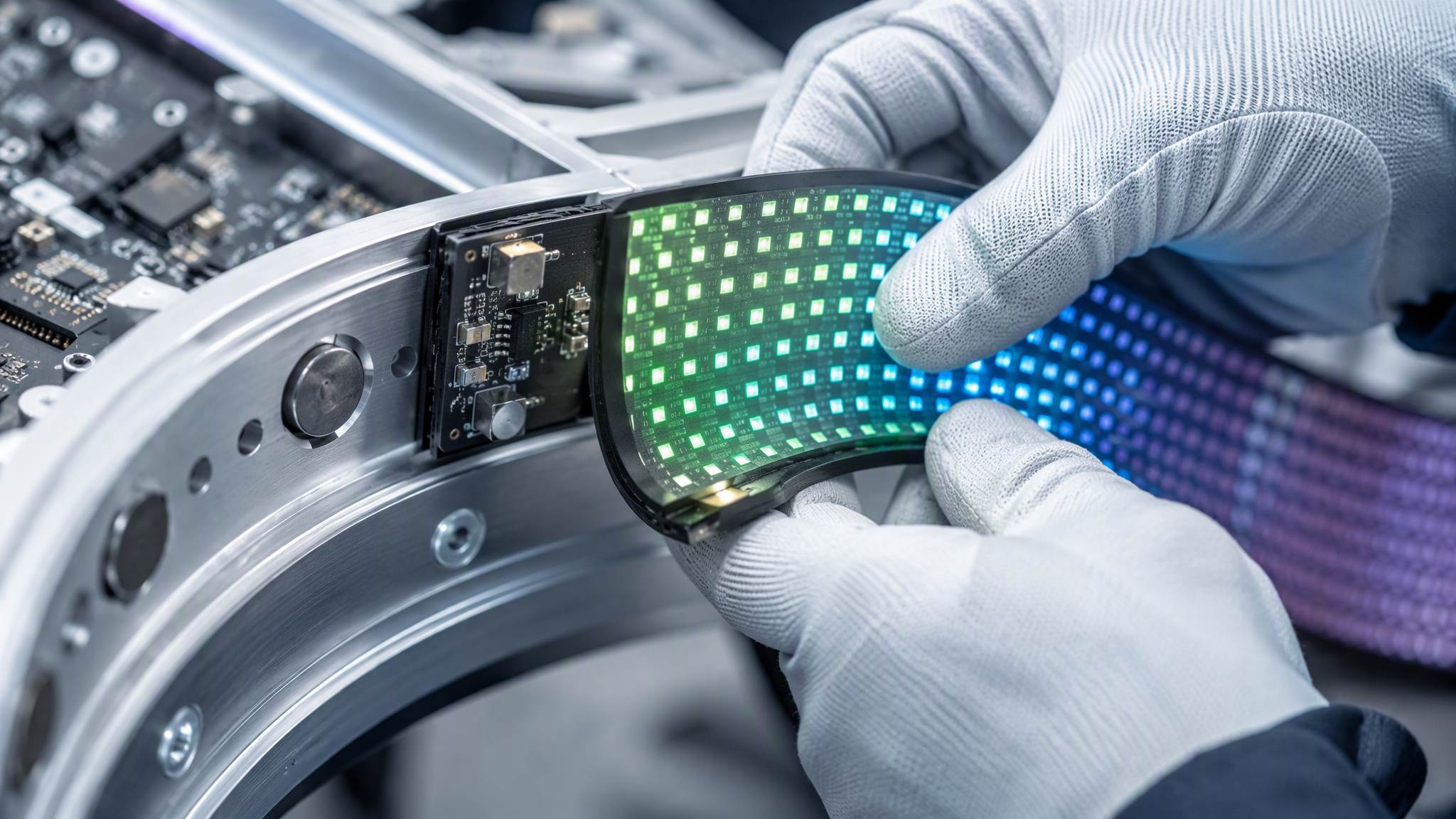
A soft module combines a flexible PCB, a silicone or polyurethane mask and a neodymium magnetic base that attaches to a curved steel sub-frame. Typical soft-module bend radii are about 250–500 mm. Bending tighter than the rated limit can damage solder joints, PCB traces or edge diodes; a 250 mm radius corresponds to a cylinder diameter of about 0.5 m.
System type | Typical pixel pitch | Curvature guidance | Key operating range |
Compact touring soft module | P2.5–P3.0 | Radius ≥250 mm | 1,000–1,500 nits; ≥3,840 Hz; 6.5–9 kg/m² |
High-resolution theatre module | P1.875–P2.0 | Radius ≥350 mm | 800–1,200 nits; 3,840–7,680 Hz; 7–9.5 kg/m² |
Rental curving cabinet | P2.6–P3.91 | Angle locks, typically ±15° to ±20° per joint | 1,200–4,500 nits; ≥3,840 Hz; 26–38 kg/m² including frame |
Note: Curving rental cabinets use rigid aluminium frames and angle locks, producing segmented curves; soft modules create smoother, continuous organic forms.
2. Six Stage Design Applications
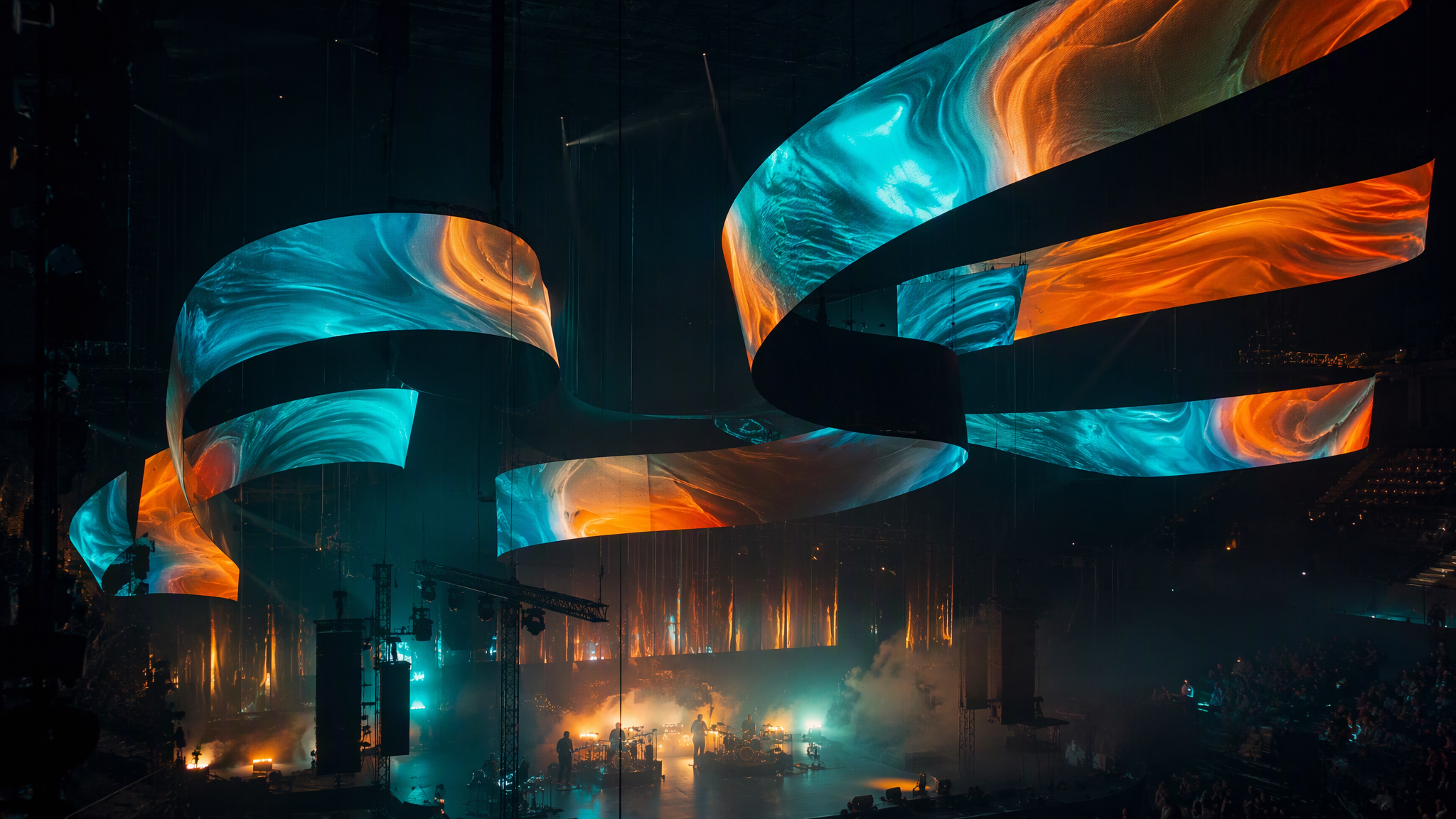
· S-wave canopy: a ribbon flows from overhead down to the stage deck, linking ceiling, backdrop and floor visuals.
· 360° columns: cylindrical LED pillars turn structural uprights into animated scenic features or audio visualisers.
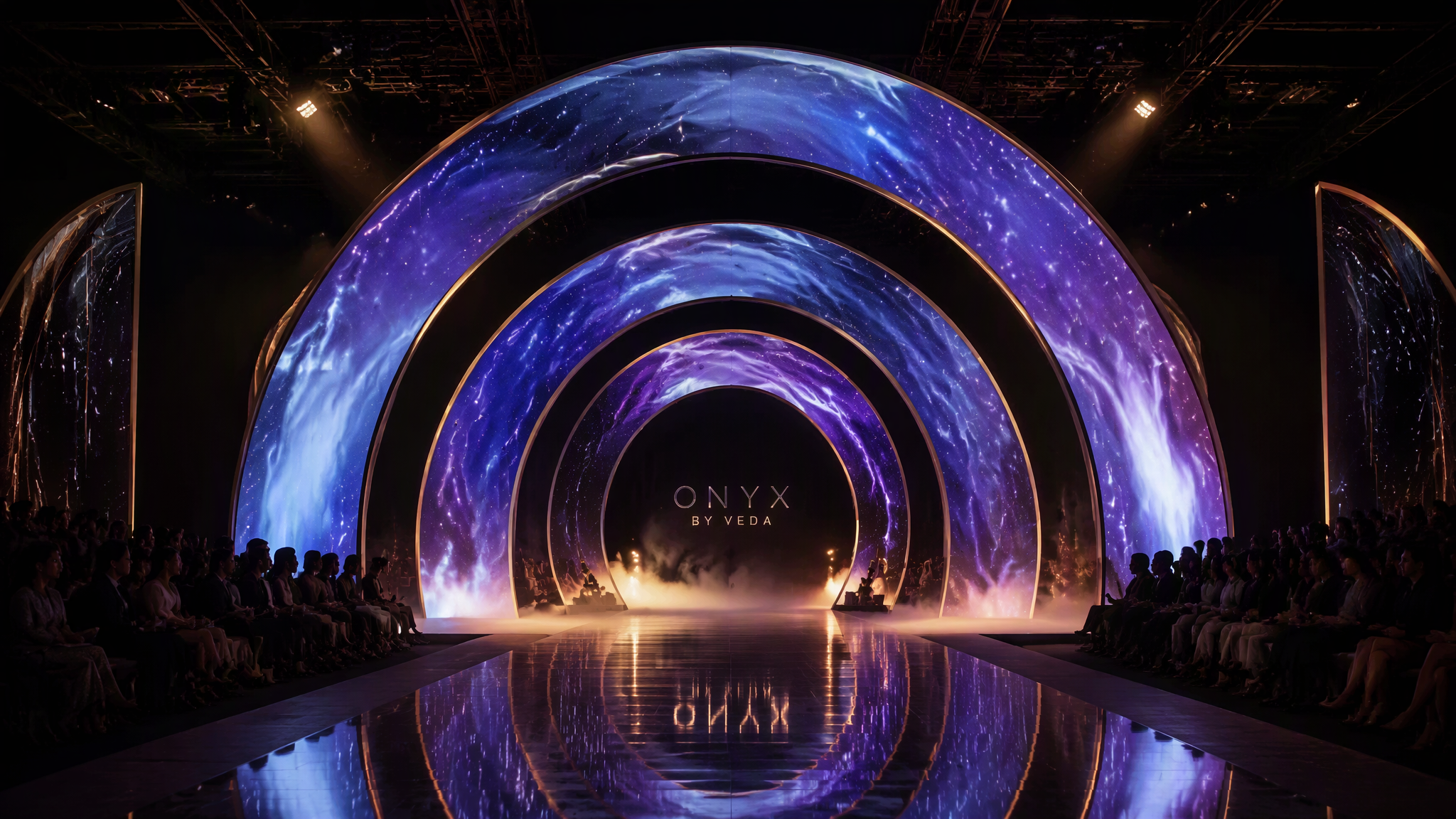
· Arches and portals: curved entrances create artist reveals, runway gateways or illuminated walk-through tunnels.
· Kinetic ribbons: motorised winches move lightweight LED strips in sync with video content.
· Concave cyclorama: a 120°–180° wrap surrounds performers and creates a wider, more immersive backdrop.
· Sculptural centrepieces: Möbius-like loops, helixes and other free-form shapes serve as standalone visual art.
3. Rigging and 3D Content Mapping
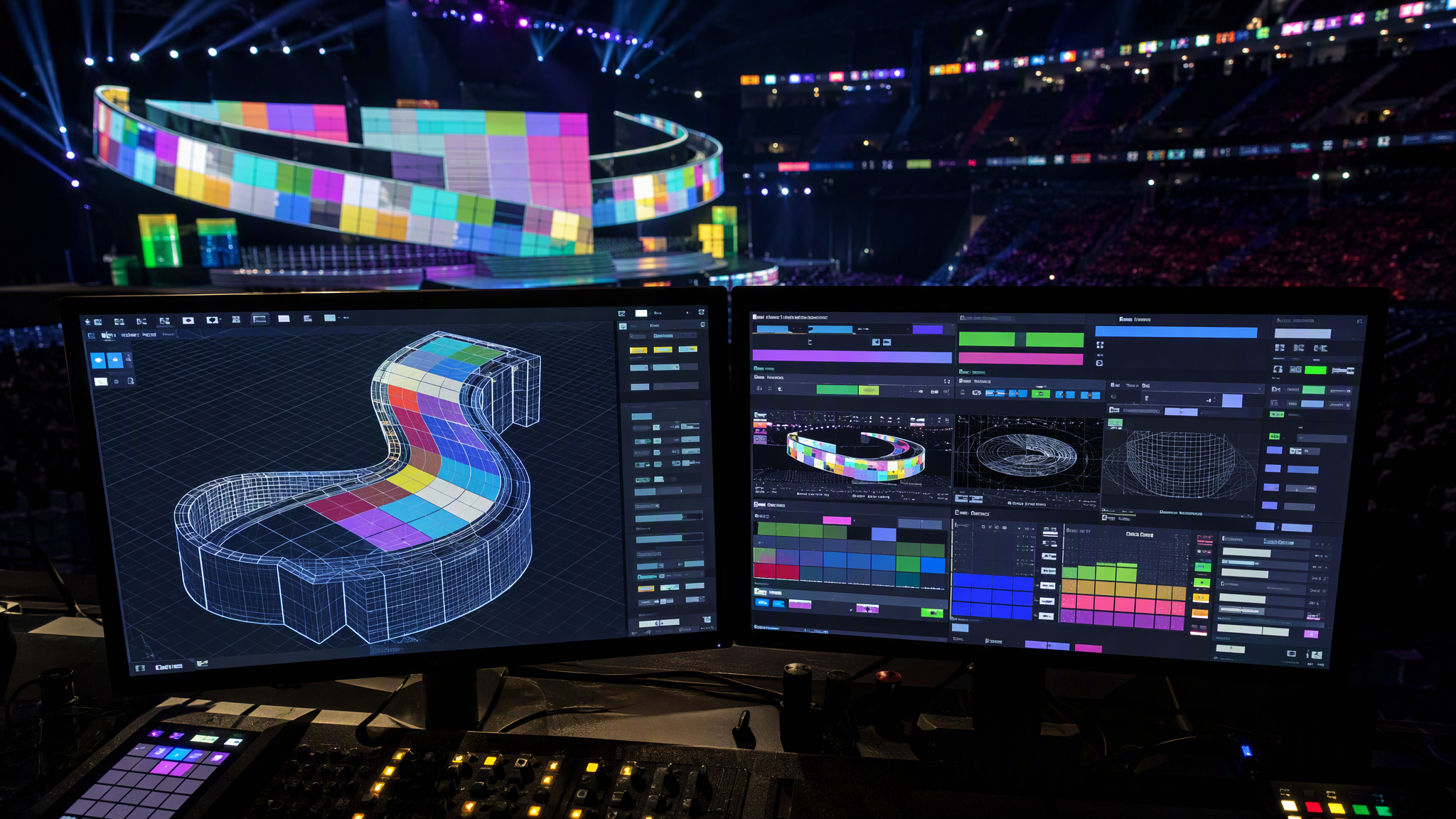
Choose the frame to suit the installation. Permanent or bespoke projects can use CNC-curved steel or aluminium backplates; touring systems often use rental cabinets with calibrated angle locks for faster assembly. Standard 2D playback may stretch across complex curves, so import the stage’s 3D CAD mesh into a media server and use UV texture mapping. Complete pre-visualisation and use on-site grid or camera calibration to align pixels across compound curves.
4. Indicative Project Budgets (2026 USD)
Configuration | Representative scale | Turnkey budget |
Pair of cylindrical columns | Two 0.8 m diameter × 3.5 m high; P2.5 | $22,000–$55,000 |
Horseshoe portal / tunnel | 4 m W × 3.5 m H × 2 m D; P2.5 | $32,000–$75,000 |
S-wave canopy | 36 m²; P2.9–P3.9 | $50,000–$130,000 |
180° concave cyclorama | 72 m²; P2.0–P2.5 | $95,000–$240,000 |
Touring rental package | 30 m² curving stage system | $2,500–$6,500 per day |
Typical cost shares: modules 40%–50%; curved steel/truss 20%–28%; media servers 12%–18%; rigging, labour and freight 10%–16%; custom 3D content and calibration 8%–12%. Actual quotations depend on scope and site conditions.
5. Essential Setup Checklist
· Never exceed the module’s minimum bend limit; tighter bends can cause permanent failures.
· Check magnetic retention under stage vibration; the source guide recommends at least 5 kg per module or safety tether clips.
· Complete 3D UV mapping during pre-production to reduce on-site setup delays.
· Transport modules in custom foam cases without pressure on silicone masks.
· Keep 5%–8% spare modules from the same diode batch, especially for non-standard shapes.
Flexible LED screens can turn stage displays into architectural curves and kinetic sculptures. The most reliable results come from matching the module to the intended geometry, engineering the sub-frame, and calibrating mapped content before show day.


