
Essential Guide to Jumbotron Screen Sizes, Specs, Costs and Common Uses
The Four Core Jumbotron Architectures
Venues differ drastically in sightlines and structure. Configuring a jumbotron begins by matching the physical form factor to spectator geometry.
Architecture | Typical Screen Dimensions | Common Pixel Pitch | Primary Venue Types | Key Engineering Feature |
Center-hung arena cube / cylinder | 4 to 8 faces; 4 × 2.5 m up to 12 × 7 m per face; total 40–300 m² | P2.5–P4.0 indoor | Basketball arenas, hockey rinks, multi-purpose civic centres | Motorised hoist system, upper/lower ribbon rings, tight weight limits |
End-zone & outfield stadium wall | Single plane; 12 × 6 m (72 m²) up to 50 × 18 m (900 m²+) | P6.0–P10.0 outdoor | Football stadiums, soccer grounds, baseball outfields | High wind load resistance, heavy structural foundation, extreme brightness |
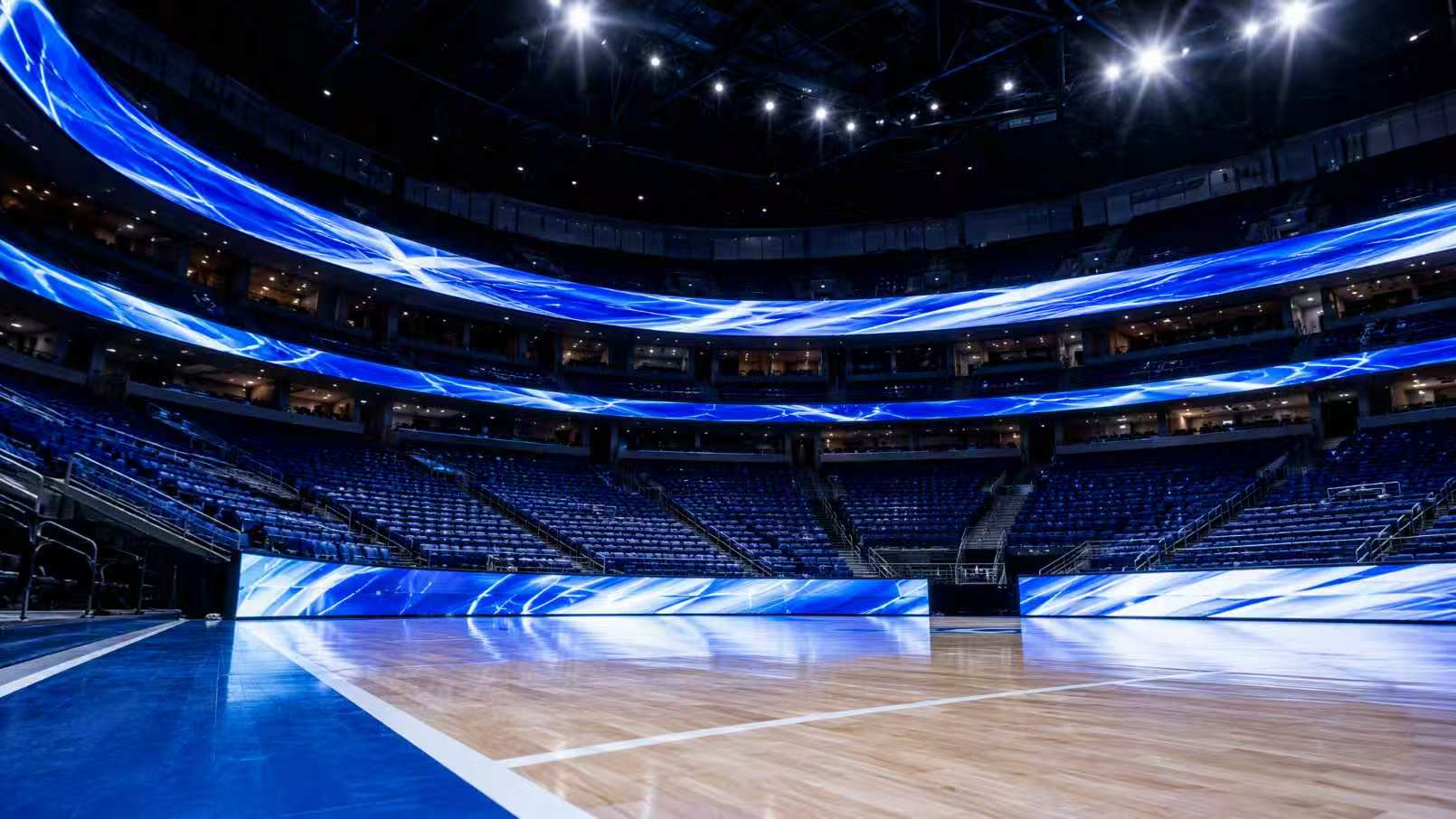
Fascia ribbon & perimeter boards | 0.6–1.2 m high × 60–300 m continuous run | P4.0–P10.0 indoor/outdoor | Stadium tier fascias, court-side and pitch-side perimeters | 360-degree synchronized broadcast, impact-resistant soft silicone masks |
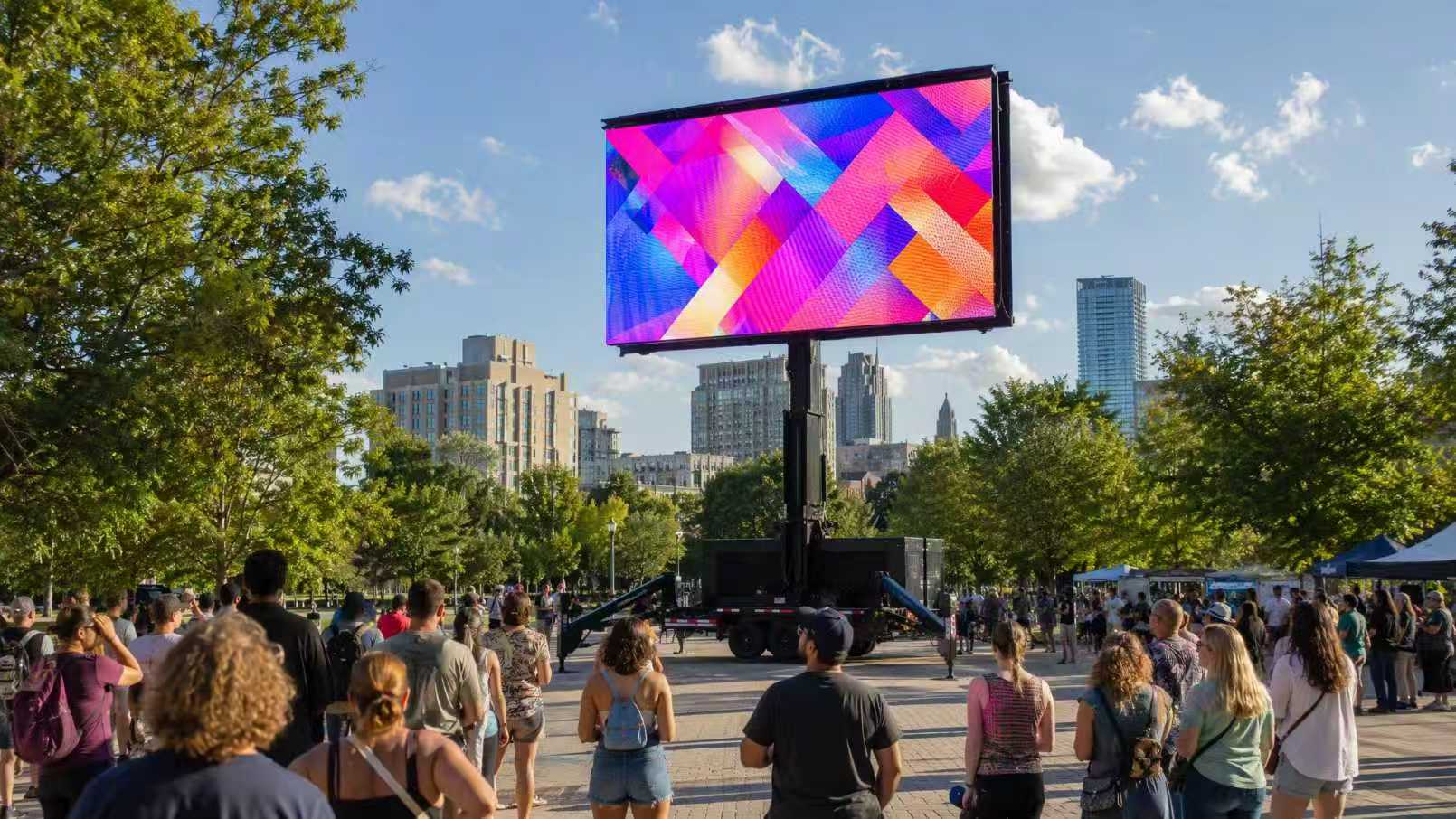
Mobile & trailer-mounted jumbotron | Single screen; 4 × 2.5 m (10 m²) up to 10 × 5.5 m (55 m²) | P3.9–P4.8 outdoor | Outdoor festivals, golf tournaments, fan zones, temporary rallies | Integrated hydraulic mast, onboard generator, rapid 30-minute setup |
Center-Hung Arena Displays
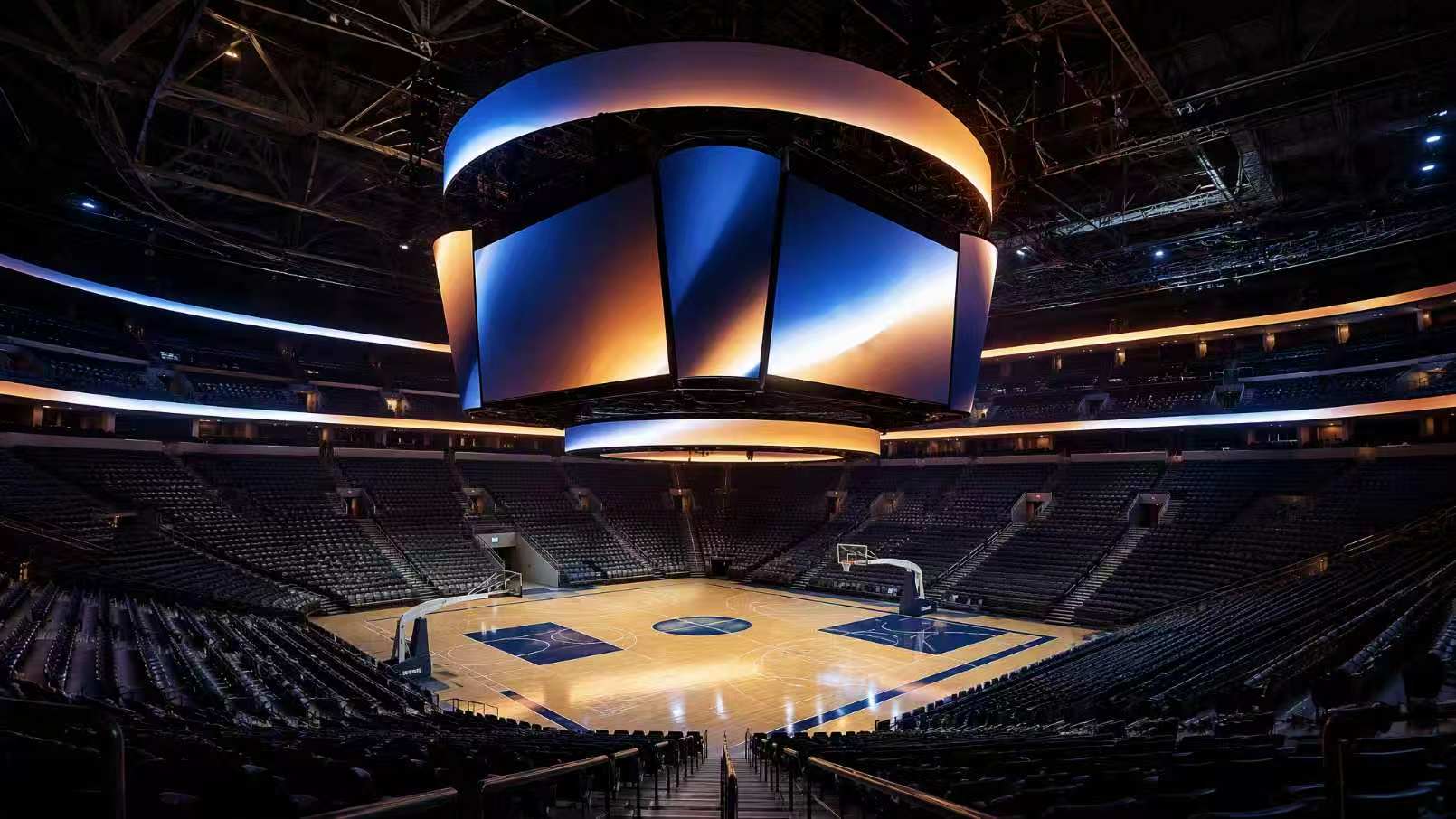
In basketball and hockey, the center-hung scoreboard is the visual anchor of the facility. Modern systems combine four primary video faces, corner wedge displays, an upper halo ribbon, and an underbelly ring for floor-level seats.
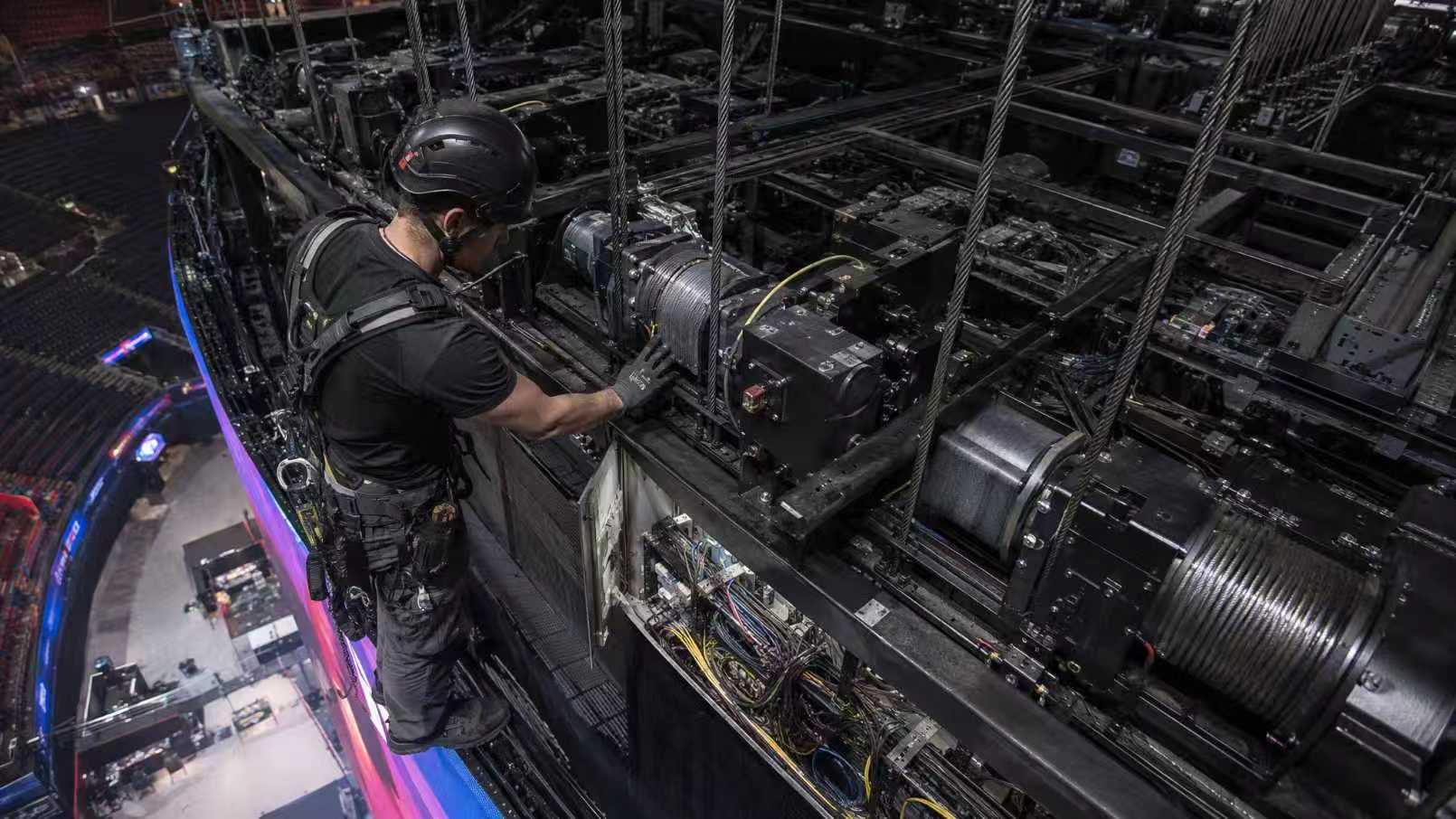
Because these structures hang directly above athletes and spectators, engineering is governed by strict weight budgets and motorized winches. Multi-purpose arenas hoist the entire assembly into the roof superstructure during concert tours to clear sightlines and touring lighting grids.
End-Zone and Outfield Stadium Video Boards
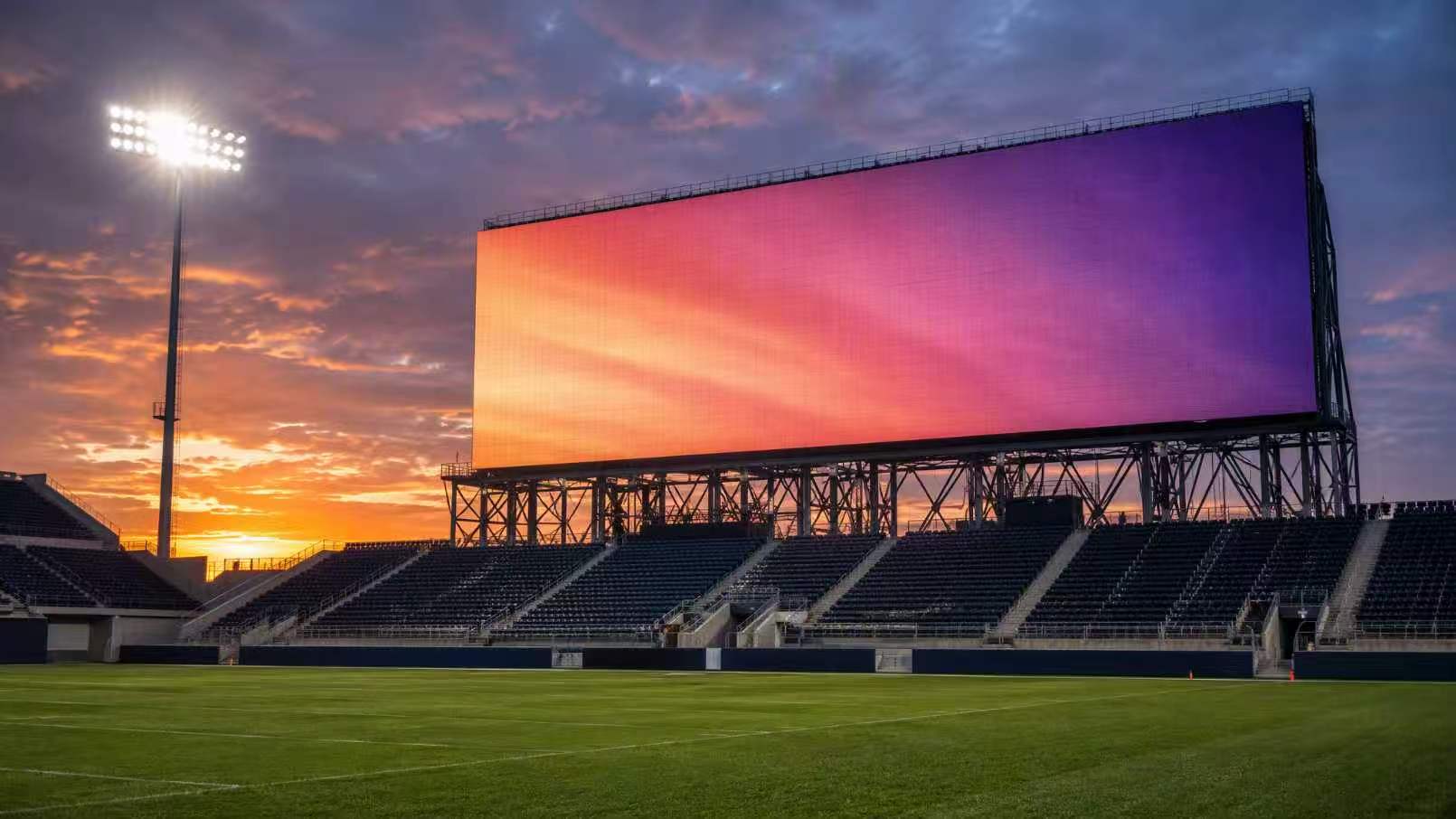
Outdoor football and baseball stadiums demand massive scale, with viewing distances often exceeding 120 to 180 metres. Screens range from 80 m² at high schools to over 1,000 m² in professional stadiums.
Outdoor boards must generate 6,000 to 10,000 nits to overpower noon sun, carry IP65/IP66 sealing, and withstand wind loads exceeding 120 to 160 km/h on heavy structural steel.
Key Technical Specifications That Decide Performance
```
Jumbotron Technical Architecture
┌─────────────────────────────────────────────────────────────────┐
│ Physical Environment: Weatherproofing & Structural Safety │
│ • IP65/IP66 Sealing • Wind Load Rigging • Front/Rear Access │
└────────────────────────────────┬────────────────────────────────┘
│
┌────────────────────────────────┴────────────────────────────────┐
│ Optical & Display Performance: Readability Across All Seating │
│ • Pixel Pitch (P2.5–P10) • Brightness (1.5k–10k nits) • 16-bit │
└────────────────────────────────┬────────────────────────────────┘
│
┌────────────────────────────────┴────────────────────────────────┐
│ Live Video & Broadcast Engine: Zero Delay, Studio Synchronization│
│ • High Refresh (≥3,840 Hz)• Sub-Frame Latency • Genlock Sync │
└─────────────────────────────────────────────────────────────────┘
```
Pixel Pitch and Viewing Distance Geometry
Pixel pitch measures the spacing between adjacent diode centers in millimetres. In large venues, pitch selection is governed by two mathematical benchmarks:
· Visual Acuity Threshold: The minimum distance where individual LED pixels blend into a continuous image:
$$text{Minimum Acuity Distance (m)} = text{Pixel Pitch (mm)} times 2.5 text{ to } 3.4$$
· Legible Character Height Rule: To ensure scores and stats remain legible from upper-deck seating:
Venue Setting | Viewing Distance Range | Recommended Pixel Pitch | Native Pixel Density | Recommended Brightness |
Indoor high school gym / small arena | 4 m – 35 m | P2.5 – P3.91 | 65,536 – 160,000 px/m² | 1,000 – 1,500 nits |
Major indoor arena (center-hung) | 8 m – 75 m | P2.9 – P4.0 | 62,500 – 118,900 px/m² | 1,200 – 2,200 nits |
Outdoor high school / college field | 20 m – 120 m | P6.0 – P8.0 | 15,625 – 27,778 px/m² | 6,000 – 8,000 nits |
Major outdoor stadium / speedway | 40 m – 200 m+ | P8.0 – P10.0 | 10,000 – 15,625 px/m² | 7,500 – 10,000 nits |
Brightness, Contrast and Ambient Dimming
Indoor arena jumbotrons require 1,200 to 2,200 nits of calibrated luminance to avoid court glare, while outdoor stadium displays require 6,500 to 10,000 nits to cut through midday sunlight.
Outdoor screens must incorporate automated light sensors that throttle brightness down to 800–1,200 nits at night, preventing driver glare and meeting municipal codes. Surface contrast relies on deep black module masks, matte shaders, and black-body SMD LEDs.
Broadcast Refresh Rate and Studio Genlock
Slow-motion replay cameras operate at high shutter speeds. To prevent scan lines and color banding, sports jumbotrons demand a minimum refresh rate of 3,840 Hz (up to 7,680 Hz in premier venues) paired with hardware Genlock frame synchronization.
Ultra-Low Latency Video Processing
In live sports, Image Magnification (IMAG) captures action for instant screen display. Standard video processors introduce 3 to 6 frames of latency (50–100 ms), causing distracting lag. Sports-grade processors utilize zero-frame scaling engines and uncompressed SDI / SMPTE ST 2110 pipelines that keep total video delay below 1.0 to 1.5 frames (<25 ms).
Common Uses: Why Venues Invest in Jumbotrons
A jumbotron is a multi-purpose platform driving ticket sales, fan loyalty, and corporate advertising revenue:
1. Live Action Replay and IMAG: Closes the visual gap for upper-deck seats, providing multi-angle replays during controversial calls and downtime.
2. Dynamic Scoring & Real-Time Analytics: Integrates directly with league timing controllers (Daktronics, Swiss Timing, Sportzcast) to display player tracking data, penalty clocks, and radar speeds.
3. Sponsorship Monetization: Dynamic L-bars, animated banner wraps, and full-screen event takeovers generate recurring ad revenue, often recouping capital costs within 24 to 36 months.
What a Jumbotron Costs in 2026
Display cabinets typically represent 45% to 55% of total turnkey expenditure. The remainder covers structural steel engineering, electrical drops, control room equipment, cabling, and specialized installation labor.
Venue / Project Tier | Representative Display Dimensions & Type | Total Turn-Key Budget Range (2026 USD) | Typical Inclusions & Project Scope |
Tier 1: High school gym / community arena | Single center-hung cube (4 faces, 3 × 2 m each, P2.9–P3.9) | $45,000 – $140,000 | Display hardware, basic hoist, video scaler, scoring console, local installation |
Tier 2: High school / municipal outdoor stadium | Single end-zone video board (8 × 4.5 m to 10 × 6 m, P6.0–P8.0) | $90,000 – $280,000 | Outdoor LED wall, steel support structure, audio integration, weatherproofing, basic replay system |
Tier 3: Mid-size college arena / minor league | Center-hung cube (4 faces 5 × 3 m + halo ring, P2.5–P2.9) | $280,000 – $750,000 | Custom multi-face chassis, motorised hoist, broadcast video switcher, genlock processor, full commissioning |
Tier 4: Major college / mid-size professional stadium | Large outdoor end-zone board (20 × 10 m to 30 × 12 m, P8.0–P10.0) | $800,000 – $2,500,000 | Heavy steel foundation, high-wind engineering, multi-channel replay server, redundant power distribution |
Tier 5: World-class sports arena / mega stadium | Complete venue LED package (massive center-hung + 360° ribbons) | $3,500,000 – $15,000,000+ | Mega custom video boards, ribbon rings, full SMPTE 2110 IP broadcast control room, dual redundant infrastructure |
Temporary Rental: Mobile trailer jumbotron | Hydraulic mobile unit (6 × 3.5 m, P3.9 outdoor) | $1,800 – $4,500 / day | Screen trailer, onboard generator, setup technician, basic video playback interface |
```
Turn-Key Jumbotron Cost Breakdown
┌───────────────────────────┬───────────────────────────┐
│ LED Display Cabinets │ Structural Steel & Hoists │
│ 45% – 55% │ 15% – 25% │
├───────────────────────────┼───────────────────────────┤
│ Control Room & Processing │ Electrical & Cabling │
│ 10% – 15% │ 8% – 12% │
├───────────────────────────┴───────────────────────────┤
│ Labour, Rigging, Permits & Commissioning: 8% – 12% │
└───────────────────────────────────────────────────────┘
```
Ongoing Total Cost of Ownership (TCO)
6. Electricity Consumption: A 100 m² outdoor jumbotron averaging 250 W/m² draws ~25 kW per hour ($15–$30 per 4-hour event), with peak power up to 70–80 kW during full-white flashes.
7. Spare Modules & Bin Matching: Budget 3% to 5% spare modules from the original diode batch to avoid color mismatch during future repairs.
8. Preventative Maintenance: Annual cleaning, cable inspection, and recalibration typically cost $2,000 to $8,000 annually. Quality diodes deliver an operational lifespan of ~100,000 hours (8 to 12 years of venue use).
Frequently Asked Questions
What is the difference between a Jumbotron and a standard LED video wall?
A standard LED video wall is a flat, indoor rectangular screen used in lobbies or conference rooms. A jumbotron refers to a stadium-scale display system engineered with multi-faceted geometry (center-hung cubes, curved fascias), extreme weatherproofing (up to 10,000 nits, IP66), broadcast-grade refresh rates (≥3,840 Hz with Genlock), and direct integration into live game clocks and replay switchers.
What size jumbotron does a high school or college football field need?
For stadiums seating 2,000 to 8,000 spectators, an end-zone video board between 8 × 4.5 metres (36 m²) and 12 × 6 metres (72 m²) with a P6 to P8 pixel pitch delivers clear instant replays and legible scoreboard graphics from every seat.
How much does a complete center-hung arena scoreboard cost?
A turnkey four-sided center-hung jumbotron for a high school or small college gym typically costs between $45,000 and $140,000. A mid-sized professional or Division I arena system with halo ribbons and motorized hoists ranges from $280,000 to $750,000. Major NBA/NHL systems routinely exceed $3,000,000.


