
NovaStar ET1S-G: 4K Media Playback and Display Control
|
 Executive Summary: The NovaStar ET1S-G is a dedicated commercial-grade 4K media server engineered for high-resolution digital signage, corporate exhibition showrooms, museum immersions, and live event video walls. Equipped with dedicated hardware GPU rendering and integrated with the intuitive NovaStar Kompass FX1 playback control software, the ET1S-G supports either a single 4K at 60Hz output via HDMI 2.0 or DisplayPort 1.2, or four independent 2K at 60Hz outputs via HDMI 1.3 connectors for multi-screen mosaic splicing. With hardware decoding across four 4K video layers, point-to-point pixel mapping, and seamless central control integration via TCP, UDP, and RS232 protocols, the ET1S-G delivers stable visual rendering at a competitive commercial price point between 2,000 USD and 2,800 USD. This technical review evaluates hardware specifications, interface cabling, Kompass FX1 setup workflows, and comparative benchmarks.
1. Product Positioning and Architectural Core Value
Commercial digital showrooms, museum exhibitions, and flagship retail environments require dedicated media playback engines capable of driving ultra-wide custom LED canvases with point-to-point pixel rendering. Conventional personal computers running consumer media players frequently suffer from operating system interruptions, frame stuttering, and complex multi-display synchronization issues. The NovaStar ET1S-G resolves these challenges through a dedicated hardware rendering architecture and embedded Kompass FX1 control software.
Key architectural advantages of the NovaStar ET1S-G include:
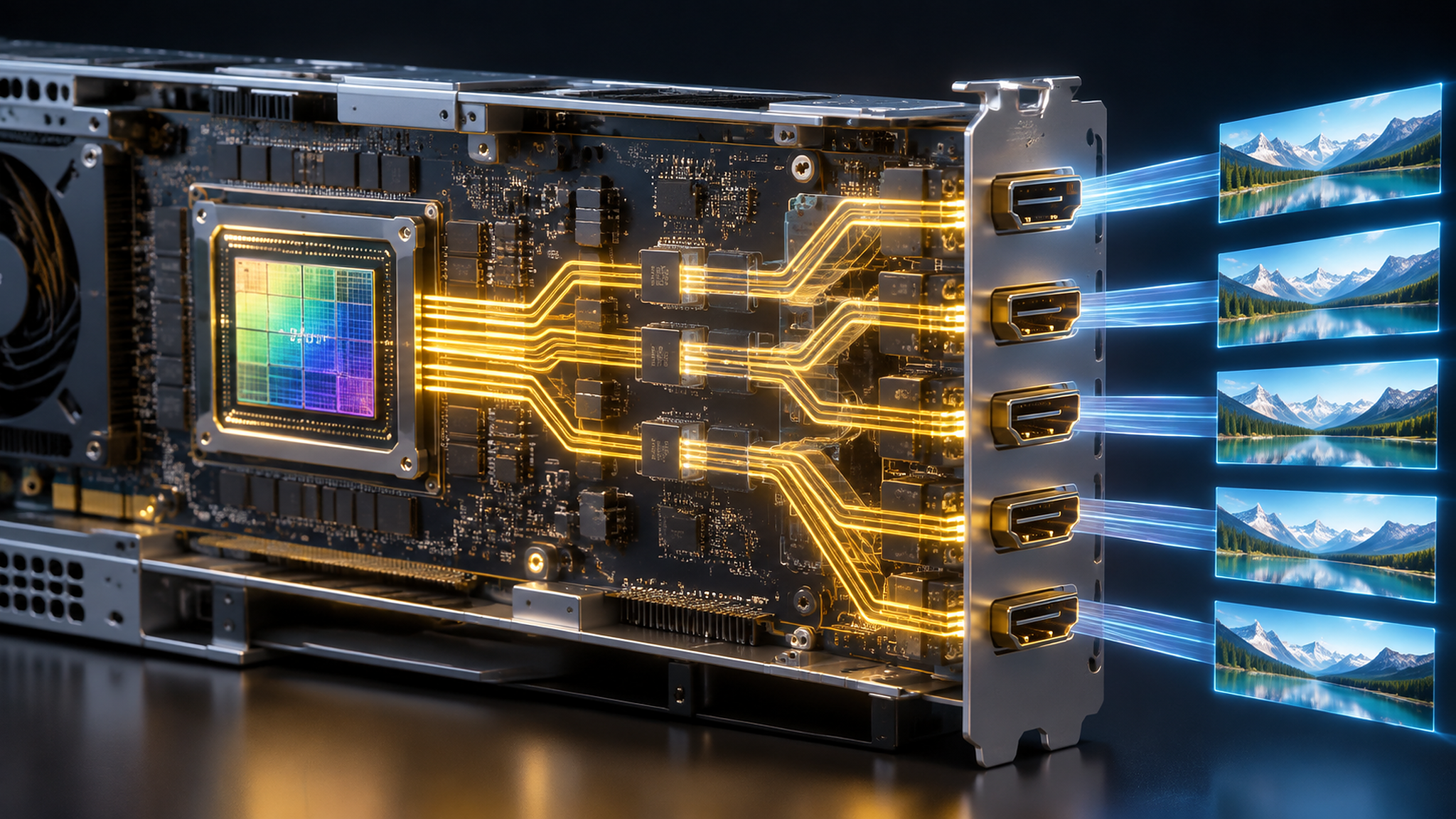
• Versatile 4K and 2K Multi-Output Architecture: Supports flexible output configurations, including single 4K at 60Hz output via HDMI 2.0 or DP 1.2, or four independent 2K at 60Hz outputs via four HDMI 1.3 connectors for multi-screen mosaic splicing.
• Multi-Layer Hardware Video Decoding: Dedicated GPU hardware decoding simultaneously drives up to 4 4K video layers or up to 8 to 12 1080p layers with smooth 60fps playback and zero dropped frames.
2. Core Technical Parameters and Engineering Specifications
The hardware parameters and decoding capabilities of the NovaStar ET1S-G are synthesized in the following master table based on verified manufacturer engineering documentation.
Technical Dimension | ET1S-G Hardware Specification | Engineering Notes and Operational Scope |
Video Output Interfaces | 1x DP 1.2, 1x HDMI 2.0, 4x HDMI 1.3, 1x HDMI Control Out | Supports single 4K at 60Hz output or 4-channel 2K at 60Hz mosaic splicing, plus 1 local monitor port |
Maximum Output Resolution | Up to 3840 by 2160 at 60Hz (Single 4K Mode) | In 4-channel 2K mode, supports ultra-wide spliced canvases up to 7680 by 1080 or 1920 by 4320 pixels |
Hardware Video Decoding | Up to 4 Channels of 4K at 60Hz or 12 Channels of 1080p | Hardware GPU accelerated decoding supporting H.264, H.265 HEVC, VP9, MPEG-2, MPEG-4, and ProRes |
Supported Media Formats | MP4, MOV, MKV, AVI, WMV, JPG, PNG, BMP, GIF | Supports uncompressed image sequences and multi-layer graphics transparency with alpha channel |
Audio Processing and Ingress | 1x TRS Balanced Stereo Audio Out, HDMI De-Embedding | Supports stereo analog audio line-out, HDMI multi-channel audio pass-through, and volume scheduling |
Integrated Software Suite | NovaStar Kompass FX1 Media Playback Software | Provides timeline cue programming, multi-layer canvas layout, visual preview, and geometric grid warping |
Processing and GPU Engine | Dedicated Multi-Core CPU and NVIDIA Discrete GPU | Industrial-grade hardware architecture engineered for uninterrupted 24-hour continuous playback |
Memory and Storage Array | 16GB to 32GB High-Speed RAM, 256GB to 512GB NVMe SSD | Dedicated solid-state drive partitions for operating system stability and high-bitrate media caching |
Communication Interfaces | 2x Gigabit RJ45 LAN Ports, 2x USB 3.0, 4x USB 2.0 | Dual Ethernet ports for network media transfer, cloud scheduling, and local central control commands |
Central Control Protocols | TCP IP, UDP, and RS232 Serial Automation | Enables third-party control systems to trigger scene switching, playlist playback, and volume control |
Power Input and Consumption | 100V to 240V AC, 50 to 60 Hz Universal Power | Maximum power consumption 150W to 200W with intelligent multi-fan convective cooling |
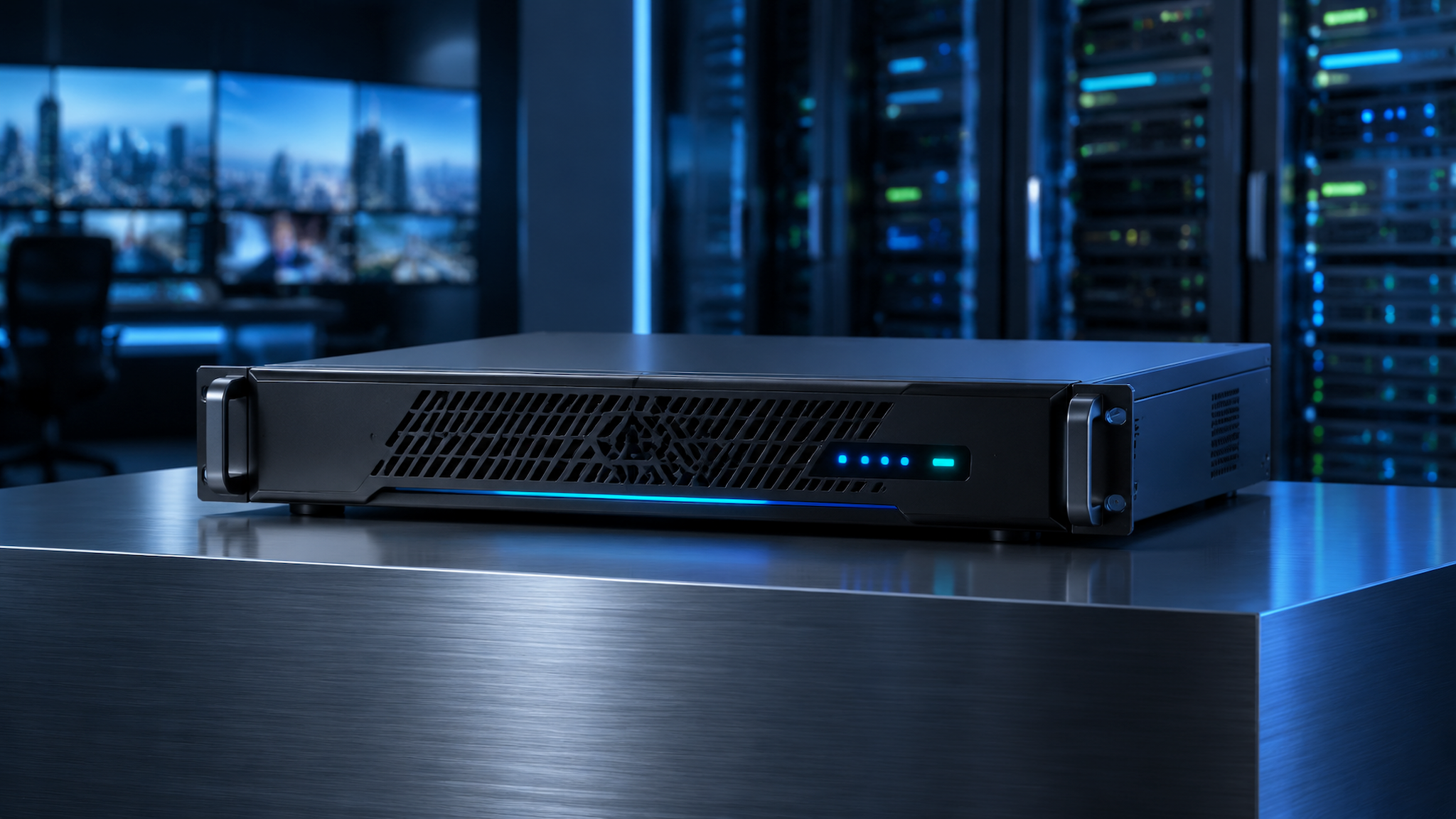
Chassis Form Factor and Weight | 1.5U Metal Enclosure (440 mm by 330 mm by 66 mm) | Standard rack-mount or desktop deployment, net chassis weight approximately 4.8 kg |
3. Hardware Interface Layout and Physical Cabling Topologies
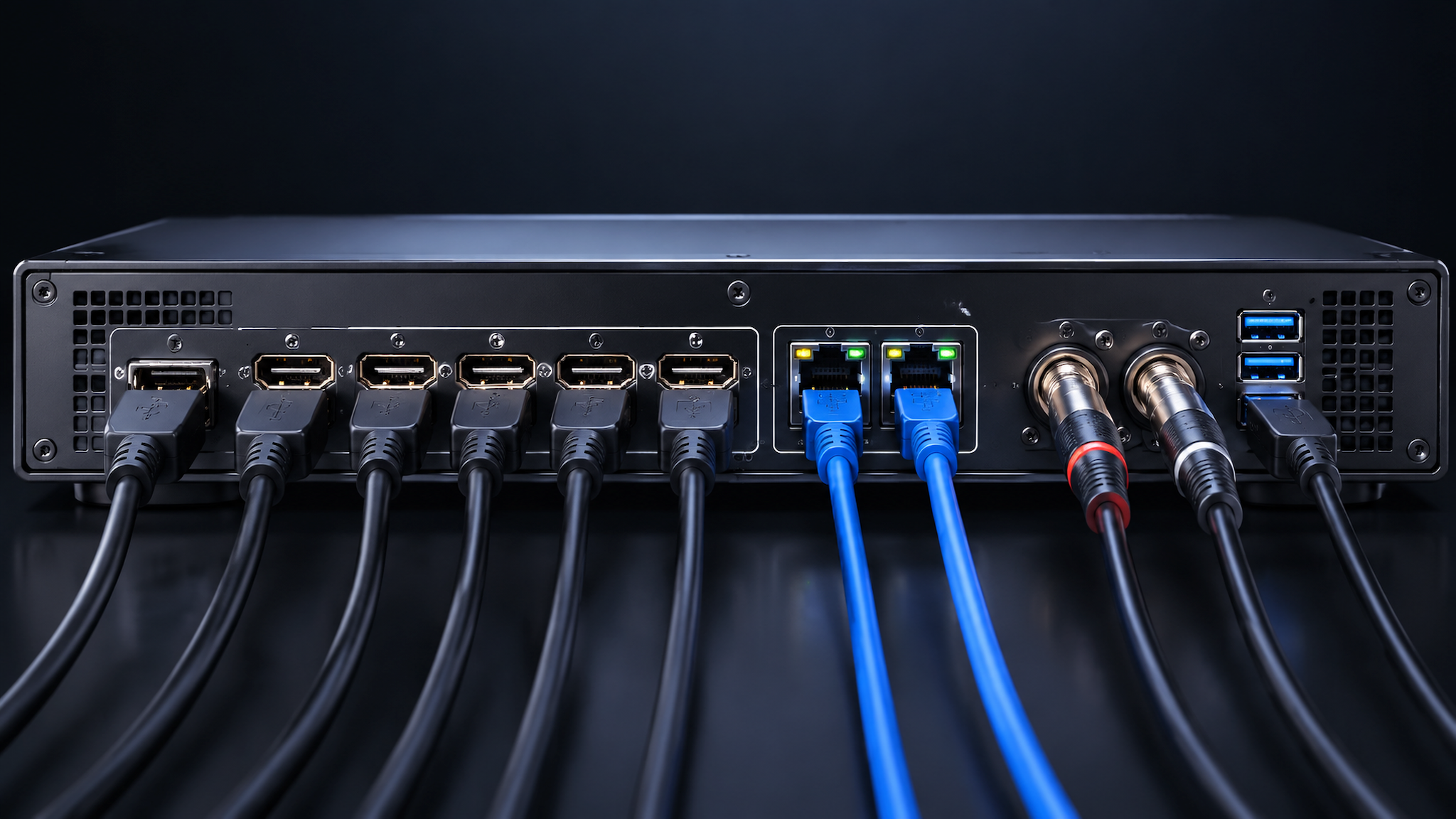
The ET1S-G rear backplane organizes display outputs, network connections, audio lines, and peripheral ports into structured zones:
A. Multi-Display Output Zone: Includes 1 DisplayPort 1.2 and 1 HDMI 2.0 for single-screen 4K at 60Hz master feeds, 4 HDMI 1.3 connectors for driving four 2K screens or spliced quadrants, and 1 dedicated HDMI output for the operator local control monitor.
B. Dual Gigabit Network Architecture: Equipped with dual Gigabit RJ45 Ethernet ports (LAN1 for media content ingestion and LAN2 for central control automation commands), ensuring network isolation between media data and building automation.
4. Software Ecosystem, Kompass FX1 Setup, and Commissioning Workflow
Commissioning the ET1S-G utilizes the embedded NovaStar Kompass FX1 media management and playback software:
• Kompass FX1 Visual Architecture: Kompass FX1 features an intuitive visual interface with an asset management library, multi-track timeline sequencing, multi-layer canvas coordinate positioning, and real-time visual preview.
• Point-to-Point Pixel Slicing: Supports custom canvas slicing, point-to-point pixel mapping across irregular display shapes, geometric grid warping, and edge blending for multi-projector setups.
Engineering Commissioning Workflow Step-by-Step
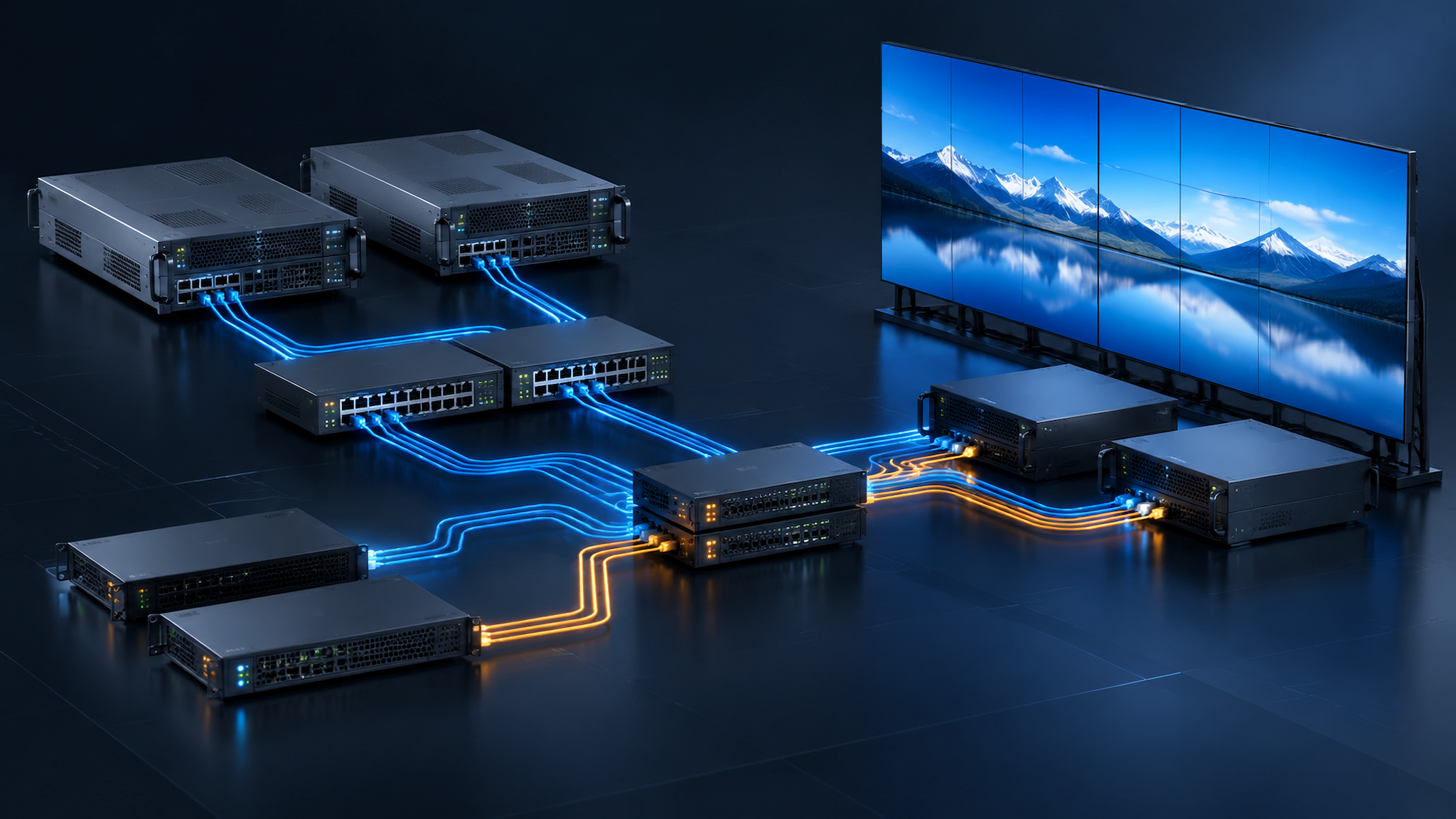
Step 1: Physical Mounting and Cabling — Mount ET1S-G in AV rack, connect AC power, attach local monitor to HDMI Control port, and route HDMI 2.0, DP 1.2, or 4x HDMI 1.3 outputs to LED video wall processors (such as NovaStar VX1000 or NovaPro UHD Jr).
Step 2: Operating System EDID Setup — Boot server, enter display settings, configure output resolution (Single 4K at 60Hz or 4x 2K at 60Hz), and verify EDID handshake.
Step 3: Kompass FX1 Screen Mapping — Launch Kompass FX1, create a new project, select output mode, and define screen pixel coordinates to match physical LED cabinet pixel boundaries.
Step 4: Media Import and Timeline Staging — Import high-bitrate 4K video files, images, and audio tracks into the media library, drag media onto timeline layers, and configure cross-fade transition durations.
5. Multi-Scenario Engineering Application Analysis
The hardware decoding and flexible output architecture of the ET1S-G make it suitable across diverse commercial visual environments:
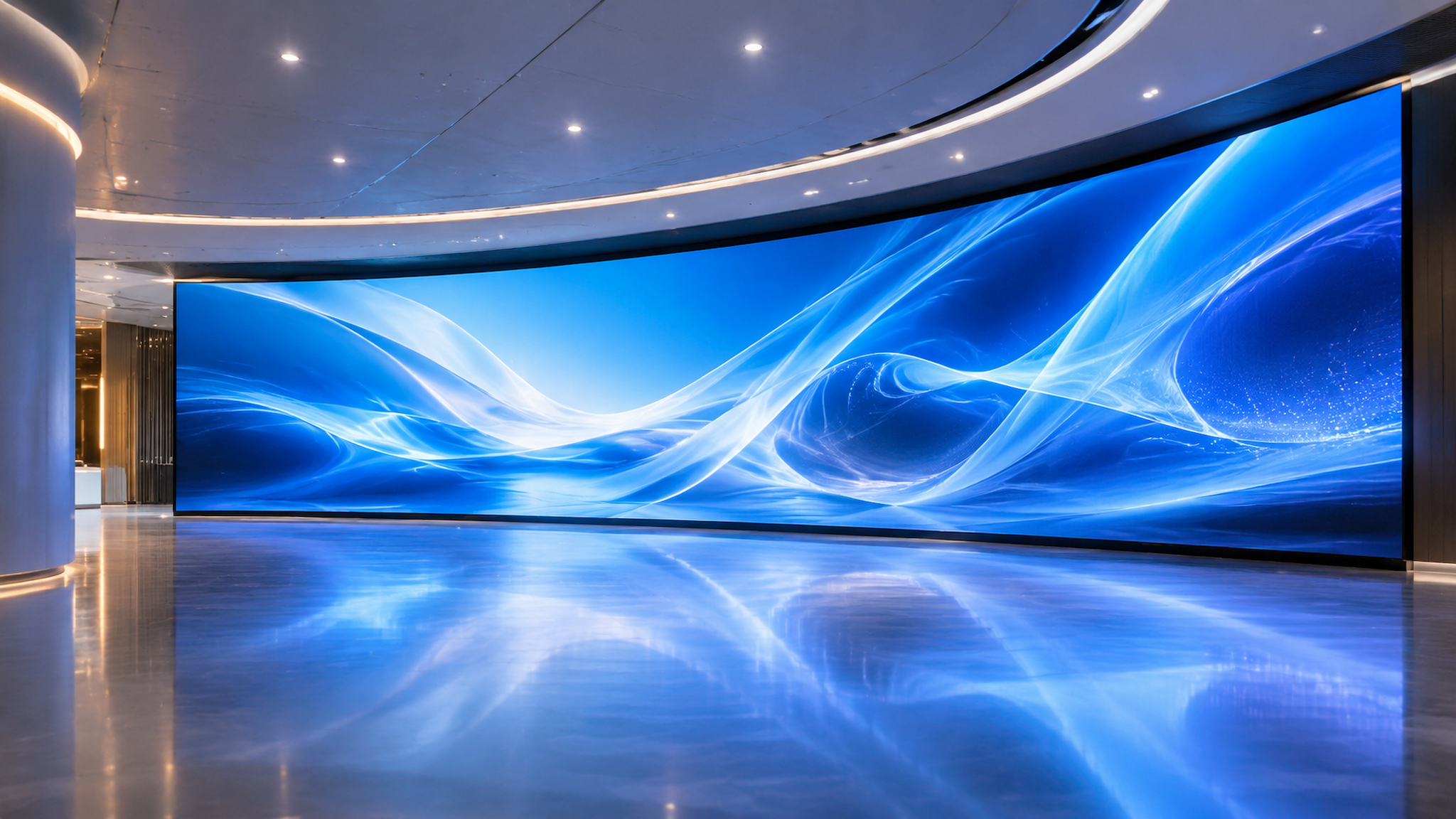
Scenario 1: Corporate Digital Showrooms and Executive Briefing Centers — Driving expansive 4K ultra-wide fine-pitch LED display walls with point-to-point pixel rendering, presenting corporate brand stories and financial analytics dashboards.
Scenario 2: Retail Flagship Stores and Brand Experience Centers — Utilizing 4x HDMI 1.3 outputs for multi-screen synchronized video walls, delivering scheduled high-resolution promotional campaigns and interactive product catalogs.
6. Cross-Model Horizontal Comparison and Benchmarking Matrix
Selecting the optimal NovaStar playback hardware requires evaluating output channel counts, software capabilities, and decoding power. The following matrix benchmarks the ET1S-G against complementary NovaStar media servers and video controllers.
Technical Dimension | NovaStar ET1S-G | NovaStar ET2S-G | NovaStar ET4S-G | NovaStar Taurus TB60 | NovaStar NovaPro UHD Jr |
Device Category | Professional 4K Media Server | High-Performance Media Server | Enterprise Multi-Screen Server | Asynchronous Media Player | All-in-One Video Processor |
Maximum Output Channels | 1x 4K (HDMI 2.0 or DP) or 4x 2K | 2x 4K (DP 1.2) or 8x 2K Outputs | 4x 4K (DP 1.2) or 16x 2K Outputs | 2x Gigabit Ethernet Outputs | 16x 1G Ethernet, 4x 10G Optical |
Native Software Platform | Kompass FX1 Software | Kompass FX2 Software | Kompass FX3 Software | ViPlex Express and VNNOX Cloud | NovaLCT and SmartLCT Suites |
Simultaneous 4K Layers | Up to 4 4K Video Layers | Up to 8 4K Video Layers | Up to 16 4K Video Layers | 1x 4K or 2x 1080p Video Playback | Up to 4 4K by 2K Input Layers |
Pixel Slicing and Warping | Supported (Kompass FX1) | Supported (Kompass FX2) | Supported (Kompass FX3) | Basic Screen Mapping | Geometric Warping Supported |
Central Control Automation | TCP IP, UDP, and RS232 | TCP IP, UDP, and RS232 | TCP IP, UDP, and RS232 | Cloud VNNOX, Basic Relay | TCP IP and RS232 Serial |
Commercial Price Range | 2,000 to 2,800 USD | 4,500 to 6,000 USD | 8,500 to 11,000 USD | 450 to 650 USD | 4,000 to 5,500 USD |
Target Application | Showrooms, Retail, Museums | Large Staging, Dual 4K Displays | Mega Multi-Screen Arenas | Commercial Outdoor Totems | Rental Staging, Live Events |
7. Frequently Asked Questions (FAQ), Price Analysis and Procurement Guidelines
Commercial Price Analysis: The NovaStar ET1S-G typically lists between 2,000 USD and 2,800 USD (or 1,900 EUR to 2,600 EUR) across authorized distributors, making it one of the most cost-effective professional 4K media servers on the market. Pricing variations depend on regional distributor logistics, internal NVMe solid-state drive capacity (256GB vs 512GB), and bundled Kompass FX1 software licensing.
Q1: Kompass FX1 Software Licensing — Question 1: Does the NovaStar ET1S-G include a permanent license for the Kompass FX1 software?
Answer: Yes. The ET1S-G includes an embedded, pre-activated perpetual license for NovaStar Kompass FX1, allowing full access to timeline cueing, multi-layer playback, and central control features without recurring annual fees.
Q2: Output Mode Configuration — Question 2: How do the output modes differ between 4K single-channel and 4-channel 2K mosaic splicing?
Answer: In single 4K mode, the server outputs 3840 by 2160 at 60Hz via HDMI 2.0 or DP 1.2 to drive a 4K LED processor. In 4-channel 2K mode, it outputs four synchronized 1920 by 1080 at 60Hz feeds across four HDMI 1.3 ports to drive wide horizontal or vertical multi-screen displays.